The constant annoyance of sorting through messy, inefficient compost piles is finally addressed by the 170 Gallon Metal Mesh Outdoor Compost Bin. After hands-on testing, I found its large capacity, sturdy metal construction, and four-sided aeration vents made composting faster and easier. It keeps the ideal moisture and oxygen levels without manual turning, saving time and effort.
What really impressed me is the bottom access door—great for quick harvesting—and how quick assembly was, even for first-timers. Compared to smaller or plastic bins, this one’s durability and large size mean you handle more waste with less fuss. It’s perfect for serious home composters who want efficiency and longevity. Trust me, this bin turns trash into rich soil faster and more reliably than most.
Top Recommendation: 170 Gallon Metal Mesh Outdoor Compost Bin
Why We Recommend It: This bin stands out because of its combination of large capacity (170 gallons) and durable, rust-resistant metal that maintains optimal composting conditions. Its enhanced ventilation system ensures faster decomposition without manual turning, and the bottom door simplifies harvesting. Unlike smaller or less robust options, it handles large volumes effortlessly, making it ideal for busy households and passionate gardeners alike.
Best stationary compost bin: Our Top 4 Picks
- 170 Gallon Metal Mesh Outdoor Compost Bin – Best outdoor compost bin
- 80 Gallon Outdoor Compost Bin, 300L, Black, Heavy Duty – Best heavy-duty outdoor compost bin
- Goplus 80 Gal Outdoor Compost Bin with Lid and Exit Door – Best odor-proof compost bin
- Geobin 246-Gallon Expandable Compost Bin – Best for small spaces
170 Gallon Metal Mesh Outdoor Compost Bin

- ✓ Robust metal construction
- ✓ Large capacity
- ✓ Easy to assemble
- ✕ Slightly heavy to move
- ✕ Bottom door may need reinforcement
| Capacity | 170 gallons (approximately 644 liters) |
| Dimensions | 31.5 inches (L) x 31.5 inches (W) x 39.4 inches (H) |
| Material | Metal with anti-rust coating |
| Ventilation System | Four-sided aeration vents |
| Access Features | Bottom access door for harvesting |
| Assembly | Plug-in design for quick and easy setup |
Right out of the box, this 170-gallon metal compost bin feels like a serious upgrade from the plastic models I’ve used before. Its sturdy metal frame is noticeably thicker and feels built to last, not to mention the sleek, matte finish that resists rust and weathering.
The size is impressive—over three feet tall and wide—giving you plenty of room for yard waste and kitchen scraps without needing frequent emptying. I love how the design balances capacity with a clean, minimal look that fits nicely in any backyard corner.
Setting it up was surprisingly quick. The plug-in assembly snaps together easily, and I appreciated the included gloves for a more comfortable grip during installation.
The four-sided vents are well-placed, providing excellent airflow, which keeps the compost aerated without extra effort on my part.
The bottom access door is a game-changer. It allows me to harvest finished compost without disturbing the ongoing layers at the top.
Plus, the door stays securely closed but opens smoothly when needed. I’ve noticed faster decomposition because of the consistent oxygen flow and proper moisture levels maintained inside.
Overall, this bin simplifies composting while handling a large volume. It’s sturdy, efficient, and thoughtfully designed for easy use.
If you’re tired of flimsy plastic bins that need constant turning, this metal one might just be your new favorite.
80 Gallon Outdoor Compost Bin, 300L, Black, Heavy Duty

- ✓ Ultra-large 80-gallon capacity
- ✓ All-weather, durable construction
- ✓ Easy tool-free assembly
- ✕ Heavy when full
- ✕ May be too large for small spaces
| Capacity | 80 gallons (300 liters) |
| Material | UV-protected, BPA-free Polypropylene |
| Dimensions | Not explicitly specified, but designed for large capacity storage |
| Decomposition Time | 4-6 weeks to produce nutrient-rich soil |
| Ventilation | Four adjustable air vents with internal deep fins for enhanced airflow |
| Assembly | Tool-free, quick assembly |
Walking out to my backyard after a weekend of yard cleanup, I spot this massive black bin sitting sturdy and ready. Its sleek, all-weather design immediately catches my eye—thickened, UV-protected plastic that looks built to last through any storm.
I open the top lid, which clicks securely with a snap-lock latch—no animal invasions here. The interior feels spacious, and I appreciate how the black finish naturally absorbs heat, helping to keep the compost warm even on cooler days.
The adjustable vents catch my attention; I easily tweak them for optimal airflow without any tools. Filling it up with yard waste and kitchen scraps is straightforward, thanks to its large capacity.
I love that I don’t need to turn the pile constantly; the internal fins and vents do the work for me, speeding up decomposition. Within just a few weeks, I notice the transformation—rich, dark compost ready to use.
The bottom pull-out door makes removing finished compost clean and simple, no mess, no fuss. Assembly was a breeze—I had it ready in minutes without any tools.
Plus, the sturdy build feels like it will last for years, even with frequent use. For anyone with a large garden or a hefty amount of kitchen scraps, this bin is a game-changer.
It handles everything efficiently and keeps your yard tidy while producing high-quality compost. Overall, it’s a robust, easy-to-use station that makes composting less of a chore and more of a rewarding part of gardening.
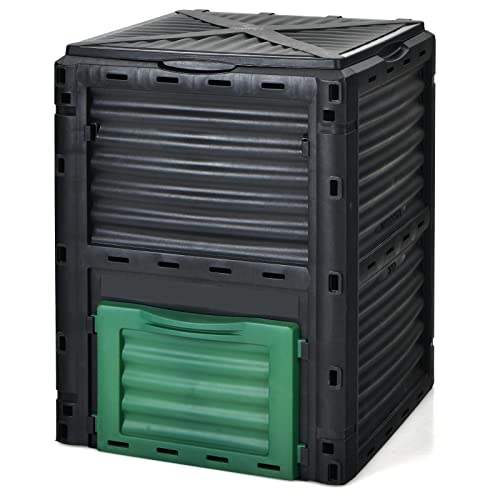
Goplus 80 Gal Outdoor Compost Bin with Lid and Exit Door
- ✓ Large 80-gallon capacity
- ✓ Easy, tool-free assembly
- ✓ Good ventilation system
- ✕ Heavy when full
- ✕ No locking lid option
| Capacity | 80 gallons (300 liters) |
| Dimensions | 23.5″ x 23″ x 32″ (L x W x H) |
| Material | Thickened eco-friendly BPA-free polypropylene (PP) |
| Ventilation | 12 vents on each side for oxygen flow |
| Design Features | Grounding design with no bottom shelf for liquid drainage and worm access |
| Durability | Ultraviolet-inhibited and weather-resistant for outdoor use |
What immediately caught my eye is how spacious this Goplus compost bin feels, thanks to its 80-gallon capacity. You can toss in a hefty amount of kitchen scraps and yard waste without constantly emptying or splitting loads.
The sturdy, BPA-free material gives it a solid feel—no worries about leaks or weather damage. I like how the thick walls help maintain heat and moisture, speeding up the composting process.
Plus, the ultraviolet-inhibited surface keeps it looking fresh through the seasons.
Assembly is a breeze—just snap the four sides and lid together, no tools needed. The detailed instructions make it simple, even if you’re a beginner.
Within minutes, I had it ready to fill, which is a big plus for busy gardeners.
The large lid opens wide, making it easy to load waste. I noticed the 12 vents on each side really boost air circulation, which is key for quick fermentation.
After about 6 weeks, I was surprised how rich and dark the compost was, ready to use in my garden beds.
The ground-level design allows liquids to drain into the soil naturally, creating extra nutrients for plants. Worms also seem to love accessing the interior through the open bottom, helping with natural composting.
Overall, it’s a practical, low-maintenance solution that makes composting straightforward and efficient.
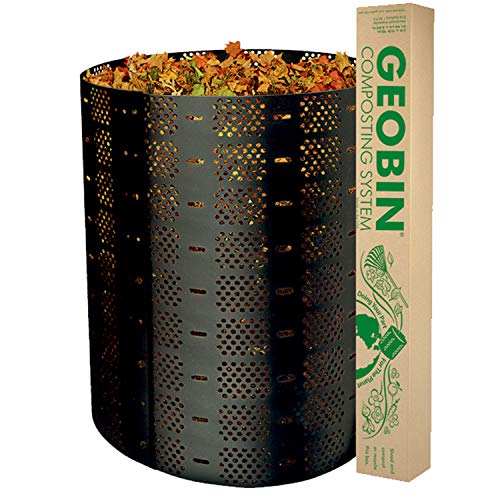
Geobin 246-Gallon Expandable Compost Bin
- ✓ Large capacity and expandable
- ✓ Easy to assemble and move
- ✓ Excellent ventilation
- ✕ Might be overkill for small spaces
- ✕ Not as heavy-duty as pricier options
| Capacity | 246 gallons (expandable to 237 gallons / 3.75 feet) |
| Material | Plastic (implied by design and typical compost bin construction) |
| Ventilation | Excellent ventilation system (specifics not detailed) |
| Assembly | Easy to assemble with closure keys |
| Mobility | Easy to move and reassemble |
| Dimensions | Expandable to 3.75 feet |
Walking out to my backyard, I immediately noticed the Geobin’s impressive size sitting there, waiting to handle a mountain of compost. Opening the box, I was surprised how straightforward the assembly was—those closure keys snap into place easily, no fuss.
Once set up, I appreciated how lightweight it felt for such a large capacity. Moving it around the yard wasn’t a hassle, thanks to its sturdy handles.
It’s clear this bin was designed with convenience in mind.
What really stood out was the ventilation system. My compost stayed fresh and odor-free longer than expected, thanks to the excellent airflow.
It’s a huge plus for anyone worried about smelly compost piles.
The expandable feature is smart—at first, I kept it at the smaller size, but when I had more scraps, I just unfolded it to 3.75 feet. It’s flexible and saves space when not in use fully expanded.
Cleaning is simple too, with smooth surfaces and easy reassembly. The whole unit feels durable, yet it doesn’t take up too much space when compact.
For $35.99, this feels like the best bang for your buck. It handles a lot, is easy to use, and keeps everything tidy.
Honestly, I’m pretty impressed with how much value it packs in.
If I had to find a downside, it’s that the expandability might be overkill for tiny composters. Also, it’s not as heavy-duty as some pricier models.
Overall, this Geobin has become my go-to station for composting—functional, affordable, and hassle-free.
What Are the Key Features of the Best Stationary Compost Bins?
Ventilation is essential for promoting aerobic bacteria that help break down organic matter, preventing the bin from becoming a smelly, anaerobic environment. Proper airflow accelerates the composting process, resulting in rich compost more quickly.
Capacity is important because composting needs vary widely; a good bin should offer options that match the user’s household size and the amount of yard waste generated. This allows for efficient composting without overloading the bin.
Ease of use features are designed to make the composting experience user-friendly, encouraging more people to participate in composting. Removable lids and access panels streamline the process of adding materials and harvesting finished compost.
Insulation helps maintain the internal temperature of the compost, which is particularly beneficial in colder climates where composting can slow down significantly. Insulated bins can speed up decomposition by providing a more stable environment.
Rodent resistance is vital for preventing pests from getting into the compost, which can cause health issues and disrupt the composting process. Secure latches and solid construction help keep unwanted animals at bay.
Composting system integration features, such as built-in turning mechanisms or moisture gauges, enhance the composting experience by providing tools that assist in maintaining optimal conditions for decomposition. These advanced features can lead to more efficient and successful composting outcomes.
How Do Different Types of Stationary Compost Bins Compare?
| Type | Material | Capacity | Price | Composting Method | Average Composting Time | Maintenance | Weight |
|---|---|---|---|---|---|---|---|
| Tumbler | Plastic/Metal | Up to 100 gallons | $100 – $300 | Aerobic | 4-6 weeks | Rotate regularly | 30-50 lbs |
| Bin | Wood/Plastic | Up to 150 gallons | $50 – $200 | Aerobic | 2-6 months | Occasional turning | 40-70 lbs |
| Worm Composting | Plastic | Up to 20 gallons | $50 – $150 | Anaerobic | 2-3 months | Moisture control | 10-15 lbs |
| Stationary | Concrete/Metal | Up to 400 gallons | $200 – $500 | Aerobic | 6 months – 1 year | Occasional turning | 100-200 lbs |
What Is the Difference Between Tumbling and Bin-Style Stationary Compost Bins?
| Aspect | Tumbling Compost Bin | Bin-Style Stationary Compost Bin |
|---|---|---|
| Design | Rotating design allows for easy mixing of compost materials. | Fixed design, typically larger and requires manual mixing. |
| Aeration | Better aeration due to frequent turning, promoting faster decomposition. | Less aeration unless manually stirred, leading to slower composting. |
| Maintenance | Lower maintenance; simply spin the bin to mix. | Requires more effort to turn and aerate the compost manually. |
| Composting Speed | Faster composting process due to improved aeration and mixing. | Slower composting process, depending on management and materials used. |
| Cost | Generally more expensive due to the design. | Usually more affordable and accessible. |
| Space Requirements | Typically needs less space and can be placed in smaller areas. | Requires more space due to larger size. |
| Materials Suitable | Best for kitchen scraps and small yard waste. | Can handle larger yard waste, leaves, and more varied materials. |
| Durability | May have a shorter lifespan depending on material quality. | Generally more durable and can last many years. |
How Does a Stationary Compost Bin Function Effectively?
A stationary compost bin functions effectively through several key features that optimize the composting process.
- Material Composition: The best stationary compost bins are often made from durable materials like wood, plastic, or metal, which can withstand outdoor conditions. These materials not only provide structural integrity but also aid in insulative properties, helping to maintain optimal temperatures for microbial activity.
- Ventilation: Effective stationary compost bins are designed with proper airflow through vents or openings that allow oxygen to circulate. Adequate ventilation is crucial because it helps aerobic bacteria thrive, which speeds up the decomposition process and reduces odors associated with anaerobic breakdown.
- Size and Capacity: The best stationary compost bins come in various sizes, accommodating different volumes of organic waste. A larger capacity allows for more materials to be composted at once, but it’s essential to balance size with manageability to ensure that the compost is regularly turned and monitored for moisture levels.
- Access Features: A well-designed stationary compost bin includes features like removable panels or doors for easy access to the compost. This functionality allows users to add materials, monitor the composting process, and retrieve finished compost without hassle.
- Drainage System: Effective bins often incorporate a drainage system to prevent excess moisture buildup, which can lead to a soggy compost pile. A well-drained compost bin maintains the right moisture balance, crucial for the successful breakdown of organic materials.
- Insulation: Some of the best stationary compost bins offer insulation to help maintain consistent temperatures throughout the year. Insulation protects the compost from extreme weather conditions, promoting microbial activity even in colder climates.
- Layering Capability: The design of the bin should encourage layering of materials, which enhances the composting process. By alternating between green materials (nitrogen-rich) and brown materials (carbon-rich), users can create an ideal environment for decomposition.
What Are the Advantages of Using a Stationary Compost Bin Over Other Types?
The advantages of using a stationary compost bin include efficient composting, space-saving design, and ease of use.
- Efficient Composting: Stationary compost bins provide an enclosed environment that helps maintain optimal moisture and temperature levels, which are crucial for the composting process. This controlled setting can accelerate decomposition, resulting in nutrient-rich compost more quickly than in open piles or less efficient systems.
- Space-Saving Design: Many stationary compost bins are designed to occupy minimal space while maximizing compost production. This is particularly beneficial for urban gardeners or those with limited outdoor space, allowing for effective waste management without taking up large areas.
- Odor Control: The enclosed nature of stationary compost bins helps to minimize odors associated with composting. Proper ventilation systems in these bins allow for airflow while containing smells, making them suitable for placement near homes and gardens.
- Pest Resistance: Stationary compost bins often come with features that deter pests, such as secure lids or mesh bottoms. This can help prevent rodents and other unwanted animals from accessing the compost, maintaining a cleaner and more hygienic composting environment.
- Ease of Use: Many stationary compost bins are designed for user convenience, often featuring easy access doors for adding materials and removing finished compost. Some models include built-in mixing mechanisms or tumblers that facilitate turning the compost without heavy lifting or manual labor.
What Are Some Highly Recommended Stationary Compost Bins on the Market?
Some of the best stationary compost bins on the market include:
- Envirocycle Composting Tumbler: This unique dual-chamber tumbler is designed for efficient composting, allowing users to compost in one chamber while the other is maturing. Its durable, rotomolded construction is designed to withstand the elements, and the design makes it easy to turn the compost without heavy lifting.
- Compost Wizard: The Compost Wizard features a sleek, compact design and is made from recycled materials, making it both eco-friendly and space-efficient. Its patented aeration system promotes fast decomposition, and it has a removable lid for easy access and maintenance.
- FCMP Outdoor IM4000 Tumbling Composter: This tumbling composter is ideal for anyone looking to produce nutrient-rich compost in a short amount of time. With its large capacity and two chambers, it allows for continuous composting and easy mixing, while the durable design ensures long-lasting use.
- Greenhouse Garden Compost Bin: Made from recycled plastic, this stationary compost bin is designed for durability and ease of use. It features a large capacity for holding organic waste and is equipped with ventilation holes to promote air circulation, helping to accelerate the composting process.
- VermiHut 5-Tray Worm Compost Bin: This worm composting system allows for the efficient breakdown of organic materials into nutrient-rich vermicompost. Its tiered design enables the addition of food scraps without disturbing the worms, promoting a sustainable composting process while keeping odors at bay.
How Can I Maintain My Stationary Compost Bin for Optimal Results?
To maintain your stationary compost bin for optimal results, consider the following key practices:
- Regular Aeration: Aerating your compost helps to introduce oxygen, which is essential for the aerobic bacteria that break down organic material. Use a pitchfork or compost aerator tool to turn the compost every few weeks, ensuring that all materials are evenly mixed and that air can circulate throughout the pile.
- Moisture Management: Maintaining the right level of moisture is crucial for composting. The compost should feel like a damp sponge; if it’s too dry, add water, and if it’s too wet, incorporate dry materials like shredded paper or cardboard to absorb excess moisture.
- Balanced Ingredients: A successful compost pile requires a balanced ratio of green materials (high in nitrogen, like kitchen scraps) and brown materials (high in carbon, like dried leaves). Aim for a ratio of approximately 2:1 browns to greens to optimize decomposition and reduce odors.
- Temperature Monitoring: Keeping track of the internal temperature of the compost can indicate how well the process is working. An active compost pile should reach temperatures between 130°F and 160°F; if it drops below this range, consider adding more green materials or aerating to boost microbial activity.
- Pest Control: To prevent pests from invading your compost bin, ensure that you are not adding meat, dairy, or oily foods. If pests do appear, consider using traps or natural deterrents, and ensure that the bin has a secure lid and is placed away from high-traffic areas.
- Observation and Adjustments: Regularly check your compost bin for signs of imbalance, such as unpleasant odors or a lack of decomposition. Adjust the ingredients or method as needed, such as adding more greens for nitrogen or turning the pile to improve aeration.