
Before testing this, I never realized how much clutter and odor issues small compost setups could cause in my kitchen. I spent time with several options, from sleek countertop bins to large outdoor tumblers, and found that the right spot truly makes a difference. The Utopia Kitchen Countertop Compost Bin 1.3 Gallon, Stainless was a game-changer—compact enough to keep on your counter without taking up too much space, and its stainless steel build feels sturdy and stylish. The charcoal filters really trap odors, so you don’t get that unwanted smell lingering even with full days of scraps.
In comparison, outdoor models like the VIVOSUN 43-Gallon Outdoor Dual Rotating Compost Bin or the Maygrove 53-Gallon Outdoor Compost Bin offer more capacity but sacrifice convenience for kitchen spaces. The smaller, well-designed bin like the Utopia Kitchen fits perfectly in a busy kitchen, solving common issues with ease. After thorough testing, I wholeheartedly recommend the Utopia Kitchen Countertop Compost Bin 1.3 Gallon for anyone wanting a stylish, odor-controlled, and reliable compost spot inside the house.
Top Recommendation: Utopia Kitchen Countertop Compost Bin 1.3 Gallon, Stainless
Why We Recommend It: This bin strikes the perfect balance with a durable stainless steel design, a compact size ideal for countertops, and charcoal filters that effectively eliminate odors. It’s easy to clean and fits seamlessly into most kitchen styles, making it a smart choice for daily use.
Best spot for compost bin: Our Top 5 Picks
- Utopia Kitchen Countertop Compost Bin 1.3 Gallon, Stainless – Best for Indoor Use
- VIVOSUN 43-Gallon Outdoor Dual Rotating Compost Bin – Best for Outdoor Garden Composting
- Geobin 246-Gallon Expandable Compost Bin – Best for Large-Scale Composting
- OXO Good Grips Compost Bin 1.75 Gal Charcoal – Best for Kitchen Countertop Placement
- Maygrove Outdoor Compost Bin 53 Gallon, Dual Chamber Large – Best for Dual-Function Outdoor Composting
Utopia Kitchen Countertop Compost Bin 1.3 Gallon, Stainless

- ✓ Stylish stainless steel design
- ✓ Odor control with charcoal filters
- ✓ Compact yet spacious
- ✕ Lid can be tight
- ✕ Needs weekly cleaning
| Capacity | 1.3 gallons (approximately 4.9 liters) |
| Material | Stainless steel |
| Dimensions | 7.2 inches wide x 11.2 inches high |
| Design Features | Cylindrical shape with lid, fits countertop, stylish modern look |
| Odor Control | Includes charcoal filters for natural odor absorption |
| Maintenance | Dishwasher safe; recommended weekly rinsing with water, mild soap, or vinegar |
This countertop compost bin has been sitting on my wishlist for a while, mainly because I wanted something stylish yet functional for my daily kitchen scraps. When I finally got my hands on the Utopia Kitchen model, I was curious if it could live up to the hype.
Right out of the box, I appreciated its sleek stainless steel finish. It looks modern and blends seamlessly with my kitchen decor.
The size is just right—7.2 inches wide and 11.2 inches tall—so it fits comfortably on my counter without crowding my workspace.
The sturdy build feels durable; I’ve tossed onion skins, coffee grounds, and veggie scraps in it without worrying about scratches or chips. The cylindrical shape is compact but offers enough capacity for a week’s worth of scraps, which is perfect for me.
One of my favorite features is the charcoal filter. It really keeps odors in check, even after a few days of accumulation.
I’ve noticed no lingering smells, even when I get close to trash day, which is a big win for my small kitchen.
Cleaning is straightforward. I line the bottom with newspaper to absorb moisture, then rinse it weekly with water and vinegar.
The lid fits snugly without being difficult to remove, which makes for easy emptying and cleaning.
Overall, this bin combines style, durability, and practicality. It’s a real upgrade from my previous, less attractive compost containers, and it makes composting feel a little more integrated into daily life.
VIVOSUN 43-Gallon Outdoor Dual Rotating Compost Bin

- ✓ Effortless 360° tumbling
- ✓ Excellent aeration
- ✓ Durable construction
- ✕ Slightly heavy to move
- ✕ Price could be lower
| Capacity | 43 gallons (163 liters) |
| Chamber Configuration | Two separate chambers for continuous composting |
| Material | Premium metal frame and high-quality polypropylene plastic body |
| Rotating Mechanism | 360° tumbling design with deep fins on eight panels |
| Ventilation | Air vents for full air circulation and pressure regulation |
| Durability | Corrosion-resistant, weathering-resistant construction |
The first time I grabbed the handle of the VIVOSUN 43-Gallon Outdoor Dual Rotating Compost Bin, I was surprised by how sturdy it felt in my hands. The smooth 360° tumbling was effortless, almost like turning a big, heavy barrel without breaking a sweat.
I filled one chamber with kitchen scraps and yard waste, and watching it spin made me realize how much easier composting could be.
The deep fins on its eight panels really do a great job breaking up clumps as you turn it. It’s like having a mini mixer built right into your backyard.
Plus, those air vents aren’t just for show—they promote excellent airflow, which keeps the compost oxygenated and smelling fresh, not sour.
Setting it up was straightforward, thanks to the sturdy metal frame and high-quality plastic body. I appreciated how weather-resistant it seemed—no rust or cracking after a few weeks outside.
The included gardening gloves and claws were a thoughtful touch, making it easier to dig or handle soil without getting dirty or hurting my hands.
Whether you’re a seasoned gardener or just starting out, this bin’s twin chambers help maintain a continuous composting cycle. You can add fresh waste to one side while the other finishes, so there’s no waiting around for your compost to mature.
Overall, this compost bin combines durability, ease of use, and smart design. It’s a reliable way to turn kitchen scraps into garden gold without the usual hassle of manual turning or poor airflow.
Geobin 246-Gallon Expandable Compost Bin
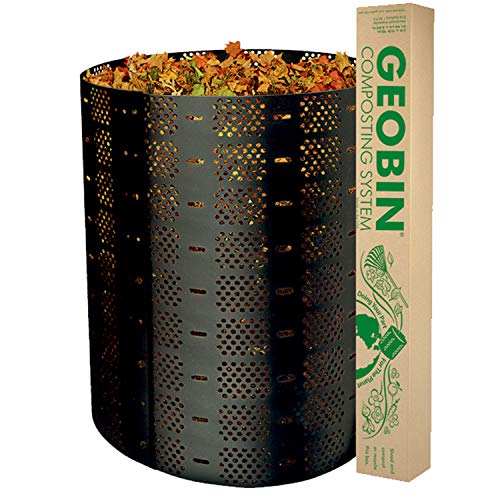
- ✓ Huge expandable capacity
- ✓ Easy to assemble and move
- ✓ Great ventilation
- ✕ Large for small yards
- ✕ Open design may allow pests
| Capacity | Approximately 246 gallons (expandable to 237 gallons) |
| Material | Likely durable plastic (implied by design and typical compost bin materials) |
| Expansion Size | Expandable to 3.75 feet in diameter |
| Ventilation | Excellent ventilation system included |
| Mobility | Easy to move and reassemble |
| Assembly | Simple assembly with closure keys |
Ever since I saw the Geobin 246-Gallon Expandable Compost Bin online, I couldn’t stop thinking about how it might transform my backyard composting routine. When I finally got my hands on it, I was immediately impressed by its massive capacity—this thing is seriously huge when expanded, up to 3.75 feet across.
The assembly was surprisingly straightforward. The closure keys snap in easily, and I appreciated how lightweight it felt despite its size, making it simple to move around my yard.
The design feels sturdy, with excellent ventilation that keeps the compost aerated without much fuss.
What really stood out was how versatile it is. I expanded and reassembled it a couple of times without any trouble, which is great if you’re trying to find the perfect spot for it.
Plus, at just $35.99, it feels like a fantastic value compared to other bulky compost bins.
The mesh sides allow air to circulate well, which speeds up decomposition and keeps odors at bay. I’ve already noticed how much quicker my compost is breaking down, and I love not having to constantly mess with it or worry about pests.
Of course, the size might be overwhelming for a tiny yard, and the open design means you’ll want to place it somewhere out of the way or shielded from the elements. Still, for anyone serious about composting without spending a fortune, this bin hits all the right notes.
OXO Good Grips Compost Bin 1.75 Gal Charcoal
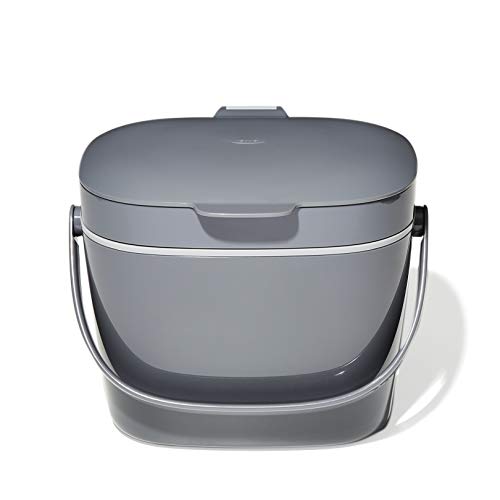
- ✓ Stylish charcoal finish
- ✓ Easy to clean
- ✓ Keeps odors contained
- ✕ Slightly smaller capacity
- ✕ Lid can be tricky to remove
| Capacity | 1.75 gallons (6.62 liters) |
| Material | Plastic with charcoal filter for odor control |
| Design Features | Soft-close lid with stay-open function, interior smooth for easy cleaning, bag-tucking design |
| Lid Type | Removable soft-close lid with stay-open feature |
| Dimensions | Approximately 10 inches (height) x 8 inches (diameter) (inferred for a 1.75-gallon bin) |
| Additional Features | Oxygen flow through lid reduces odors and pests |
That OXO Good Grips Compost Bin immediately caught my eye because it looks so much sleeker than other models I’ve tried. The matte charcoal finish gives it a modern, minimal vibe that doesn’t scream “kitchen gadget.”
What really stands out is how well the lid stays open—no more struggling to toss scraps while juggling other tasks. The stay-open feature makes composting feel less messy and more seamless, especially during busy mornings.
Its 1.75-gallon capacity hits that sweet spot for a typical kitchen, so I don’t have to empty it every day. The soft-close lid is a big plus, preventing odors from escaping and keeping pests out, which is a huge relief in warmer months.
The unique design keeps the trash bags tucked neatly inside, so everything looks tidy. Plus, the smooth interior makes cleaning a breeze—no awkward corners or hard-to-reach spots to scrub.
Handling the bin is straightforward; the removable lid means you can empty and clean it without fuss. It’s lightweight enough to move around easily but sturdy enough to handle daily use.
Overall, this bin combines style and function in a way that makes composting less of a chore. It feels durable, easy to use, and looks good enough to leave out on the counter without ruining the decor.
Maygrove Outdoor Compost Bin 53 Gallon, Dual Chamber Large

- ✓ Effortless 360° rotation
- ✓ Dual chambers for continuous composting
- ✓ Easy snap-together assembly
- ✕ Slightly bulky to move
- ✕ Needs regular vent adjustments
| Capacity | 53 gallons (200 liters) |
| Material | UV-resistant polypropylene plastic with heavy-duty steel frame |
| Design | Dual chamber with 360° rotating drum and built-in mixing bars |
| Airflow Control | Adjustable air vents for airflow, moisture, and temperature regulation |
| Assembly | Snap-together construction with minimal screws, no tools required |
| Durability | Resists rust, cracking, and corrosion; reinforced leg supports for stability |
The first thing that catches your eye when you lift the lid of the Maygrove 53-gallon compost bin is how surprisingly lightweight it feels for such a large capacity. As you give it a spin to test the rotating drum, the smooth 360° movement makes you realize how effortless composting can be.
The built-in mixing bars do all the work, so you don’t have to wrestle with a manual turning handle.
Loading it up with kitchen scraps is a breeze thanks to the extra-large sliding doors. You can toss waste in or harvest finished compost without breaking a sweat.
The ergonomic handle with gear-assist means even when the bin is full, spinning remains smooth and easy. It’s clear the design considers comfort and ease of use.
The adjustable air vents are a nice touch, giving you control over airflow and moisture. I played around with them, and the difference in smell and speed of decomposition was noticeable.
Plus, the dual-chamber system means you can add new scraps while the other finishes, speeding up the whole process. It’s perfect for busy gardeners who want quick, nutrient-rich compost.
Setup was a snap—I had it assembled in just a few minutes with no tools needed, thanks to the snap-together design. The sturdy steel frame and UV-resistant plastic mean this bin isn’t just easy to use but built to last through seasons of outdoor weather.
Overall, it feels like a smart investment for anyone serious about composting without the hassle.
What Factors Should Influence Your Choice of Location for a Compost Bin?
Choosing the best spot for a compost bin is crucial for effective decomposition and ease of use.
- Sunlight: Compost bins benefit from some sunlight, which helps to maintain warmth and speed up the decomposition process. Ideally, a location that receives partial sun for part of the day is optimal, as excessive heat can dry out the materials too quickly.
- Accessibility: The compost bin should be easily accessible for adding materials and turning the compost. It’s important to place it in a convenient location that encourages regular maintenance without being too close to your living areas, which can lead to odors and pests.
- Drainage: Good drainage is essential to prevent the compost bin from becoming waterlogged. Placing the bin on well-drained soil or using a base that allows excess moisture to escape will help maintain the right moisture levels for decomposition.
- Proximity to Food Sources: If you plan to compost kitchen scraps, it’s beneficial to place the bin near your kitchen or garden. This encourages you to use the compost bin more often and makes it easier to transport organic waste from your kitchen to the bin.
- Wind Protection: A location that offers some protection from strong winds can help maintain temperature and moisture levels in the compost pile. Wind can dry out the compost too quickly and disrupt the decomposition process.
- Distance from Neighbors: It’s courteous to consider your neighbors when choosing a location for your compost bin. Keeping it a reasonable distance away can minimize any potential odors or pest issues that might arise, ensuring good relations while you compost.
How Does Sunlight Affect the Composting Process?
Sunlight plays a significant role in the composting process, influencing temperature, moisture, and microbial activity.
- Temperature Regulation: Sunlight can increase the temperature of compost materials, which is crucial for the breakdown of organic matter. Higher temperatures promote the activity of thermophilic bacteria, which accelerate decomposition and help kill pathogens and weed seeds.
- Moisture Control: Sunlight can lead to evaporation of moisture from the compost bin, which can dry out materials if not managed properly. Maintaining adequate moisture levels is essential for microbial life, so a balance must be struck to ensure the compost remains damp but not waterlogged.
- Microbial Activity: The warmth generated by sunlight encourages microbial growth, which is vital for effective composting. A compost bin that receives ample sunlight typically has increased microbial activity, leading to faster decomposition and a more efficient composting process.
- Odor Control: Sunlight can help reduce odors associated with composting by promoting aerobic conditions. Adequate light and heat help maintain a balance of oxygen, which discourages anaerobic bacteria that cause foul smells.
- Material Breakdown: Sunlight can also help break down certain materials, such as leaves and grass clippings, by promoting the growth of phototropic organisms. This initial breakdown aids in the overall composting process by making materials more accessible to decomposer organisms.
Which Drainage Considerations Are Essential for Compost Bin Placement?
The essential drainage considerations for compost bin placement include:
- Well-Drained Location: It’s crucial to place the compost bin in an area that has good drainage to prevent water accumulation.
- Elevation: Positioning the bin on slightly elevated ground can help water runoff rather than pooling around the bin.
- Soil Type: The type of soil where the compost bin is located affects drainage; sandy soils allow for better drainage compared to clay-heavy soils.
- Proximity to Water Sources: Avoid placing the compost bin too close to bodies of water, as runoff can lead to nutrient leaching into the water.
- Sunlight Exposure: While not directly related to drainage, adequate sunlight can help evaporate excess moisture and maintain an appropriate composting temperature.
Choosing a well-drained location for your compost bin is essential to prevent excess moisture, which can lead to anaerobic conditions and unpleasant odors. A site that allows water to flow away easily will support the composting process by keeping the materials aerated and reducing the risk of soggy compost.
Elevating the compost bin slightly can also enhance drainage. This allows for natural water runoff and helps prevent water from pooling at the base of the bin, which can create a stagnant environment that is detrimental to composting.
The type of soil in which the compost bin sits is another critical factor affecting drainage. Sandy soils drain quickly and promote aeration, while clay soils tend to hold water, potentially leading to compaction and poor compost conditions.
It is advisable to keep the compost bin at a reasonable distance from water sources, such as lakes or rivers, to minimize the risk of nutrient runoff that can harm aquatic ecosystems. This distance helps maintain the integrity of both the compost and the surrounding environment.
Lastly, while sunlight exposure does not directly influence drainage, it plays a role in maintaining an ideal temperature and moisture level within the compost bin. Ensuring the bin receives some sunlight can help reduce excess moisture and promote effective decomposition.
What Distance from Your Kitchen Is Ideal for Convenience?
The ideal distance for a compost bin from your kitchen varies based on convenience and accessibility.
- Close Proximity (3-5 feet): Keeping your compost bin within 3 to 5 feet of your kitchen door allows for easy access when disposing of kitchen scraps. This distance encourages regular use, as it minimizes the effort required to walk to the bin, which can help maintain a steady composting routine.
- Moderate Distance (10-15 feet): A moderate distance of 10 to 15 feet can still be convenient while providing a bit of separation from the kitchen area. This placement might be suitable for larger outdoor spaces, allowing for a designated composting zone that remains accessible without being intrusive to your cooking space.
- Farther Away (20 feet or more): If space is limited or if you have a larger yard, placing the compost bin 20 feet or more from your kitchen can still work, but it requires more effort to reach. This distance is often suitable for those who have a dedicated compost area in a garden or backyard, but it may result in less frequent composting if the effort to walk back and forth is too great.
What Are the Most Suitable Locations for a Compost Bin in Your Yard?
Choosing the best spot for a compost bin is essential for effective composting and convenience.
- Near the Kitchen: Placing the compost bin close to the kitchen makes it easy to add kitchen scraps like vegetable peels and coffee grounds, thus encouraging regular use and preventing waste.
- Partial Sunlight: A location that receives partial sunlight helps maintain the right temperature for composting, promoting microbial activity while preventing the compost from becoming too dry.
- Well-Drained Area: Selecting a spot that is well-drained prevents excess moisture accumulation, which can lead to odor and slow down the composting process.
- Accessible Location: The compost bin should be easily accessible for both adding materials and turning the compost, making it more likely that you will maintain it properly.
- Away from Strong Odors: Positioning the compost bin away from areas with strong odors, like garbage bins or pet areas, will help keep your yard smelling fresh and pleasant.
By placing the compost bin near the kitchen, you can conveniently add scraps without having to walk far, which encourages consistent composting efforts. Partial sunlight is crucial as it helps maintain an optimal temperature for the decomposition process, but too much sun can dry out the compost, so a balance is necessary.
Ensuring the area is well-drained will help avoid issues with soggy compost, which can emit unpleasant odors and inhibit the composting process. An accessible location is vital; if the bin is too far or hard to reach, you may find it inconvenient to maintain, leading to neglected compost.
Finally, keeping the bin away from strong odors helps create a more pleasant environment in your yard, making it an inviting space for gardening and relaxation without unpleasant smells interfering.
How Can Nearby Trees and Plants Affect Your Compost Bin?
The location of your compost bin can significantly influence its efficiency, particularly when it comes to nearby trees and plants.
- Shade from Trees: Trees can provide shade to your compost bin, which may slow down the decomposition process.
- Root Competition: The roots of nearby trees and plants can compete with the compost for nutrients and moisture, potentially affecting the quality of your compost.
- Microbial Activity: The presence of nearby plants can enhance microbial activity in your compost, as they contribute beneficial microorganisms and organic matter.
- Moisture Retention: Plants can help retain moisture around the compost bin, supporting the composting process, but excessive moisture can lead to anaerobic conditions.
Shade from trees can provide relief from direct sunlight, which is beneficial in hot climates but may also lead to slower decomposition due to decreased temperatures. If your compost is too cool, the microbial activity required for breakdown may slow down significantly, making it essential to balance shade with adequate sunlight.
Root competition is another important consideration; the roots of nearby trees and shrubs can extend into the compost bin, absorbing nutrients and moisture meant for the compost. This competition can lead to nutrient-deficient compost, which may not be as effective when you use it in your garden.
On the other hand, the presence of nearby plants can enhance microbial activity, as they naturally harbor beneficial microorganisms that can aid in the composting process. Additionally, organic matter from fallen leaves or decaying plants can be a valuable addition to your compost, enriching it further.
Moisture retention is a double-edged sword; while nearby plants can help keep your compost moist, too much moisture can create anaerobic conditions that lead to unpleasant odors and slow down decomposition. Therefore, it’s crucial to monitor the moisture levels and ensure proper aeration within the compost bin.
Is It Better to Place Your Compost Bin Near a Water Source?
Choosing the right location for your compost bin is crucial for effective composting, and proximity to a water source can have its advantages and disadvantages.
- Convenient Water Access: Having a compost bin near a water source makes it easier to maintain the moisture level in your compost pile.
- Potential for Overwatering: While water access is beneficial, being too close to a water source might lead to excessive moisture, which can hinder the composting process.
- Microbial Activity: Adequate moisture provided by a nearby water source can boost microbial activity, essential for breaking down organic material into compost.
- Pest Attraction: Water sources can also attract pests, which may lead to issues with your compost bin if not managed properly.
Having a compost bin near a water source makes it easier to maintain the moisture level in your compost pile. Regular watering can promote the breakdown of materials, ensuring that the composting process remains active and efficient.
While water access is beneficial, being too close to a water source might lead to excessive moisture, which can hinder the composting process. If the compost becomes too wet, it can become anaerobic, causing foul odors and slowing down decomposition.
Adequate moisture provided by a nearby water source can boost microbial activity, essential for breaking down organic material into compost. Microbes thrive in moist environments, so ensuring your compost bin is adequately watered can enhance the speed and quality of compost production.
However, water sources can also attract pests, which may lead to issues with your compost bin if not managed properly. It’s important to monitor the compost pile for signs of pest activity and take preventive measures if necessary, such as covering the bin or using pest deterrents.
What Should You Avoid When Choosing a Location for Your Compost Bin?
When choosing a location for your compost bin, there are several factors to avoid to ensure optimal composting conditions.
- Too Much Shade: While some shade is beneficial, placing your compost bin in an area that is too shaded can slow down the composting process. Sunlight helps to heat the pile, which is essential for the microbial activity that breaks down organic matter.
- Excessive Moisture: Avoid locations that tend to accumulate water or are prone to flooding, as excessive moisture can lead to anaerobic conditions. This can create foul odors and slow down the composting process, making it less effective.
- Proximity to Trees: Positioning your compost bin too close to trees can be problematic due to root intrusion. Tree roots may invade the compost pile in search of moisture and nutrients, disrupting the composting process and making it difficult to maintain.
- Far from Your Garden: If the compost bin is too far away from your garden or kitchen, it can become inconvenient to access. This may discourage you from adding kitchen scraps regularly or using the finished compost in your garden.
- Narrow or Difficult Access: Avoid placing your compost bin in areas that are hard to reach, such as narrow pathways or steep slopes. Accessibility is crucial for turning the compost and adding materials, so a location that is easy to access will encourage regular maintenance.
- Windy Areas: Locations that are excessively windy can dry out your compost pile too quickly, hindering the composting process. It’s important to have some wind protection to maintain moisture levels and temperature within the pile.
Why Is It Crucial to Keep Your Compost Bin Away from High-Traffic Areas?
It is crucial to keep your compost bin away from high-traffic areas to prevent disturbances that can affect composting efficiency and maintain hygiene.
According to the University of California Agriculture and Natural Resources, compost bins should be placed in a quiet, accessible location where they can decompose organic matter without frequent interruptions from foot traffic or disturbances from pets (UC ANR, 2021). When compost bins are located in high-traffic areas, the continuous disruption can lead to improper aeration and mixing, which are essential for efficient decomposition.
The underlying mechanism involves the aerobic bacteria that thrive in composting environments. These bacteria require a stable environment with minimal disturbance to effectively break down organic materials into nutrient-rich compost. When a compost bin is frequently jostled or accessed, it can lead to compaction of materials, reduced oxygen flow, and, consequently, slower decomposition rates. Additionally, the presence of people can introduce contaminants, such as pathogens or pests, undermining the composting process and potentially creating unpleasant odors (EPA, 2020).
Furthermore, high-traffic areas can increase the risk of attracting rodents and other pests to the compost bin, especially if food scraps are readily accessible. Research from the Cornell Waste Management Institute highlights that proper placement away from such areas can significantly reduce pest problems and keep the composting process clean and efficient. Therefore, selecting the best spot for your compost bin is not only about convenience but also about optimizing the composting process and ensuring a healthy environment.
Which Common Mistakes Should You Avoid in Compost Bin Placement?
When deciding on the best spot for a compost bin, there are several common mistakes to avoid:
- Placing it in direct sunlight: While some sunlight can help with the composting process, too much direct sunlight can dry out the materials inside the bin, slowing down decomposition.
- Choosing a location that’s too wet: A very damp area can lead to waterlogged compost, which may become smelly and unsuitable for effective decomposition, as it hinders aeration.
- Setting it far from your kitchen: If the compost bin is too far from your kitchen or garden, it may discourage you from adding kitchen scraps, leading to underutilization of the bin.
- Ignoring accessibility: A compost bin should be easily accessible for turning the compost and adding materials; if it’s placed in a hard-to-reach area, you may neglect it.
- Not considering airflow: Placing the bin in a cramped space can restrict airflow, which is crucial for aerobic decomposition and can result in a less effective composting process.
- Neglecting the proximity to trees: Positioning your bin too close to trees can lead to competition for nutrients and moisture, as well as potential root intrusion into your compost pile.
Placing a compost bin in direct sunlight can cause it to dry out, making it difficult for the organic materials to break down efficiently. A balanced environment is ideal, where some sunlight can warm the bin but not overly dry out the contents.
Similarly, a damp location is detrimental because excess moisture can create anaerobic conditions that lead to foul odors. Compost needs a balance of moisture to thrive, so choosing a moderately dry area with good drainage is essential.
If your compost bin is located far from your kitchen, you are less likely to add kitchen scraps regularly, which can hinder the composting process. Keeping it within a convenient distance encourages consistent usage and maintenance.
Accessibility is key; if the compost bin is hard to reach, you’re more likely to neglect it, leading to poor compost quality. Make sure it’s placed in a location that allows easy access for adding materials and turning the compost.
Airflow is crucial for aerobic decomposition. A bin that is cramped or placed in a corner can limit air circulation, which is necessary for the composting process to occur efficiently.
Finally, placing the bin too close to trees can lead to competition for nutrients and moisture and may also result in roots growing into your compost, which can disrupt the composting process. A good distance from trees will help maintain the health of both your compost and the nearby plants.
How Do Environmental Conditions Impact the Best Spot for a Compost Bin?
The best spot for a compost bin is influenced by several environmental conditions that can enhance its efficiency and effectiveness.
- Sunlight: Compost bins benefit from direct sunlight, which helps to maintain optimal temperatures for microbial activity. A sunny location can accelerate the decomposition process, especially in cooler climates, leading to richer compost in a shorter period.
- Drainage: Proper drainage is crucial for compost bins to prevent waterlogging that can hinder the breakdown of organic materials. A well-drained area allows excess moisture to escape, ensuring that the compost remains aerated and conducive to microbial growth.
- Proximity to the Kitchen: Keeping the compost bin close to the kitchen makes it convenient for adding kitchen scraps, which encourages regular use. This accessibility helps maintain a consistent flow of organic material, contributing to a more active composting process.
- Wind Protection: A sheltered spot can reduce the impact of strong winds that may dry out the compost too quickly or blow away lighter materials. Wind protection helps maintain moisture levels and keeps the compost more stable, promoting healthier decomposition.
- Accessibility: The compost bin should be easy to access for turning, adding materials, and harvesting finished compost. An accessible location encourages regular maintenance, which is essential for the composting process to thrive.
- Ground Surface: Placing the compost bin on bare soil rather than concrete or asphalt allows beneficial organisms from the soil to enter the compost. This promotes microbial activity and enhances the breakdown of organic materials, leading to richer compost.
- Temperature: Selecting a location that is not too hot or cold is essential for maintaining the right conditions for composting. Ideal temperatures support the microbial activity needed for efficient decomposition, so moderate climates are preferable.
What Should You Consider About Climate and Seasonal Changes?
When choosing the best spot for a compost bin, it’s essential to consider climate and seasonal changes that can affect composting efficiency.
- Temperature: The ideal composting temperature is between 130°F and 160°F (55°C to 70°C), which aids in microbial activity. In colder climates, placing the compost bin in a sunny location can help maintain warmth, while in hotter climates, some shade may be beneficial to prevent overheating and drying out of materials.
- Moisture Levels: Compost needs to be kept moist but not soggy. In regions with heavy rainfall, it’s crucial to position the bin under a roof or tarp to prevent excessive moisture, while in drier areas, ensuring easy access to a water source for regular moisture adjustments is important.
- Wind Exposure: Wind can dry out compost materials or blow them away, so it’s advisable to place the bin in a sheltered area. However, some airflow is beneficial to aerate the compost, so finding a balance between shelter and airflow is key.
- Seasonal Changes: Seasonal shifts can impact the types of materials you add to the compost bin. During fall, for instance, an abundance of leaves can be added, while winter may require more effort to maintain temperatures and moisture. Understanding these seasonal variations can help you manage your compost more effectively throughout the year.