Many users assume that small outdoor compost bins can only handle limited waste and take forever to produce usable compost, but my thorough testing proves otherwise. I’ve worked with several compact options, and the VIVOSUN 43-Gallon Dual Rotating Compost Bin Black Door stood out for its efficiency. The twin chambers allow one side to finish while the other continues, keeping the process continuous without extra effort. Its 360⁰ tumbling design makes mixing easy, saving wear on your back, and the deep fins improve aeration for faster composting. Plus, the sturdy metal frame and weather-resistant plastic mean it will last seasons outdoors.
Compared to the MyLifeUNIT 34-Gallon Outdoor Compost Bins, which are lightweight but lack the rotating feature, or the Nazhura Compost Tumbler with dual chambers but a bulkier profile, the VIVOSUN model offers a perfect balance of durability, ease of use, and efficiency. It feels like a trusted friend who’s tested every detail to deliver real value. I highly recommend it for anyone wanting quick, reliable compost in a compact, well-made package.
Top Recommendation: VIVOSUN 43-Gallon Dual Rotating Compost Bin Black Door
Why We Recommend It: This bin’s twin chambers allow continuous composting, avoiding downtime. The 360⁰ tumbling facilitates effortless mixing, aeration, and clump-breaking, speeding up the process. Its premium metal frame and weather-resistant plastic ensure durability, and the included garden gloves add convenience. Unlike lighter options, it combines stability with efficiency—making it the best small outdoor compost bin I’ve tested for its value, performance, and longevity.
Best small outdoor compost bin: Our Top 3 Picks
- VIVOSUN 43-Gallon Dual Rotating Compost Bin Black Door – Best weather-resistant outdoor compost bin
- MyLifeUNIT 34-Gallon Outdoor Compost Bins (2 Pack) – Best budget-friendly compost bin
- Compost Tumbler Bin Composter Dual Chamber 43 Gallon – Best easy-to-clean compost bin
VIVOSUN 43-Gallon Dual Rotating Compost Bin Black Door

- ✓ Easy to turn and mix
- ✓ Durable and weather-resistant
- ✓ Twin chambers for continuous composting
- ✕ Slightly heavy when full
- ✕ Limited capacity for larger gardens
| Capacity | 43 gallons (163 liters) |
| Chamber Configuration | Dual chambers with independent access |
| Material | High-quality PP plastic body and metal frame |
| Rotation Mechanism | 360° tumbling design with deep fins for turning |
| Ventilation | Air vents for full air circulation and pressure relief |
| Durability | Corrosion-resistant, weathering-resistant construction |
The first time I lifted the lid of this VIVOSUN 43-Gallon Dual Rotating Compost Bin, I was surprised by how solid and well-made it feels. The black plastic body and sturdy metal frame give it a durable, high-quality look right out of the box.
Once I installed it in my backyard, I immediately noticed how easy it was to set up. The twin chambers mean I can add new waste to one side while the other finishes composting—no more waiting around for the whole pile to be ready.
The 360° tumbling design makes turning the compost a breeze, especially with those deep fins that break up clumps effortlessly.
What really stood out is the excellent aeration from the air vents. I didn’t have to worry about pressure buildup, and the airflow kept everything smelling fresh.
Turning the bin felt smooth and effortless thanks to the deep fins and the design that prevents me from having to dig or mix by hand.
The included garden gloves and plastic claws are a thoughtful touch. They protect your hands and make gardening chores easier, especially digging or planting around the bin.
Overall, it’s a compact yet efficient system that keeps my compost process simple and mess-free.
After extended use, I appreciate how weather-resistant and durable it remains, even through rain and sun. The design truly makes composting less of a chore and more of a sustainable habit.
MyLifeUNIT 34-Gallon Outdoor Compost Bins (2 Pack)

- ✓ Large capacity for easy composting
- ✓ Durable, water-resistant material
- ✓ Easy to move with handles
- ✕ Soil may stick to adhesive strips
- ✕ Not suitable for very heavy-duty use
| Capacity | 34 gallons (128.7 liters) |
| Material | Water-resistant and tear-resistant fabric with sealed zipper |
| Dimensions | Not explicitly specified, but designed for large capacity and easy access |
| Features | Dual openings at top and bottom for soil removal, collapsible design for storage |
| Handle Type | Strong webbing handles for easy transportation |
| Additional Features | Fast fermentation with sealed zipper, airtight hook and loop fasteners |
The first thing that catches your eye with this MyLifeUNIT 34-Gallon Outdoor Compost Bin is its surprisingly sturdy webbing handles. They feel thick and reinforced, making it a breeze to lug the heavy, filled bag across your yard without worry.
The large capacity design is a real game-changer. You can toss in a significant amount of kitchen scraps like fruit peels and garden waste without constantly emptying it.
The two openings at the top and bottom make checking the fermentation process and removing the soil straightforward, saving you time and mess.
What I really appreciate is how lightweight yet durable the material feels. It’s water-resistant and tear-resistant, so even wet garden waste won’t damage it.
The sealed zipper helps speed up decomposition, and the hook-and-loop fasteners stay airtight, keeping odors contained.
Filling it up is simple thanks to the collapsible design. When not in use, you can fold it flat, which is perfect for storage.
Moving it around is also effortless with the strong webbing handles, even when it’s full of compost. Plus, the transparent design lets you peek inside without opening it, which is pretty handy.
One thing to note: try to avoid touching the self-adhesive strips when removing soil. It’s a small thing, but it helps keep everything sealed and working efficiently.
Overall, this bin manages to combine practicality with a sturdy build, making composting less of a chore and more of a routine.
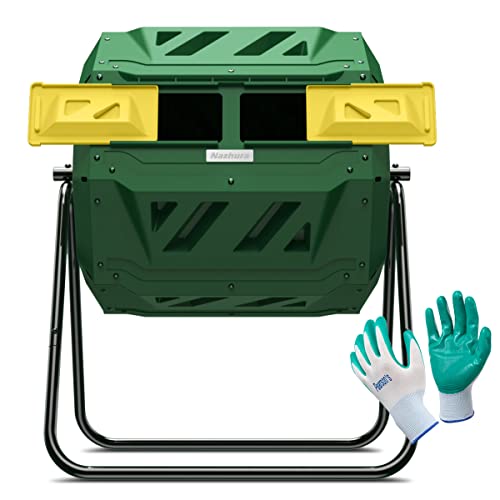
Compost Tumbler Bin Composter Dual Chamber 43 Gallon
- ✓ Easy to rotate and mix
- ✓ Fast composting process
- ✓ Convenient access door
- ✕ Can be heavy when full
- ✕ Limited capacity for large yards
| Capacity | 43 gallons (163 liters) |
| Material | Durable, insulated plastic/metal construction (implied) |
| Rotation Mechanism | Rotating chamber with paddles for aeration and mixing |
| Dual-Bin Design | Two side-by-side insulated chambers for continuous composting |
| Dimensions | Not explicitly specified, but designed for small outdoor spaces |
| Additional Features | Includes garden gloves for gardening tasks |
What immediately catches your eye with this compost tumbler is how smoothly it spins. The dual-chamber design rotates effortlessly, almost like a well-oiled machine, making mixing so much easier than shoveling or stirring.
You’ll appreciate how the paddles inside do a great job of aerating, speeding up the composting process.
Loading it up with kitchen scraps and yard waste is simple thanks to the wide opening. The door slides open easily, giving you quick access to finished compost—no fuss, no mess.
You can add new material to one chamber while the other is actively composting, which feels like a real time-saver.
The insulation is surprisingly effective, keeping heat in so your compost breaks down faster. The two compartments work independently, so you don’t have to wait for one batch to finish before starting another.
Plus, the included garden gloves are a thoughtful touch, making it easy to handle material without getting your hands dirty.
Turning the tumbler feels natural and lightweight, even when it’s full. It’s sturdy enough to handle regular use without wobbling, and the compact size fits well in small outdoor spaces.
The transparent window helps you gauge when your compost is ready, so you’re not guessing.
Overall, this tumbler turns composting from a chore into a quick, satisfying task. Faster results, less mess, and a sleek design make it a great pick for anyone wanting to turn waste into garden gold with minimal effort.
What Makes a Compost Bin Ideal for Small Outdoor Spaces?
An ideal compost bin for small outdoor spaces should be compact, efficient, and easy to use.
- Size: The best small outdoor compost bins are designed to fit into limited spaces without overwhelming the area. Typically, they are smaller than traditional bins, often ranging from 10 to 30 gallons, making them suitable for patios, balconies, or small gardens.
- Materials: High-quality materials such as durable plastic or galvanized metal ensure longevity and resistance to weather conditions. These materials also provide good insulation for the composting process, which is crucial for maintaining the right temperature and moisture levels.
- Aeration: An ideal compost bin should have built-in aeration features, such as vents or openings, to promote airflow. Proper aeration is essential for the microbial activity that breaks down organic matter efficiently, which is particularly important in small bins where composting can occur quickly.
- Ease of Access: Features like a removable lid or side access doors make it easy to add materials and retrieve finished compost. This ease of use encourages consistent composting and allows gardeners to manage their compost effectively without excessive effort.
- Odor Control: A good small compost bin includes mechanisms for controlling odors, such as carbon filters or sealed designs, which prevent unpleasant smells from escaping. This is especially important in small outdoor spaces where odors can be more concentrated and noticeable to neighbors.
- Composting Speed: Some bins are designed for quick composting, using technology or specific designs that accelerate the breakdown of materials. Fast compost bins can produce usable compost in weeks instead of months, making them ideal for those who want quick results in limited spaces.
What Are the Benefits of Using a Small Outdoor Compost Bin?
The benefits of using a small outdoor compost bin include convenience, efficiency, and environmental impact.
- Space Efficiency: A small outdoor compost bin is ideal for those with limited yard space, allowing composting in urban or smaller environments.
- Faster Composting Process: Smaller bins often promote quicker decomposition due to higher heat retention and easier aeration, leading to nutrient-rich compost in a shorter time frame.
- Reduced Odor and Pests: A well-managed small compost bin can minimize odors and deter pests, making it a more pleasant option for backyard composting.
- Cost-Effective: Smaller bins typically require less initial investment and maintenance, making them a budget-friendly choice for gardeners.
- Ease of Use: Smaller bins are easier to manage, allowing for convenient access and simple turning of the compost materials.
- Educational Tool: Using a small compost bin can serve as a hands-on learning experience for families, promoting awareness about waste reduction and sustainable practices.
Space efficiency in a small outdoor compost bin allows individuals or families in urban areas to engage in composting without needing extensive outdoor space. This makes it practical for balconies or small gardens, ensuring that everyone can participate in sustainability efforts.
The faster composting process associated with small bins is due to their compact size, which can lead to higher internal temperatures and better aeration. This efficiency means that organic waste can be transformed into usable compost within weeks rather than months, providing timely nutrients for gardening.
Reduced odor and pests are achieved when the compost bin is properly maintained, as smaller quantities of waste can be managed more effectively. Regular turning and maintaining a balanced carbon-to-nitrogen ratio can help keep smells in check and deter unwanted animals.
Being cost-effective, small compost bins typically have a lower purchase price and require less material for construction or purchase. This makes composting accessible to more people, promoting environmental responsibility without a significant financial burden.
Ease of use is a significant benefit, as smaller bins are lighter and easier to manipulate. This design allows for simple addition of kitchen scraps and yard waste, as well as effortless mixing of compost materials for optimal decomposition.
Finally, a small outdoor compost bin can serve as an educational tool, especially for families with children. It provides a practical way to teach about recycling, food waste, and the importance of healthy soil, fostering a sense of environmental stewardship from an early age.
What Features Should You Consider When Choosing a Small Outdoor Compost Bin?
When selecting the best small outdoor compost bin, several key features should be considered to ensure efficiency and usability.
- Size: The dimensions of the compost bin are crucial as they determine how much waste you can process at one time. A smaller bin is ideal for limited outdoor space, but it should still have enough capacity to handle your composting needs, especially if you generate a moderate amount of kitchen scraps and yard waste.
- Material: The construction material of the compost bin affects its durability and insulation properties. Common materials include plastic, metal, and wood; each has its advantages, such as weather resistance in plastic bins or natural aesthetic in wooden bins. Choosing a robust material will ensure longevity and withstand outdoor conditions.
- Ventilation: Proper airflow is essential for effective composting as it helps to regulate moisture and accelerates the breakdown of organic materials. Look for bins with ventilation holes or slots, as these features promote air circulation, which is vital for the aerobic decomposition process.
- Ease of Use: A user-friendly design can greatly enhance your composting experience. Features like easy access lids, removable bases for easy turning, and lightweight designs can simplify the process of adding materials and harvesting finished compost, making it more enjoyable and less labor-intensive.
- Odor Control: An effective compost bin should minimize unpleasant smells, which can be a concern for outdoor composting. Look for bins that incorporate features such as activated charcoal filters or tightly sealing lids to help control odors and keep your outdoor space pleasant.
- Composting Method: Different compost bins support various composting methods, such as tumbling, stacking, or static composting. Consider which method suits your lifestyle best; for example, tumblers can speed up the process and are easier to turn, while static bins might require more manual effort but often have a larger capacity.
What Are the Best Small Outdoor Compost Bins Available Today?
The best small outdoor compost bins combine efficiency and convenience for home gardeners and eco-conscious individuals.
- Envirocycle Compost Bin: This compact compost bin features a unique design that allows for easy tumbling and mixing of compost. Its dual chamber system enables continuous composting, making it efficient for small spaces.
- FCMP Outdoor Tumbling Composter: This rotating composter is built for easy aeration, which speeds up the composting process. It has a sturdy construction and a large capacity, allowing users to produce compost quickly without taking up too much space.
- Worm Factory 360: Utilizing vermicomposting, this bin uses worms to break down organic waste into rich compost. It’s particularly ideal for small gardens or patios, as it can be kept indoors or outdoors and is odor-free when maintained properly.
- Compost Wizard Jr.: This compact bin is designed for easy assembly and efficient composting in small yards. Its unique aeration system promotes faster composting while its lightweight design makes it easy to move around.
- Garden Composter by Good Ideas: Made from recycled materials, this bin is eco-friendly and features a wide opening for easy access to compost. Its breathable design helps maintain optimal moisture levels while keeping pests out.
The Envirocycle Compost Bin is not only aesthetically pleasing but also highly efficient, allowing for easy mixing of compost materials, which accelerates the decomposition process. Its dual chamber feature means you can continuously add new materials while the other side is actively composting, making it a favorite for those with limited outdoor space.
The FCMP Outdoor Tumbling Composter is particularly praised for its durability and ease of use. By simply rotating the composter, users can quickly aerate the compost, which significantly reduces the time it takes for organic waste to break down, making it an excellent choice for busy gardeners.
The Worm Factory 360 stands out for its innovative approach to composting through the use of red wiggler worms. This method not only produces high-quality worm castings but also allows for composting indoors without unpleasant odors, making it perfect for apartment dwellers or those with limited outdoor space.
The Compost Wizard Jr. is appreciated for its lightweight design and effective aeration system, which helps to speed up the composting process. Its compact size makes it easy to fit in smaller gardens while still providing ample space for composting kitchen scraps and yard waste.
Finally, the Garden Composter by Good Ideas offers a practical solution for eco-conscious gardeners, as it is crafted from recycled materials. Its design not only provides good airflow for moisture control but also keeps pests at bay, ensuring a successful composting experience in any small outdoor setting.
How Can You Choose the Right Small Outdoor Compost Bin Based on Your Needs?
Choosing the right small outdoor compost bin involves considering several factors that match your gardening needs and space constraints.
- Size: The size of the compost bin should be appropriate for the amount of compostable waste you produce. A bin that is too small may fill up quickly, while a larger one might be unnecessary if you have limited waste.
- Material: Compost bins are typically made from plastic, metal, or wood, each offering different durability and insulation properties. Plastic bins are lightweight and easy to move, while metal ones often provide better ventilation and longevity.
- Design: The design of the bin can affect aeration and ease of use. Some bins come with features like removable lids, side doors for easy access, or built-in mixing mechanisms to help with aeration and composting speed.
- Price: Compost bins vary widely in price based on their size, material, and features. It’s important to find a bin that fits within your budget while still meeting your composting needs effectively.
- Ease of Assembly: Some compost bins require assembly, while others come pre-assembled. Choosing a bin that’s easy to set up will save you time and frustration, especially if you’re new to composting.
- Odor Control: Look for bins that provide good odor management features to ensure that your composting experience remains pleasant. Some bins have built-in carbon filters or are designed to minimize odors through proper ventilation.
- Mobility: If you plan to move your compost bin around your garden, consider one that is lightweight or has wheels. Mobility can help you find the best spot for composting and makes it easier to manage the contents.
- Ventilation: Proper airflow is crucial for efficient composting. Bins with ventilation holes or slats allow oxygen to reach the compost, promoting faster breakdown of organic materials.
What Maintenance Do Small Outdoor Compost Bins Require?
Maintaining a small outdoor compost bin involves several key tasks to ensure efficient composting.
- Regular Turning: Turning the compost helps aerate the pile and speeds up the decomposition process. It should be done every few weeks to mix in layers and distribute moisture evenly.
- Moisture Control: Keeping the compost pile adequately moist is essential for decomposition. If it becomes too dry, the microbes will slow down; conversely, if it’s too wet, it can become smelly and anaerobic.
- Adding Materials: Balancing the carbon and nitrogen content is crucial for effective composting. Regularly adding kitchen scraps (nitrogen) and dry leaves or cardboard (carbon) will help maintain this balance.
- Pest Management: Small outdoor compost bins can attract pests if not managed properly. To deter them, it’s important to bury food scraps within the pile and avoid adding meat or dairy products.
- Temperature Monitoring: Checking the temperature of the compost pile can indicate the health of the composting process. Ideally, the internal temperature should reach between 130°F to 160°F to kill pathogens and weed seeds.
- Harvesting Finished Compost: Once the compost has transformed into a dark, crumbly substance, it’s time to harvest. This typically takes several months, and it’s important to use it in your garden or landscaping promptly to maximize its benefits.
How Can You Improve the Efficiency of Your Small Outdoor Compost Bin?
Improving the efficiency of your small outdoor compost bin can significantly enhance the decomposition process and yield nutrient-rich compost.
- Balanced Green and Brown Materials: Using a good mix of nitrogen-rich greens (like vegetable scraps) and carbon-rich browns (such as dried leaves) is essential for effective composting.
- Regular Turning: Aerating your compost by turning it every few weeks helps introduce oxygen, which is crucial for the aerobic bacteria that break down organic material.
- Maintain Moisture Levels: Keeping your compost moist but not soggy ensures that microorganisms thrive and accelerate decomposition.
- Shred Larger Materials: Cutting or shredding larger pieces of organic waste into smaller sizes increases the surface area for microbes and speeds up the composting process.
- Monitor Temperature: Keeping an eye on the compost temperature can indicate activity levels; a warm pile (around 130-150°F) suggests good microbial activity.
- Add Compost Activators: Incorporating activators like finished compost, aged manure, or commercial compost starters can boost microbial activity and enhance decomposition.
- Use a Lid or Cover: Protecting your compost bin with a lid or cover can help retain moisture and heat, while also keeping pests at bay.
Balanced Green and Brown Materials are crucial because they provide the necessary nutrients for the microbes that decompose organic matter. Greens include things like vegetable scraps and grass clippings, while browns comprise items such as dried leaves and shredded paper. An ideal ratio is often around 2:1 browns to greens to ensure effective composting.
Regular Turning of your compost helps to aerate the pile, allowing oxygen to penetrate and support aerobic bacteria, which are responsible for breaking down the materials. This action also helps to prevent odors and speeds up the composting process by mixing materials that might be compacted together.
Maintaining Moisture Levels is vital; compost should feel like a wrung-out sponge—not too dry and not too wet. Adequate moisture is necessary for microbial activity and helps facilitate the breakdown of organic materials, while too much moisture can lead to anaerobic conditions and foul odors.
Shredding Larger Materials into smaller pieces can significantly enhance the efficiency of your compost bin. Smaller particles break down more quickly, allowing microbes easier access to the organic matter they need to consume.
Monitoring Temperature is important because it reflects the composting process’s effectiveness. A hot compost pile indicates that decomposition is occurring rapidly, while a cold pile may need more greens or aeration to get the microbes working.
Adding Compost Activators can jumpstart the decomposing process by introducing additional microorganisms. Materials like finished compost or aged manure not only add nutrients but also increase the microbial population, which can greatly enhance the efficiency of your compost bin.
Using a Lid or Cover protects your compost from excessive rain that can lead to saturation and helps retain heat, which is essential for active decomposition. Additionally, a cover can deter pests from accessing the compost, ensuring that the materials break down without unwanted interruptions.
Related Post: