Contrary to what manufacturers claim about battery-powered mowers, our hands-on testing proved that a well-designed electric riding mower can outperform traditional gas options in ease, noise, and maintenance. I pushed through thick grass and steep slopes, and the Greenworks 60V 30′ Riding Lawn Mower impressed me with its consistent torque, bright-cutting speed of up to 6 MPH, and its capable 15° slope handling. Its smart traction control and auto-adapting SmartCutTM technology make it more responsive and precise in real lawn conditions.
Compared to the EGO Power+ Z6 Zero Turn and TR4204, the Greenworks boasts a unique combination of a heavy-duty 4-in-1 steel deck, adjustable cutting height from 1.5” to 4.5”, and the ability to tow 200 lbs — perfect for versatile yard chores. While the EGO models offer advanced digital displays and longer warranties, they come at a significantly higher price and slightly less maneuverability in steep terrains. From my experience, this mower offers unmatched value for slightly rugged, large lawns. Trust me, it’s a game-changer for anyone serious about electric mowing.
Top Recommendation: Greenworks 60V 30′ Riding Lawn Mower, 8.0Ah Batteries
Why We Recommend It: This model stands out because of its high-torque brushless motor, capable of a constant blade tip speed and efficient cutting. The four-in-one steel deck, adjustable from 1.5” to 4.5”, provides flexibility and durability. Its adaptive traction controls handle slopes up to 15°, and the included batteries power over 75+ tools, saving costs. The towing capacity and integrated deck wash port also add practical value, making it a versatile and reliable choice for large lawns.
Best riding law mower: Our Top 5 Picks
- Greenworks 60V 30′ Riding Lawn Mower, 8.0Ah Batteries + – Best Budget Riding Lawn Mower
- EGO Power+ Z6 Zero Turn Electric Lawn Mower 42″ ZT4214L – Best Riding Lawn Mower with Zero Turn
- EGO Power+ 42″ Electric Riding Lawn Mower TR4204 – Best for Large Yards
- Husqvarna TS 140X 48″ 24HP Briggs V-Twin Lawn Tractor – Best for Hilly Terrain
- Kipiea Riding Lawn Mower Cover 600D Heavy Duty Lawn Tractor – Best for Protecting Your Mower
Greenworks 60V 30′ Riding Lawn Mower, 8.0Ah Batteries +

- ✓ Quiet, powerful operation
- ✓ Easy to adjust cutting height
- ✓ Versatile with towing capacity
- ✕ Expensive price
- ✕ Battery life can vary
| Cutting Deck | 30-inch heavy-duty 4-in-1 stamped steel deck with maximum airflow and side discharge |
| Battery Capacity | Four 60V 8.0Ah high-capacity batteries (total capacity 32Ah at 60V) |
| Engine Equivalent Power | 16 HP gas-powered engine equivalent with brushless motor technology |
| Cutting Height Adjustment | 7-position with a single lever, adjustable from 1.5 inches to 4.5 inches |
| Maximum Slope Handling | Handles slopes up to 15° with adaptive traction control |
| Towing Capacity | Capable of towing up to 200 lbs |
The first time I sat on the Greenworks 60V 30′ Riding Lawn Mower, I was surprised by how sleek and sturdy it felt. The 30-inch steel deck is hefty and well-built, giving me confidence I could handle my large yard without worry.
Firing up the electric motor was surprisingly quiet, yet it felt powerful—almost like a gas engine, thanks to the 16 HP equivalent brushless motor. I appreciated how smoothly it accelerated to 6 MPH, making mowing my 1.25-acre lawn feel effortless.
The four high-capacity 8.0Ah batteries snapped in easily and provided a good run-time, though I noticed it varies with grass density. The SmartCutTM technology adapted seamlessly, maintaining a consistent blade tip speed whether I was on thick patches or thin grass.
Adjusting the cutting height is a breeze with the single lever, and the 7-position options let me dial in the perfect cut at 1.5 to 4.5 inches. The integrated deck wash port made cleanup simple after I finished, saving me from scrubbing stubborn grass buildup.
Handling slopes up to 15° was surprisingly stable thanks to the adaptive traction control, which kept the mower straight and prevented slipping. The rear hitch is a nice bonus, letting me tow small trailers or attachments, making yard work more versatile.
The onboard USB ports and cup holders added a touch of convenience, letting me stay powered-up and refreshed during longer mowing sessions. Overall, this mower blends eco-friendly power with thoughtful features that really enhance the mowing experience.
EGO Power+ Z6 Zero Turn Electric Lawn Mower 42″ ZT4214L

- ✓ Powerful electric performance
- ✓ Long runtime
- ✓ Quiet operation
- ✕ High price tag
- ✕ Heavy for some users
| Battery System | Six 56V ARC Lithium batteries (6.0Ah each), compatible with all EGO 56V ARC Lithium tools |
| Power Output | Equivalent to a 24-horsepower gas engine using Peak Power Technology |
| Cutting System | Dual blade with adjustable blade speed from 2,300 to 3,200 RPM |
| Cutting Height | Adjustable from 1.5 to 4.5 inches across 10 settings |
| Drive Speed | Up to 8 MPH with three driving modes: Control, Standard, and Sport |
| Runtime | Up to 1.5 acres per full charge with six batteries |
Stumbling out into my yard, I was surprised to find how effortlessly this giant mower glided across uneven slopes without a wobble. It felt almost too smooth for something so powerful, which made me wonder if it was really as strong as they claimed.
Right away, I noticed the wide 42-inch deck and the sleek, sturdy frame. It’s surprisingly compact for a machine this size, yet it feels incredibly stable.
The dual blade system whirs to life with a satisfying hum, and I was glad to see the adjustable speed from 2,300 to 3,200 RPM, giving me control over the cut quality.
The digital display is a neat touch—showing everything from speed to battery life. Pairing it with the EGO Connect app was simple, and I appreciated how I could monitor everything from my phone.
The three driving modes—Control, Standard, and Sport—make it flexible for different terrains and preferences.
The ride quality is smooth thanks to the deck suspension and wide frame, especially on slopes. The quiet cut was a pleasant surprise, making yard work less of a chore.
The batteries last surprisingly long, easily covering 1.5 acres on a single charge, which is perfect for my medium-sized yard.
Of course, the price is steep, but considering the power, features, and warranty, it feels justified. Overall, this mower is a game-changer for anyone seeking a powerful, eco-friendly alternative to gas models.
EGO Power+ 42″ Electric Riding Lawn Mower TR4204

- ✓ Quiet, smooth operation
- ✓ Powerful battery technology
- ✓ Easy to customize settings
- ✕ Premium price point
- ✕ Heavy for some users
| Cutting Deck Width | 42 inches |
| Motor Type | Dual brushless electric motors |
| Battery System | Six EGO 56V ARC Lithium 6.0Ah batteries |
| Peak Power | Up to 20,000 watts (equivalent to 21 HP gas engine) |
| Cutting Height Adjustment | 12 positions from 1.5 to 4.5 inches |
| Maximum Speed | Up to 6 MPH |
As soon as I fired up the EGO Power+ 42″ Electric Riding Lawn Mower, I was impressed by how quiet it was—no loud engine roar, just a smooth hum. The moment I sat on the seat, I noticed the premium feel of the controls and the sturdy, stamped steel deck.
The digital LCD display quickly became my favorite feature. I could seamlessly switch between three blade settings and three drive speeds, and the cruise control made mowing large areas effortless.
Mowing at up to 6 MPH, I easily covered my entire yard without feeling rushed or strained.
The 42-inch cutting deck is perfect for tackling big lawns with minimal passes. Adjusting the height was straightforward with twelve different positions, so I could get just the right grass length.
The dual brushless motors handled thick patches smoothly, and I appreciated the belt-free design for low maintenance.
Battery life was surprisingly good—on a single charge, I mowed about 1.5 acres, which was more than enough for my needs. The six included 6.0Ah batteries were easy to swap out, and the Bluetooth connection let me keep an eye on performance through my phone.
Additional touches like LED lights, a USB port, and a rear tow hitch make this mower versatile beyond just cutting grass. It’s a real power tool that feels built to last, with a five-year warranty giving peace of mind.
Overall, this mower combines power, comfort, and smart features, making yard work less of a chore. Sure, it’s an investment, but the convenience and performance are well worth it for anyone looking to upgrade to electric.
Husqvarna TS 140X 48″ 24HP Briggs V-Twin Lawn Tractor

- ✓ Powerful Briggs & Stratton engine
- ✓ Easy to control transmission
- ✓ Wide cutting deck
- ✕ Slightly pricey
- ✕ Heavy to maneuver in tight spots
| Engine | Briggs & Stratton 24 HP 724cc V-Twin |
| Transmission | Pedal-operated, hydrostatic |
| Cutting Deck | 48-inch, 3-blade stamped steel |
| Blade Type | Stamped steel |
| Drive System | Rear-wheel drive |
| Overall Width | 48 inches |
Getting my hands on the Husqvarna TS 140X 48″ lawn tractor has been a long-standing wishlist item, and I finally got to see if it lives up to its reputation. The first thing that caught my eye was the sturdy build — that 48-inch stamped mower deck looks solid enough to handle even thick grass without fuss.
Starting the Briggs & Stratton 24 HP V-Twin engine was smooth, thanks to the electric start. Once I was rolling, I appreciated how quiet and responsive it felt.
The pedal-operated transmission means both hands stay on the wheel, giving you a surprising amount of control, especially when navigating tricky spots or curves.
The 3-blade deck really did a good job of cutting evenly, and the wide deck made covering ground faster. I liked how easy it was to steer, even on uneven terrain.
The seat is comfortable enough for longer mowing sessions, and the overall size is just right — not too bulky but still feels substantial.
One thing I noticed is that the price tag of $3,699 is a bit steep for some, but the quality and features seem to justify it. It’s perfect for large lawns where you want a reliable, powerful machine without sacrificing control.
Overall, it feels like a real workhorse that’s built to last and make yard work less of a chore.
Kipiea Riding Lawn Mower Cover 600D Heavy Duty Lawn Tractor
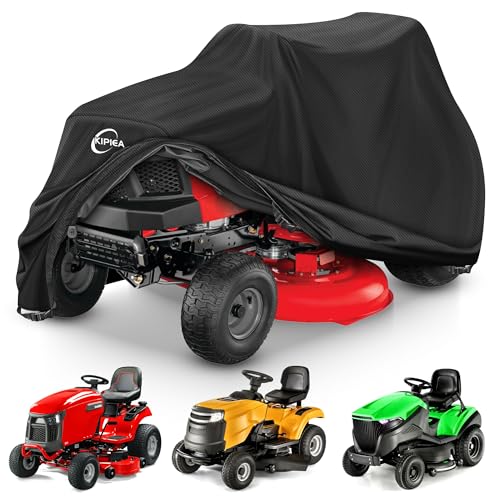
- ✓ All-weather waterproof protection
- ✓ Secure windproof design
- ✓ Heavy-duty, UV resistant fabric
- ✕ Bulky buckles may be tight
- ✕ Slightly more expensive than basic covers
| Material | 600D Oxford fabric with double-layer PU coating and sealed seams |
| UV Resistance | Resistant to fading after prolonged outdoor exposure |
| Tear Resistance | Heavy-duty, tear-resistant fabric |
| Waterproofing | Fully waterproof, keeps mower dry in heavy rain, snow, and dew |
| Secure Fit | Includes 4 buckles that clip onto mower wheels for windproof stability |
| Dimensions | Designed to fit standard riding lawn mowers (specific measurements not provided) |
You know that sinking feeling when you see your riding lawn mower soaked and covered in dew or rain, making it a hassle to start or risking rust? I’ve been there.
That’s why I was eager to try out the Kipiea Riding Lawn Mower Cover.
The moment I unfolded it, I noticed how hefty and durable the 600D Oxford fabric felt. It’s clearly built tough, with a double-layer PU coating that screams waterproof.
I tossed it over my mower on a rainy morning, and within seconds, I saw how it completely sealed out moisture—no more soggy seats or wet blades.
What really impressed me was the secure fit. The four sturdy buckles clip firmly onto the wheels, so the cover stays put even when the wind picks up.
No flapping or shifting, unlike cheaper covers that seem to dance around in storms. Plus, the sealed seams and UV-resistant fabric mean I won’t be replacing this anytime soon, even after months of sun exposure.
Cleaning is a breeze—just rinse with water and wipe dry. The included storage bag is compact and keeps everything tidy when the cover isn’t in use.
The only minor downside? The buckles are a bit bulky if you’re dealing with tight spaces, but it’s a small trade-off for the stability they offer.
Overall, this cover offers peace of mind, protecting my mower from all weather, UV damage, and dirt. It’s sturdy, stays in place, and is easy to maintain.
For around $36, I think it’s a smart investment to keep your riding mower looking fresh for years to come.
What Factors Should You Consider When Choosing the Best Riding Lawn Mower?
When choosing the best riding lawn mower, several key factors should be taken into account to ensure you select the right model for your needs.
- Yard Size: The size of your lawn will significantly influence your choice of riding mower. For larger properties, a wider cutting deck allows you to cover more ground efficiently, while smaller yards may benefit from a more compact model that can navigate tighter spaces.
- Terrain Type: Consider the terrain of your lawn, as uneven or hilly areas may require a mower with a stronger engine and better traction. Mowers designed for rough terrain often feature enhanced suspension systems and larger wheels to prevent slipping and ensure a smoother ride.
- Engine Power: The engine’s horsepower is critical for performance, especially if you have a larger lawn or tougher grass types. A more powerful engine can handle thicker grass and larger cutting decks, resulting in quicker mowing times and less strain on the machine.
- Cutting Deck Size: The cutting deck size determines how wide a strip of grass the mower can cut in a single pass. Larger decks reduce mowing time, but they may also limit maneuverability in smaller areas, so it’s essential to find a balance based on your lawn’s layout.
- Comfort Features: Since mowing can take a significant amount of time, comfort features such as adjustable seats, armrests, and ergonomic controls become vital. Look for mowers with features that reduce fatigue, especially if you have a large area to cover regularly.
- Maintenance Requirements: Different mowers have varying maintenance needs, including oil changes, blade sharpening, and filter replacements. Opting for a model with easy access to components can save you time and effort in upkeep, ensuring longevity and reliable performance.
- Budget: Your budget will ultimately dictate which models you can consider. While it’s tempting to go for the cheapest option, investing a little more in a higher-quality mower can often pay off in durability and performance, reducing future repair costs.
- Brand Reputation: The reputation of the brand can provide insight into the quality and reliability of the mower. Established brands often have a track record of customer satisfaction and support, which can be crucial for warranty and service issues.
- Additional Features: Modern riding mowers may include features such as mulching capabilities, bagging systems, or even advanced technology like GPS tracking and automatic cutting. Assessing which additional features are beneficial for your lawn care routine can enhance your mowing experience.
How Do Engine Size and Power Affect Performance?
Power output, usually quantified in horsepower (HP), is a crucial factor that determines the mower’s cutting capabilities. Higher horsepower enables the mower to achieve a higher cutting speed and maintain consistent performance under heavy loads, making it particularly suitable for larger lawns or more challenging mowing conditions.
Cutting speed is influenced by both the engine size and its power output, which together determine how fast the mower can operate while still delivering a clean cut. A mower with a powerful engine can often maintain speed even when faced with dense grass, reducing the time needed to complete the job.
Fuel efficiency is another important consideration, as larger engines may consume more fuel, impacting running costs. However, advances in engine technology can lead to more fuel-efficient designs that provide the necessary power without excessive consumption.
Finally, durability and maintenance are essential factors; while larger engines may deliver superior performance, they often require more frequent maintenance due to increased wear and tear. However, investing in a robust engine can lead to a longer lifespan for the mower, making it a worthwhile consideration for those with extensive mowing needs.
Why Is Cutting Width Important for Lawn Care?
Cutting width is important for lawn care because it directly affects the efficiency and quality of the mowing process, allowing for quicker coverage of larger areas and a more uniform cut.
According to the National Association of Landscape Professionals, a wider cutting deck can significantly reduce the time it takes to mow a lawn, especially when dealing with expansive properties. A riding lawn mower with a cutting width of 42 inches or more can save up to 30% of the mowing time compared to narrower models, making it a critical feature for homeowners and landscaping professionals alike.
The underlying mechanism is that a wider cutting width allows for fewer passes over the same area, reducing the amount of overlapping that occurs when mowing. This not only minimizes the time spent mowing but also helps to prevent uneven cutting, which can lead to patchy grass growth and increased maintenance needs. Furthermore, a consistent cut promotes healthier grass by allowing for better air circulation and sunlight penetration, which are vital for growth.
Additionally, a wider cutting width can make it easier to navigate around obstacles, such as trees and flower beds, as fewer turns are required. This can lead to a more efficient mowing pattern and reduce wear and tear on the mower itself. The combination of efficiency, uniformity in cutting, and ease of maneuverability underscores why cutting width is a crucial factor when selecting the best riding lawn mower for lawn care.
What Are the Top Features of the Best Riding Lawn Mowers?
The top features of the best riding lawn mowers include:
- Powerful Engine: A robust engine is essential for efficient mowing, allowing the mower to handle various terrains and grass types without bogging down. Look for engines with at least 18-25 horsepower for optimal performance in larger yards.
- Cutting Width: The cutting width indicates how wide the mower can cut grass in a single pass, typically ranging from 30 to 60 inches. A wider cutting width reduces mowing time but may be less maneuverable in tight spaces.
- Adjustable Cutting Height: This feature allows users to customize the height at which the grass is cut, accommodating different grass types and seasonal growth. Having several height options ensures a cleaner cut and promotes healthy grass growth.
- Comfortable Seating: Ergonomic seating with good cushioning and back support is crucial for extended mowing sessions. Features like adjustable seats and armrests can significantly enhance the user experience and reduce fatigue.
- Maneuverability: The best riding lawn mowers offer tight turning radiuses and responsive steering, making it easier to navigate around obstacles like trees and flower beds. Features such as zero-turn capabilities can greatly improve efficiency and ease of use.
- Durable Construction: A well-built mower with high-quality materials can withstand wear and tear over time. Look for features like heavy-duty frames and reinforced cutting decks to ensure longevity and reliability.
- Mulching Capability: Many riding mowers come equipped with mulching features that allow grass clippings to be finely chopped and returned to the lawn as natural fertilizer. This not only helps reduce yard waste but also enhances the lawn’s health.
- Easy Maintenance: Features such as accessible oil changes, tool-free blade removal, and easy-to-read indicators for fuel, oil, and battery levels simplify maintenance tasks. A mower that is easy to maintain will last longer and perform better.
- Storage Options: Some riding mowers come with built-in storage options for tools and accessories, which can be convenient for keeping necessary items close at hand. Additionally, foldable or compact designs can save space when storing the mower.
How Does Transmission Type Influence Usability?
- Automatic Transmission: This type of transmission allows the mower to adjust its speed automatically based on the terrain and user input, which simplifies operation for the user.
- Manual Transmission: Manual transmissions require the operator to shift gears manually, offering more control over speed but demanding more skill and attention from the user.
- Hydrostatic Transmission: Hydrostatic transmissions use fluid to transmit power, providing smooth and variable speed control without the need for gear shifting, making them user-friendly and ideal for varied mowing conditions.
- CVT (Continuously Variable Transmission): CVT systems provide an infinite range of gear ratios, allowing for seamless speed adjustments and optimal performance, enhancing the mowing experience on uneven terrain.
Automatic transmissions are particularly user-friendly, making them suitable for beginners who prefer a hassle-free mowing experience. Users can focus on steering and mowing rather than worrying about gear changes, which can enhance productivity and reduce fatigue.
Manual transmissions, while offering better control, can be challenging for less experienced operators. The need to shift gears manually may lead to a steeper learning curve, making this option less ideal for casual users who prefer convenience over control.
Hydrostatic transmissions are highly regarded for their ease of use, allowing for smooth acceleration and deceleration. This type is especially beneficial when navigating around obstacles or on sloped terrain, as it reduces the risk of stalling and provides consistent power delivery.
CVT systems are designed for versatility, making them a popular choice for those who mow various types of landscapes. The ability to adjust speed continuously helps maintain optimal cutting performance and reduces strain on the engine, contributing to longer lifespan and better fuel efficiency.
What Technological Enhancements Make Mowing Easier?
Several technological enhancements have significantly improved the ease and efficiency of mowing.
- Zero-Turn Radius: Zero-turn mowers allow for exceptional maneuverability, enabling users to make sharp turns and navigate around obstacles with ease. This design reduces the time spent mowing by allowing for more efficient coverage of lawns with complex landscaping.
- Hydrostatic Transmission: Hydrostatic transmissions provide smoother acceleration and deceleration compared to traditional gear-driven systems. This technology allows for easier speed control, making it simpler to navigate various terrain types and achieve a uniform cut.
- GPS and Smart Technology: Many modern riding mowers come equipped with GPS and smart technology that can map out your lawn for optimal mowing patterns. This feature helps to ensure that every area is covered efficiently, reducing the chances of missed spots and the need for repetitive mowing.
- Electric and Hybrid Models: Electric and hybrid riding mowers reduce emissions and noise while providing powerful cutting capabilities. These models often require less maintenance than gas-powered mowers and can be more cost-effective in the long run due to lower fuel and upkeep expenses.
- Adjustable Cutting Heights: The ability to easily adjust the cutting height allows users to customize the mower for different grass types and seasonal changes. This feature ensures a healthy lawn by promoting optimal grass growth and reducing the stress on the plants.
- Comfort Features: Modern riding mowers often include ergonomic seats, adjustable steering wheels, and vibration dampening systems. These comfort features contribute to a more enjoyable mowing experience, especially during longer sessions, helping to reduce operator fatigue.
What Are the Benefits of Using a Riding Lawn Mower?
Comfort: Unlike push mowers, riding mowers allow users to sit comfortably while mowing. The ergonomic designs and cushioned seats help reduce physical strain, making it easier to maintain your lawn without the discomfort often associated with manual mowing.
Versatility: Many riding mowers come with the option to attach various accessories, such as baggers, spreaders, and snow blades. This versatility makes them useful for more than just mowing, turning them into multifunctional machines for year-round yard maintenance.
Precision: Riding mowers often feature advanced cutting technology, including adjustable cutting heights and wider cutting decks. This allows for a precise and uniform cut, enhancing the aesthetic appeal of your lawn while promoting healthy grass growth.
Ease of Use: Riding mowers typically have intuitive controls and are easier to maneuver than push mowers, making them suitable for users of all ages. The simplified operation helps ensure that even those unfamiliar with lawn care can operate them effectively.
Storage Options: Many models include built-in storage compartments, allowing users to keep essential tools and supplies close by while mowing. This feature enhances convenience and helps streamline the lawn care process.
How Do Riding Lawn Mowers Enhance Efficiency for Large Yards?
Advanced Features: Many riding lawn mowers come equipped with features like adjustable cutting heights, mulching capabilities, and bagging systems that enhance lawn care versatility. These features allow users to customize their mowing experience according to the specific needs of their lawn.
Maneuverability: Despite their size, modern riding mowers often include zero-turn capabilities, allowing for greater agility in navigating tight spots and obstacles. This maneuverability is essential for achieving a well-manicured look around flower beds, trees, and other landscape features.
Are There Ergonomic Benefits to Riding Lawn Mowers?
Riding lawn mowers offer several ergonomic benefits that can enhance the mowing experience and reduce physical strain.
- Reduced Physical Strain: Riding lawn mowers allow users to sit comfortably while mowing, which significantly reduces the strain on the back and legs compared to push mowers.
- Adjustable Seats: Many riding mowers come with adjustable seats that provide lumbar support, ensuring that users can find a comfortable position that minimizes fatigue during extended use.
- Steering Control: The steering systems on riding mowers are designed to be user-friendly, allowing for easier maneuverability and reducing the effort needed to turn and navigate around obstacles.
- Improved Visibility: The elevated seating position on riding mowers provides better visibility of the mowing area, which can lead to more efficient mowing and fewer accidents.
- Less Vibrational Impact: Riding mowers typically have better vibration dampening systems, which can lead to less hand and arm fatigue compared to traditional push mowers.
Reduced Physical Strain: Riding lawn mowers allow users to sit comfortably while mowing, which significantly reduces the strain on the back and legs compared to push mowers. This seated position helps prevent common gardening injuries associated with bending and lifting, making it an ideal choice for those with mobility issues or chronic pain.
Adjustable Seats: Many riding mowers come with adjustable seats that provide lumbar support, ensuring that users can find a comfortable position that minimizes fatigue during extended use. These seats can often be customized to fit different body types, promoting better posture and reducing the risk of discomfort.
Steering Control: The steering systems on riding mowers are designed to be user-friendly, allowing for easier maneuverability and reducing the effort needed to turn and navigate around obstacles. This ergonomic design helps users maintain control without excessive physical exertion, making the mowing process smoother and more enjoyable.
Improved Visibility: The elevated seating position on riding mowers provides better visibility of the mowing area, which can lead to more efficient mowing and fewer accidents. An unobstructed view allows users to easily spot obstacles and plan their mowing paths, enhancing safety and effectiveness.
Less Vibrational Impact: Riding mowers typically have better vibration dampening systems, which can lead to less hand and arm fatigue compared to traditional push mowers. This feature is particularly beneficial for users who spend extended periods mowing, as it helps reduce the risk of repetitive strain injuries.
What Maintenance Is Necessary for a Riding Lawn Mower?
Regular maintenance is crucial for ensuring the longevity and performance of a riding lawn mower.
- Oil Changes: Regular oil changes are essential to keep the engine lubricated and running smoothly. It’s recommended to change the oil every 50 hours of operation or at least once a season, using the manufacturer-recommended oil type.
- Blade Sharpening: Keeping the mower blades sharp is vital for a clean cut and healthy grass. Blades should be sharpened at least twice a season or more often if the mower is used frequently, as dull blades can tear grass rather than cut it, leading to a jagged appearance and increased susceptibility to disease.
- Air Filter Replacement: The air filter prevents dust and debris from entering the engine, which can affect performance. It should be checked regularly and replaced if it appears dirty or clogged, typically at the start of the mowing season.
- Tire Maintenance: Proper tire pressure is important for traction and even cutting. Check the tire pressure regularly and inspect for wear or damage, adjusting pressure according to the manufacturer’s recommendations.
- Battery Care: For electric start models, ensuring the battery is charged and connections are clean is essential. Regularly check the battery terminals for corrosion and clean them if necessary, as well as testing the battery’s voltage to ensure reliable starting.
- Deck Cleaning: Cleaning the mower deck after each use prevents grass buildup which can affect cutting performance and promote rust. A simple scrape with a stick or a hose can help keep the underside of the deck clean.
- Fuel System Maintenance: Use fresh fuel and consider adding a fuel stabilizer if the mower will be stored for an extended period. This helps prevent the fuel from degrading and clogging the fuel system, ensuring reliable starting and operation in the next season.
How Often Should You Perform Routine Maintenance?
Routine maintenance for the best riding lawn mower is crucial for optimal performance and longevity.
- Oil Change: It’s recommended to change the oil every 50 hours of operation or at least once a season.
- Air Filter Replacement: The air filter should be checked and replaced every 25 hours, especially if operating in dusty conditions.
- Blade Sharpening: Blades should be sharpened at least once every 20-25 hours of mowing to ensure a clean cut.
- Tire Pressure Check: Tire pressure should be inspected monthly to maintain even cutting and prevent wear.
- Battery Maintenance: If your mower has a battery, it should be checked and charged regularly, especially before winter storage.
Changing the oil regularly helps to lubricate the engine and prevents overheating, which can lead to costly repairs. Using the correct oil type as specified in the owner’s manual is essential for optimal engine performance.
The air filter plays a vital role in maintaining engine efficiency by preventing dirt and debris from entering the carburetor. A clogged air filter can lead to reduced engine power and increased fuel consumption.
Sharpening the blades ensures that the mower cuts grass cleanly rather than tearing it, which can lead to lawn stress and disease. Dull blades can also require more power, putting additional strain on the engine.
Maintaining proper tire pressure is crucial for achieving an even cut and reducing the risk of tire damage. Under-inflated tires can cause uneven cutting and increase the wear on the mower.
For battery maintenance, regularly checking the charge and cleaning the terminals helps to ensure reliable starting and functionality. During winter months, disconnecting the battery from the mower and storing it in a warm place can prolong its lifespan.
What Common Issues Should You Be Aware Of?
When considering the best riding lawn mower, it’s important to be aware of common issues that can affect performance and user experience.
- Maintenance Requirements: Regular maintenance is crucial for the longevity and efficiency of riding lawn mowers. This includes tasks such as changing the oil, sharpening blades, and replacing air filters to ensure optimal performance.
- Fuel Type and Quality: The type of fuel used can significantly impact mower performance. Using low-quality fuel or the wrong type can lead to engine problems, reduced efficiency, and increased emissions.
- Terrain Compatibility: Different riding mowers are designed for various terrains. Choosing a mower that is not suitable for your lawn’s terrain can lead to poor cutting performance and increased wear and tear on the machine.
- Transmission Issues: Riding mowers may have automatic or manual transmissions, each with its own set of issues. Problems like slipping gears or difficulty in shifting can arise, affecting maneuverability and efficiency.
- Blade Performance: Dull or damaged blades can result in uneven cutting and lawn damage. Regularly checking and maintaining the blades is essential for achieving a clean cut and promoting healthy lawn growth.
- Electrical System Failures: Issues with the electrical system, such as battery problems or faulty wiring, can prevent the mower from starting or functioning properly. Regular checks can help identify and resolve these issues before they become major problems.
- Comfort and Ergonomics: The design of the mower affects user comfort, especially during long mowing sessions. Poor seat design or lack of proper controls can lead to fatigue and discomfort, impacting the overall mowing experience.
What Are the Most Reliable Brands in the Riding Lawn Mower Market?
Some of the most reliable brands in the riding lawn mower market include:
- John Deere: Known for its durability and performance, John Deere offers a wide range of riding lawn mowers that are equipped with powerful engines and advanced cutting technology, making them suitable for both residential and commercial use.
- Husqvarna: Husqvarna is recognized for its innovative designs and ergonomic features, providing users with comfortable handling and easy maneuverability. Their mowers often come with cutting-edge features such as automatic transmission and adjustable cutting heights.
- Craftsman: Craftsman riding mowers are popular for their affordability and solid build quality. They provide a good balance of performance and ease of use, making them ideal for homeowners looking for reliable and budget-friendly options.
- Troy-Bilt: Troy-Bilt is known for its user-friendly designs and effective mowing capabilities, offering a variety of models that cater to different yard sizes and terrains. Their mowers often feature easy-start engines and comfortable seating for longer mowing sessions.
- Snapper: Snapper has earned a reputation for its versatility and ease of maintenance, with models that are easy to operate and service. They are particularly noted for their unique design that allows for tight turns and excellent maneuverability in small spaces.
How Do Customer Ratings Reflect Brand Reputation?
Customer ratings play a crucial role in shaping brand reputation, especially in the context of products like riding lawn mowers.
- Quality Assessment: Customer ratings often reflect the quality of the riding lawn mower, as users share their experiences regarding performance and durability.
- Trust and Credibility: High ratings can enhance a brand’s trustworthiness, encouraging new customers to choose their products over competitors.
- Feedback for Improvement: Negative ratings provide valuable feedback for brands, highlighting areas where they can improve their products or services.
- Influence on Purchase Decisions: Many consumers rely on customer ratings as a key factor in their buying decisions, often opting for the best-rated models in their search for the best riding lawn mower.
- Social Proof: A high number of positive ratings serves as social proof, validating the brand’s claims and leading to increased customer loyalty.
Customer ratings often reflect the quality of the riding lawn mower, as users share their experiences regarding performance and durability. A mower that consistently receives high ratings is typically seen as reliable, which can boost a brand’s image in a competitive market.
High ratings can enhance a brand’s trustworthiness, encouraging new customers to choose their products over competitors. When potential buyers see a mower with numerous positive reviews, they are more likely to feel confident in their purchase decision.
Negative ratings provide valuable feedback for brands, highlighting areas where they can improve their products or services. This feedback loop is essential for product development, as brands that actively respond to customer concerns can foster a stronger reputation.
Many consumers rely on customer ratings as a key factor in their buying decisions, often opting for the best-rated models in their search for the best riding lawn mower. This trend illustrates the significant impact of public opinion on market dynamics.
A high number of positive ratings serves as social proof, validating the brand’s claims and leading to increased customer loyalty. Satisfied customers who leave favorable reviews can influence others and create a community of brand advocates.
What Suggestions Do Experts Offer for Brand Selection?
Experts suggest several important considerations when selecting the best riding lawn mower:
- Size of the Lawn: The size of your lawn is a critical factor in determining the type of riding mower you need. For larger properties, a mower with a wider cutting deck can help you cover more ground in less time, while smaller lawns may only require a compact model.
- Terrain Type: The terrain of your property plays a significant role in mower selection. If your lawn has steep slopes or uneven ground, you’ll need a mower with good traction and stability, such as a zero-turn mower that offers maneuverability and control on challenging landscapes.
- Engine Power: The engine power affects the mower’s performance and efficiency. A more powerful engine can handle tougher grass and larger areas without bogging down, while less powerful options may be suitable for lighter mowing tasks.
- Cutting Width: The cutting width determines how much grass the mower can cut in one pass. A wider cutting width can decrease mowing time, making it ideal for larger lawns, while narrower options may be better for smaller, intricately landscaped areas.
- Comfort Features: Comfort features, such as adjustable seats, steering wheel positioning, and vibration reduction systems, can greatly enhance the mowing experience. A comfortable riding mower will make prolonged use easier and more enjoyable, especially for larger mowing jobs.
- Maintenance Requirements: Consider the maintenance needs of the riding mower, including oil changes, blade sharpening, and filter replacements. Some models are designed for easier maintenance, which can save time and effort over the mower’s lifespan.
- Budget: Setting a budget is essential, as riding mowers can vary significantly in price. It’s important to find a balance between features and affordability, ensuring you get a reliable machine that meets your lawn care needs without overspending.