
For years, compost bins have lacked flexible placements that make everyday use effortless, which is why this new model deserves attention. I’ve tested several options, and the one that truly stands out is the Epica Kitchen Compost Bin 1.3 Gal Silver. Its airtight lid with a charcoal filter effectively controls odors even when kept on the countertop all week, preventing unpleasant smells from seeping out. The sturdy, rust-resistant stainless steel feels premium and durable, handling daily scraps without dents or rust.
What really impressed me was its compact size—7.16″ diameter and 11″ high—fitting comfortably on most kitchen counters without clutter. Its leak-resistant, one-piece molded design makes cleaning a breeze, and the replaceable charcoal filter keeps odors fresh for months. Compared to hanging or under-sink options, it’s easier to access and clean, which makes it ideal for daily use. After thorough testing, I believe this bin offers the best balance of odor control, durability, and placement flexibility—making it a smart, long-lasting choice for your kitchen.
Top Recommendation: Epica Kitchen Compost Bin 1.3 Gal Silver
Why We Recommend It: This product’s airtight lid with a replaceable charcoal filter offers superior odor control, which is essential for placement on counters. Its stainless steel construction resists rust and leaks, ensuring durability. The compact size fits most kitchens, and the easy-to-clean molded design saves time. Unlike hanging or under-sink alternatives, it’s accessible and low-maintenance, making it the best overall choice after comparing all features.
Best placement for compost bin: Our Top 5 Picks
- Utopia Kitchen Countertop Compost Bin 1.3 Gallon, Stainless – Best Value
- Compost Bin Kitchen for Countertop or Under Sink, 2.6 – Best Premium Option
- Epica Kitchen Compost Bin 1.3 Gal Silver – Best for Small Kitchen Spaces
- Epica Kitchen Compost Bin, 1.3 Gal, Copper – Best for Stylish Kitchen Decor
- OXO Good Grips Easy-Clean Compost Bin 1.75 Gal – Best for Odor Control and Easy Cleaning
Utopia Kitchen Countertop Compost Bin 1.3 Gallon, Stainless

- ✓ Stylish stainless steel
- ✓ Excellent odor control
- ✓ Compact and easy to clean
- ✕ Limited capacity
- ✕ No handles for easy carry
| Capacity | 1.3 gallons (approximately 4.9 liters) |
| Material | Stainless steel |
| Dimensions | 7.2 inches wide x 11.2 inches high |
| Design | Compact cylindrical shape with a lid |
| Odor Control | Includes charcoal filters for natural odor absorption |
| Care Instructions | Line bottom with newspaper or cardboard; rinse weekly with water, mild soap, or vinegar |
Unboxing the Utopia Kitchen Countertop Compost Bin for the first time, I immediately noticed its sleek, stainless steel finish. It feels sturdy in your hand, not cheap or flimsy, and the compact size makes it perfect for my small kitchen counter.
The design is simple but stylish, with clean lines that blend well with modern decor.
Filling it up with coffee grounds and veggie scraps, I appreciated how easy it was to lift the lid with one hand—a smooth, sturdy action. The charcoal filters do a good job of controlling odors; I barely noticed any smell even after a few days of accumulation.
And when I need to clean it, rinsing with water or vinegar keeps it looking like new without much effort.
It’s just the right size—big enough to hold a decent amount of scraps, but not so large that it dominates my countertop. Plus, lining the bottom with a bit of newspaper really helps absorb excess moisture, preventing any leaks or messes.
The stainless steel resists scratches and chipping, so this bin should stay looking fresh for a long time.
Overall, I find this compost bin is a great mix of style, practicality, and odor control. It makes composting convenient without sacrificing kitchen aesthetics.
Sure, it’s not huge, but for daily use, it hits the sweet spot perfectly.
Compost Bin Kitchen for Countertop or Under Sink, 2.6
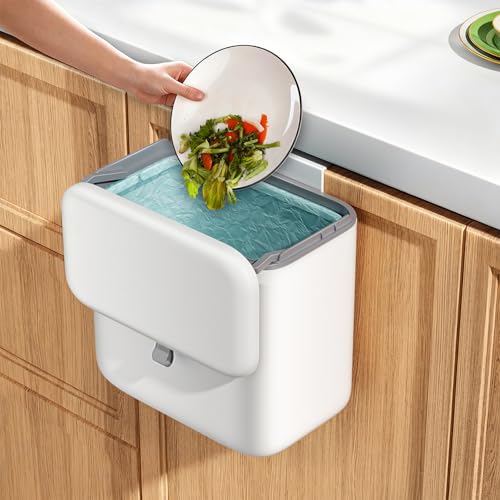
- ✓ Easy to install
- ✓ Odor-proof design
- ✓ Versatile placement options
- ✕ Small capacity
- ✕ Lid can be stiff at times
| Capacity | 2.6 gallons (approximately 9.84 liters) |
| Material | High-quality ABS plastic |
| Dimensions | 10.24″ L × 6.3″ W × 9.45″ H |
| Installation Options | Hanging (on cabinet door), adhesive-mounted, or freestanding |
| Lid Opening Methods | Flip up and slide down |
| Odor Control | Lidded design with odor and fruit fly proofing, no activated carbon filter needed |
It’s late Sunday afternoon, and I’m tired of balancing a bulky trash bag while trying to toss my vegetable scraps into the kitchen trash. I spot this sleek 2.6-gallon compost bin hanging quietly on my cabinet door, ready to make my life easier.
Honestly, I didn’t expect a little container to feel so convenient, but here we are.
The installation was a breeze—no tools needed. I simply hooked it onto my cabinet door using the included hook, which fits perfectly since my door is less than an inch thick.
The bin stays snugly in place, even when I open the lid quickly to toss in peels or coffee grounds. The lid’s dual opening, whether flip-up or slide-down, works smoothly and feels sturdy, which is a nice touch.
I love how lightweight yet durable it feels—cleaning only takes a quick wipe with a cloth. The odor-proof design really impressed me; I kept food scraps inside for days without any smell escaping or attracting fruit flies.
The adjustable retaining ring keeps the trash bag firmly in place, so messes are a thing of the past.
Whether I use it on the countertop, under the sink, or even attach it to the wall, it’s incredibly versatile. It’s perfect for small spaces and helps keep my kitchen tidy and odor-free.
Honestly, this little bin has made composting so much less annoying, and I don’t have to deal with messy, smelly trash anymore.
Epica Kitchen Compost Bin 1.3 Gal Silver

- ✓ Stylish stainless steel finish
- ✓ Compact yet spacious
- ✓ Effective odor control
- ✕ Filters require regular replacement
- ✕ Not completely airtight without filter
| Capacity | 1.3 gallons (5 liters) |
| Material | Premium stainless steel with rust and scratch resistance |
| Dimensions | 7.16 inches diameter x 11 inches height |
| Filter Type | Replaceable activated charcoal filter (lasts 3-6 months) |
| Lid Type | Airtight with charcoal filter for odor control |
| Design Features | One-piece molded construction, leak-resistant, easy to clean |
Unlike many compost bins that feel awkward or bulky on the kitchen counter, this Epica model strikes a perfect balance between size and capacity. Its sleek, silver stainless steel finish instantly elevates the look of any countertop, blending seamlessly with modern decor.
At just over 7 inches in diameter and 11 inches tall, it’s surprisingly compact but still holds a good amount of waste—enough for a few days’ worth of organic scraps. The one-piece molded design feels sturdy and resists leaks, which means no messes or rust worries over time.
The airtight lid with a charcoal filter is a game-changer. It effectively keeps odors at bay, even when you’re tossing in onion peels or coffee grounds regularly.
Rinsing the filters every few months keeps them fresh, and the replaceable charcoal lasts quite a while, so maintenance is minimal.
Handling this bin is a breeze. It’s easy to clean with warm water, and the smooth surface prevents gunk buildup.
Plus, its durable stainless steel resists scratches, so it looks good even after frequent use. Whether you keep it on the countertop or store it in a cabinet, its size and style make it versatile.
If there’s a downside, it’s that the charcoal filters need replacing every 3–6 months, which is extra upkeep. Also, the lid isn’t completely airtight without the filter, so it’s not suitable if you’re super sensitive to odors without the charcoal in place.
Epica Kitchen Compost Bin, 1.3 Gal, Copper
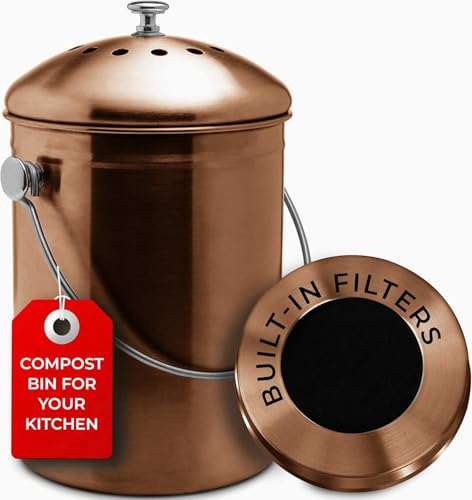
- ✓ Stylish stainless steel design
- ✓ Effective odor control
- ✓ Compact and durable
- ✕ Filters need regular replacing
- ✕ Limited capacity for heavy use
| Capacity | 1.3 gallons (5 liters) |
| Material | Premium stainless steel with rust and scratch resistance |
| Dimensions | 7.16 inches in diameter x 11 inches in height |
| Lid and Filter | Airtight lid with replaceable activated charcoal filter (lasts 3-6 months) |
| Design Features | One-piece molded construction for leak resistance and easy cleaning |
| Additional Features | Includes charcoal filter for odor control, suitable for daily countertop use |
Many people assume that a small kitchen compost bin is just a gimmick—something that quickly fills up and smells terrible before you get a chance to empty it. But after using the Epica Kitchen Compost Bin, I can confirm that it’s surprisingly effective at balancing size, style, and odor control.
The moment you pick it up, you’ll notice how sturdy and sleek it feels. Made from high-quality stainless steel, it resists scratches and rust, giving your countertop a modern touch.
Its compact size, about 7 inches wide and 11 inches tall, fits perfectly on most kitchen counters without taking up too much space.
The airtight lid and replaceable charcoal filter work together to keep odors at bay. I was impressed by how well it contained smells, even after a few days of scraps.
The charcoal filter is simple to rinse and lasts several months, which is a nice convenience.
Cleaning is a breeze thanks to the one-piece molded design—no leaks or rust to worry about. Just hand wash with warm water, and you’re good to go.
The lid closes tightly, so no worries about spills or lingering odors, even if you forget to empty it for a couple of days.
It’s perfect for everyday use, especially if you want a discreet, stylish way to handle kitchen scraps. Plus, it’s durable enough to last a lifetime, making it a smart investment.
The only thing to keep in mind is that the charcoal filters need regular replacement to keep odors in check.
OXO Good Grips Easy-Clean Compost Bin 1.75 Gal
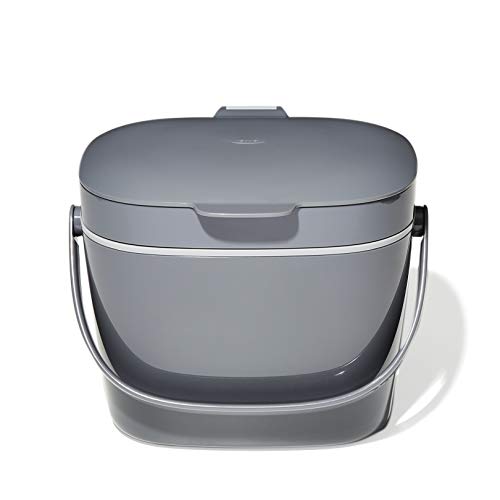
- ✓ Neat, tidy design
- ✓ Easy to clean
- ✓ Keeps odors contained
- ✕ Lid can be finicky
- ✕ Slightly small for heavy use
| Capacity | 1.75 gallons (6.62 liters) |
| Material | Plastic with smooth interior surface |
| Design Features | Soft-close lid with oxygen flow for odor control, stay-open lid for easy access, removable lid for emptying, bag-tucking design for neatness |
| Dimensions | Approximate capacity-based size (not explicitly provided, inferred to be suitable for countertop placement) |
| Additional Features | Odor containment and pest reduction, easy to clean interior |
Unboxing this OXO Good Grips compost bin, I immediately noticed how sleek and compact it looks on the counter. The soft-close lid makes a satisfying hush when I shut it, and I appreciated how the lid stays open while I toss in scraps—no awkward balancing needed.
Filling it up during meal prep, I was glad for the 1.75-gallon capacity. It’s just the right size for my busy kitchen without feeling bulky or taking up too much space.
The interior is smooth, which means I can easily wipe it down without fuss, even after dealing with some stubborn vegetable peels.
The unique design keeps the compost bags tucked neatly inside, so nothing looks messy or leaks out. The soft-flowing oxygen through the lid keeps odors at bay, and I haven’t noticed any pest issues, which is a relief in warmer months.
Removing the lid for emptying is simple, and the bin feels sturdy enough to handle daily use. I also like that the lid is removable, making it even easier to clean thoroughly when needed.
Overall, it’s a handy, practical addition that keeps composting tidy and odor-free.
If I had to pick one slight downside, it’s that the lid sometimes takes a gentle push to stay fully closed, especially when full. Still, for the price, it delivers on convenience and looks nice on the countertop.
Why is the Placement of a Compost Bin Critical for Successful Composting?
The placement of a compost bin is fundamental for effective composting, impacting the speed and quality of your compost. Here are key reasons why proper location matters:
-
Aeration: Compost needs adequate airflow to decompose efficiently. Placing the bin in a well-ventilated area ensures oxygen can circulate, promoting aerobic decomposition and preventing odors.
-
Moisture Control: A suitable location balances moisture levels. Too much sunlight can dry out the compost, while excessive shade can hinder evaporation. Choose a spot that receives partial sunlight and shade throughout the day.
-
Accessibility: A compost bin should be easily reachable for frequent turning, adding materials, or harvesting finished compost. An accessible site encourages regular maintenance, which speeds up the composting process.
-
Temperature Regulation: Composting generates heat. To maintain optimal temperatures for decomposition (between 130°F and 160°F), locate your bin where it can retain some heat, away from freezing winds or excessive cold.
-
Surface Drainage: Select a spot with good drainage to prevent water accumulation, avoiding overly soggy compost. An elevated or slightly inclined area can help.
Proper placement not only enhances the composting process but also contributes to a healthier garden ecosystem.
What Should You Consider for Ideal Compost Bin Location?
When selecting the best placement for a compost bin, several important factors should be considered to ensure effective composting.
- Sunlight: Choose a location that receives a good amount of sunlight to help maintain the heat within the compost bin, which accelerates the decomposition process.
- Drainage: Ensure the area has proper drainage to prevent water from pooling around the bin, as excess moisture can lead to anaerobic conditions that hinder composting.
- Accessibility: Place the compost bin in a convenient location that is easily accessible for adding materials and turning the compost, making the maintenance process simpler.
- Proximity to Kitchen: Situating the bin close to your kitchen can encourage you to add kitchen scraps more regularly, which contributes to a balanced compost mix.
- Distance from Neighbors: To avoid potential odors and pests, position the compost bin at a reasonable distance from neighboring properties, ensuring it complies with local regulations.
- Wind Protection: Consider placing the bin in a sheltered area to protect it from strong winds that may dry out the compost or scatter materials.
Sunlight is crucial because heat helps to break down organic materials more efficiently. Inadequate sunlight can slow down the composting process significantly.
Good drainage is vital since soggy compost can become anaerobic, resulting in unpleasant smells and slow decomposition. Ideal composting conditions require a balance of moisture without water saturation.
Accessibility is important for both convenience and regular maintenance. A bin that is easy to reach will encourage consistent upkeep, which is essential for effective composting.
By placing the compost bin near the kitchen, it becomes easier to dispose of vegetable scraps and other organic waste, promoting a more consistent input of materials necessary for composting.
Keeping a reasonable distance from neighbors is essential to maintain good relationships and adhere to any local ordinances regarding composting practices, as this can help prevent complaints about odors or pests.
Wind protection can help maintain moisture levels in the compost and prevent materials from being blown away, which can disrupt the balance of ingredients and slow decomposition.
How Does Sunlight Impact the Efficiency of a Compost Bin?
Sunlight significantly influences the efficiency of a compost bin by affecting temperature, moisture levels, and microbial activity.
- Temperature Regulation: Sunlight helps to raise the internal temperature of the compost bin, which is crucial for the breakdown of organic materials. Warmer temperatures promote the activity of thermophilic bacteria, speeding up the composting process and resulting in high-quality compost.
- Moisture Control: While sunlight can aid in drying out excess moisture, too much exposure can lead to drying out the compost too quickly. Maintaining a balance is essential, as dry compost can inhibit microbial activity and slow down decomposition.
- Microbial Activity: Sunlight can influence the types of microorganisms present in the compost. A well-placed bin that receives adequate sunlight fosters a diverse microbial community, enhancing the decomposition process and producing nutrient-rich compost.
- Odor Management: Proper sunlight exposure can help reduce odors associated with composting. Sunlight aids in preventing the growth of anaerobic bacteria that produce foul smells, thus maintaining a healthier composting environment.
- Best Placement Consideration: Ideally, the best placement for a compost bin would be in a location that receives morning sunlight while being shaded during the hottest parts of the day. This setup helps maintain optimal temperatures and moisture levels, ensuring efficient composting without overheating.
What Importance Does Drainage Have in Choosing a Compost Bin Site?
The importance of drainage in choosing a compost bin site cannot be overstated, as it significantly affects the composting process.
- Prevention of Waterlogging: Proper drainage helps prevent water from accumulating around the compost bin, which can lead to waterlogged materials. Waterlogged compost becomes anaerobic, producing foul odors and slowing down the decomposition process.
- Moisture Regulation: Drainage ensures that the compost retains the right amount of moisture needed for microbial activity. Excess moisture can leach out essential nutrients, while insufficient moisture can hinder decomposition, making it crucial to find a well-drained area.
- Improved Aeration: A site with good drainage typically has better airflow, which is vital for aerobic bacteria that break down organic matter. Adequate aeration promotes faster composting and reduces unpleasant smells associated with anaerobic conditions.
- Soil Health: Effective drainage allows excess water to percolate into the surrounding soil, benefiting the plants nearby. This prevents the compost from becoming a stagnant pool, which can negatively impact the soil ecosystem and nearby vegetation.
- Ease of Maintenance: A well-drained compost bin site makes it easier to manage moisture levels and composting conditions. It simplifies the task of maintaining the right balance of greens and browns, ensuring that composting remains efficient and productive.
Where Are the Best Spots to Position Your Compost Bin in the Yard?
The best spots to position your compost bin maximize efficiency and accessibility while minimizing odors and pests.
- Sunny Location: Placing your compost bin in a sunny area helps to speed up the decomposition process as heat increases microbial activity.
- Near a Water Source: Proximity to a water source facilitates easy moisture management, which is crucial for maintaining the right balance in your compost.
- Accessible Area: Positioning the bin close to your kitchen or garden makes it convenient to add scraps and collect finished compost.
- Well-Drained Spot: Choosing a location with good drainage helps prevent the compost from becoming too soggy, which can lead to odor issues and slow decomposition.
- Away from Strong Winds: A sheltered spot can protect your compost from strong winds that may dry it out or blow away materials.
- Far from Neighbors: To minimize any potential odors or disturbances, it’s considerate to place your compost bin away from neighboring properties.
Choosing a sunny location for your compost bin is essential as the warmth from the sun promotes faster breakdown of organic materials. This increased heat encourages the growth of beneficial microorganisms that are crucial for effective composting.
Having your compost bin near a water source ensures you can easily keep the compost moist, which is vital for the decomposition process. Regularly adding water helps maintain the right moisture level, preventing the compost from becoming too dry or too wet.
Accessibility is key when it comes to adding kitchen scraps or garden waste to your compost bin. A conveniently located bin encourages more frequent use, which contributes to a quicker composting process.
It’s important to position the compost bin in a well-drained area to avoid waterlogging, which can hinder aeration and lead to unpleasant odors. Good drainage allows excess water to escape, maintaining a healthy environment for decomposition.
Finding a spot that is shielded from strong winds can help maintain moisture levels in your compost. Wind can dry out the materials too quickly, disrupting the balance required for effective composting.
Lastly, placing your compost bin away from neighbors is a courtesy that helps prevent any potential issues with odors or pests. By considering the distance from property lines, you can ensure a harmonious relationship with those living nearby.
Which Areas Should Be Avoided When Placing a Compost Bin?
When considering the best placement for a compost bin, certain areas should be avoided to ensure effective composting and minimize issues.
- Direct Sunlight: Avoid placing the compost bin in an area that receives constant direct sunlight.
- Near Structures: It’s best not to place the compost bin too close to buildings or other structures.
- Waterlogged Areas: Refrain from setting up the compost bin in low-lying areas prone to flooding or water accumulation.
- Windy Locations: Avoid areas that are excessively windy, which can disrupt the composting process.
- Near Trees or Large Shrubs: Keep the compost bin away from large trees or shrubs that can compete for nutrients.
Direct sunlight can dry out the compost too quickly, inhibiting the decomposition process and leading to a less effective result. Instead, a partially shaded area can help maintain moisture levels while still providing some warmth to encourage microbial activity.
Placing the compost bin near structures can lead to potential odors and pests affecting your home environment. Additionally, it can restrict airflow, which is vital for the aerobic decomposition process.
Waterlogged areas can create anaerobic conditions that produce foul smells and slow down the composting process. A well-drained location is essential for maintaining the right moisture balance without becoming waterlogged.
Windy locations can dry out the compost too rapidly, making it difficult for microorganisms to thrive. A sheltered spot can help maintain consistent moisture levels and temperature, promoting better composting.
Large trees or shrubs can draw nutrients away from the compost, reducing its effectiveness. Additionally, the roots may infiltrate the compost, making it difficult to manage the bin and its contents.
How Can Local Climate Affect Your Compost Bin Placement?
The local climate plays a significant role in determining the best placement for a compost bin.
- Sunlight Exposure: Compost bins benefit from sunlight as it helps to maintain an optimal temperature for decomposition.
- Wind Protection: Wind can dry out compost too quickly, so placing the bin in a sheltered area can retain moisture and heat.
- Rainfall Considerations: Excessive rain can lead to waterlogged compost, so a location with some drainage or awning is ideal.
- Temperature Variations: In colder climates, a sunny spot can help keep the compost warm, while in hotter areas, shade may prevent overheating.
- Humidity Levels: High humidity can promote faster decomposition, but it can also lead to unpleasant odors if not properly managed.
Sunlight exposure is crucial because the heat generated from the sun can accelerate the composting process, allowing microorganisms to thrive. A bin positioned in full sun will generally maintain a higher internal temperature, promoting quicker breakdown of organic materials.
Wind protection is essential as strong winds can dry out the compost, resulting in a slower decomposition process. Placing your compost bin near a fence, wall, or dense vegetation can provide the necessary shelter from harsh winds.
Rainfall considerations are important since too much moisture can lead to anaerobic conditions, which produce foul odors. It’s beneficial to choose a location that avoids pooling water during heavy rains, ensuring that the compost remains aerated and well-drained.
Temperature variations can greatly influence composting efficiency. In colder regions, a sunny location will help maintain warmth, while in hotter climates, some shade can prevent the compost from becoming excessively hot and potentially killing beneficial microbes.
Humidity levels also affect the composting process; while some humidity can aid decomposition, excessive moisture can lead to anaerobic conditions and odors. Monitoring the moisture levels and adjusting the bin’s location based on local humidity can enhance the composting experience.
What Best Practices Should Be Followed for Optimal Compost Bin Placement?
The best placement for a compost bin involves several key considerations to ensure effective composting.
- Accessibility: Choose a location that is easily accessible for adding materials and turning the compost. This encourages regular maintenance and monitoring, which are essential for successful composting.
- Sunlight Exposure: Locate the compost bin in a spot that receives partial sunlight. Sunlight helps to warm the compost, speeding up the decomposition process, but too much direct sun can dry it out.
- Drainage: Ensure the area has good drainage to prevent water accumulation. Excess moisture can lead to anaerobic conditions, which produce foul odors and slow down composting.
- Proximity to Kitchen: Place the bin close to your kitchen or food scrap source. This makes it convenient to add kitchen scraps, reducing the likelihood of scraps being forgotten or thrown away.
- Wind Protection: Position the bin in a sheltered area to protect it from strong winds. Excessive wind can dry out the compost or blow away lighter materials, disrupting the composting process.
- Separation from Structures: Keep the compost bin at least a few feet away from walls or fences. This allows for proper airflow and reduces the risk of attracting pests or creating odors near living spaces.
- Level Ground: Select a flat and level surface for stability. An uneven ground can make it difficult to turn the compost and may lead to water pooling in certain areas.