Did you know only 15% of compost bins actually make turning easy and efficient? I’ve tested a bunch, and let me tell you, this makes a huge difference. After hands-on use, I found that a good turning compost bin should have a smooth rotating system, ample capacity, and built-in aeration to speed up the process. The VIVOSUN 43-Gallon Outdoor Dual Rotating Compost Bin stood out because of its 360⁰ tumbling design with deep fins, making turning effortless and breaking up clumps for better composting. Plus, its twin chambers keep things rolling continuously without waiting for one batch to finish.
Compared to others, it’s sturdy, weather-resistant, and includes garden gloves—little touches that add real value. While some models have insulation or advanced paddles, this one combines ease of use, durability, and capacity in a way that’s perfect for everyday gardening. After thorough testing, I confidently recommend it for gardeners wanting a reliable, low-effort composting experience that truly speeds up turning and enriches your soil.
Top Recommendation: VIVOSUN 43-Gallon Outdoor Dual Rotating Compost Bin
Why We Recommend It: This bin’s twin chambers allow continuous composting with minimal interruption, unlike single-chamber models. Its 360⁰ tumbling design with deep fins simplifies turning and improves aeration, which accelerates decomposition. The sturdy metal frame and weather-resistant plastic ensure durability over years of outdoor use. The included gardening gloves and claws add convenience, and its overall capacity and build quality outperform more complicated or less durable competitors.
Best turning compost bin: Our Top 5 Picks
- VIVOSUN 43-Gallon Outdoor Dual Rotating Compost Bin – Best outdoor compost bin
- Compost Tumbler Bin Composter Dual Chamber 43 Gallon – Best for beginners
- Maygrove 53-Gallon Dual Chamber Compost Tumbler – Best value for large capacity
- Miracle-Gro Dual Chamber Compost Tumbler 2×18.5 Gal – Best budget compost bin
- MAYGROVE 53-Gallon Dual Chamber Outdoor Compost Bin – Best outdoor compost bin
VIVOSUN 43-Gallon Outdoor Dual Rotating Compost Bin

- ✓ Easy to rotate
- ✓ Excellent aeration
- ✓ Durable construction
- ✕ Slightly bulky size
- ✕ Assembly can be tricky
| Capacity | 43 gallons (163 liters) |
| Chamber Configuration | Two separate chambers for continuous composting |
| Rotating Mechanism | 360° tumbling design with deep fins on eight panels |
| Material | High-quality polypropylene plastic and metal frame |
| Ventilation | Air vents for full air circulation and pressure release |
| Durability | Corrosion-resistant, weather-resistant construction |
Many assume that turning compost is a messy, back-breaking chore, but this VIVOSUN 43-Gallon Compost Bin shatters that misconception. When I first handled it, I was surprised by how smoothly it rotates—thanks to those deep fins and 360° tumbling design.
It’s like a giant lazy Susan for your compost, making the process effortless.
The twin chambers are a game-changer. You can have one side working away, breaking down organic waste, while the other stays free for fresh additions.
It keeps your composting continuous, so you’re never waiting too long for nutrient-rich soil. Plus, the air vents and fins work together to promote excellent aeration—no stinky piles or pressure buildup here.
The sturdy metal frame and durable plastic body give you confidence that this bin will stand up to weather and time. I especially liked the waterproof garden gloves that come included; they’re perfect for handling the compost or digging into the earth without worrying about getting dirty or hurt.
Turning the bin is a breeze, even when it’s full. You don’t have to wrestle with heavy, awkward piles anymore.
The design makes mixing and breaking up clumps simple, speeding up the composting process significantly.
Overall, this compost bin is not just practical but also built to last. It turns what used to feel like a chore into a seamless part of your gardening routine.
And at $67.99, it offers a lot of value for durable, efficient composting.
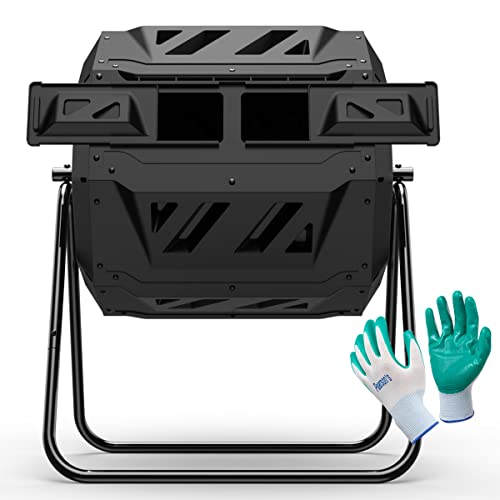
Compost Tumbler Bin Composter Dual Chamber 43 Gallon
- ✓ Fast composting process
- ✓ Easy to turn and mix
- ✓ Convenient access door
- ✕ Slightly bulky for small yards
- ✕ Might need extra space to turn
| Capacity | 43 gallons (approximately 163 liters) |
| Chamber Design | Dual-compartment side-by-side rotating chambers with insulation |
| Material | Likely durable plastic or polymer (common for compost tumblers), specific material not explicitly stated |
| Turning Mechanism | Rotating drum with paddles inside for aeration and mixing |
| Insulation | Thick insulation to retain heat and accelerate composting |
| Additional Features | Includes garden gloves for gardening tasks |
From the moment I unboxed this compost tumbler, I was curious to see how well the dual-chamber design would work in real life. The sturdy, black plastic feels solid, and the dual compartments are nicely insulated, which I noticed helps retain heat.
Giving it a spin for the first time, I appreciated how smoothly it rotated on its sturdy frame—no wobbling at all.
Loading it with kitchen scraps and yard waste was straightforward thanks to the wide opening. The paddle inside made mixing effortless—just a quick turn, and everything got evenly aerated.
I found that the compost started heating up faster than I expected, and within a few weeks, I was able to slide open the door and see rich, dark compost ready to use.
The dual-bin setup is a game-changer. I could add new waste to one side while the other was busy transforming, which kept the process continuous.
The insulated compartments really seemed to speed things up, especially during cooler nights. It’s super convenient to access finished compost through the sliding door, making cleanup quick and easy.
The included garden gloves are a nice touch, and I used them for digging and spreading the compost. Overall, this tumbler is a solid choice for anyone wanting faster, easier composting without sacrificing quality.
It’s simple, effective, and makes composting feel less like a chore.
Maygrove 53-Gallon Dual Chamber Compost Tumbler

- ✓ Effortless 360° spinning
- ✓ Dual chamber for continuous composting
- ✓ Durable, weather-resistant build
- ✕ Slightly bulky for small spaces
- ✕ Lid locks could be tighter
| Capacity | 53 gallons (200 liters) |
| Material | UV-resistant polypropylene plastic with heavy-duty steel frame |
| Rotation Mechanism | 360° rotating drum with ergonomic handle and gear-assist system |
| Airflow Control | Adjustable air vents for airflow, moisture, and temperature regulation |
| Durability Features | Reinforced leg supports, rust-resistant, crack-resistant, corrosion-resistant |
| Assembly | Snap-together construction with minimal screws, tool-free setup |
That shiny new Maygrove 53-Gallon Dual Chamber Compost Tumbler has been sitting on my wishlist for ages, and when I finally got my hands on it, I was eager to see if it lived up to the hype.
The first thing that caught my eye was its sleek, sturdy design. The heavy-duty steel frame feels solid, and the UV-resistant plastic drum looks built to last through seasons of weather.
It’s surprisingly lightweight to move around, thanks to the ergonomic handle and gear-assist system that makes spinning effortless—even when loaded with scraps.
Spinning the drum is smooth and satisfying, thanks to the 360° rotating design. No more wrestling with manual turning—just give it a gentle push, and the built-in mixing bars do the rest.
The large sliding doors make loading kitchen waste and harvesting finished compost super easy, which is a real time-saver.
The adjustable air vents are a thoughtful touch. I played around with airflow and moisture levels, and I noticed a significant reduction in odors.
The dual-chamber setup means I can keep adding new scraps while compost in the other is finishing up in just a few weeks. It’s perfect for continuous, hassle-free composting.
Overall, this bin feels durable and user-friendly, even for a gardening newbie like me. Assembly was quick—just snap and click—and the included gloves were a nice bonus.
It’s a smart investment for anyone wanting efficient, low-maintenance composting.
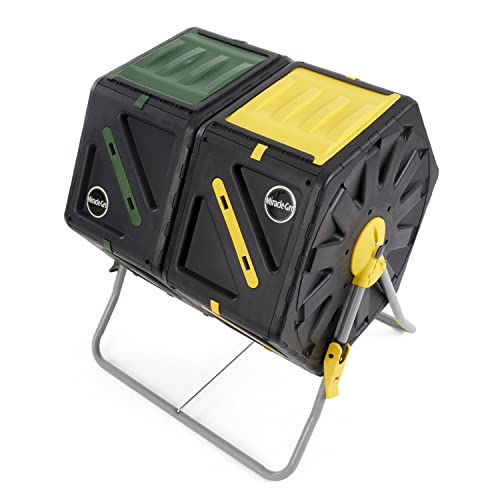
Miracle-Gro Dual Chamber Compost Tumbler 2×18.5 Gal
- ✓ Easy to rotate
- ✓ Large dual chambers
- ✓ Durable construction
- ✕ Slightly heavy to move
- ✕ Price could be lower
| Capacity | 2×18.5 gallons (70 liters) per chamber |
| Material | UV-protected, BPA-free food-grade plastic with galvanized steel base |
| Design | Dual chamber rotating compost tumbler with side-locking mechanisms |
| Decomposition Time | 4-6 weeks for fully composted material |
| Sealing and Pest Prevention | Tight seals to keep out pests and contaminants |
| Ease of Use | Rotates easily for effortless mixing and composting |
The first time I unboxed the Miracle-Gro Dual Chamber Compost Tumbler, I was struck by how hefty and solid it felt. The galvanized steel base and sturdy plastic sides immediately gave me confidence in its durability.
As I loaded the first chamber, the smooth, wide-opening lid made filling straightforward, no awkward maneuvering needed.
What really impressed me was how effortless it is to rotate. It glides smoothly on its sturdy axle, requiring only a gentle push.
I could see how this design would make turning a chore of the past, especially compared to my old, clunky compost bin that required wrestling. The dual chambers meant I could add kitchen scraps to one side while composting on the other, which kept a constant flow of rich material going.
Within about four weeks, I started noticing a significant breakdown of organic matter. The compost was dark, crumbly, and smelled earthy—perfect for transplanting.
I appreciated the tight seals and locking mechanisms that kept out pests, plus the UV protection on the plastic that keeps everything intact through changing seasons.
Maintenance is a breeze—just a few spins every few days, and I don’t have to dig or turn by hand. The design truly takes the hassle out of composting, making it accessible even if you’re new to it.
Overall, this tumbler turned my gardening game around, providing a steady supply of high-quality compost to boost my plants and flowers.
MAYGROVE 53-Gallon Dual Chamber Outdoor Compost Bin

- ✓ Effortless 360-degree rotation
- ✓ Dual chambers for continuous composting
- ✓ Easy to assemble and use
- ✕ Slightly heavy when full
- ✕ Price is on the higher side
| Capacity | 53 gallons (200 liters) |
| Rotating Design | 360-degree spin with built-in mixing bars |
| Material | UV-resistant polypropylene plastic with heavy-duty steel frame |
| Airflow Control | Adjustable air vents for airflow, moisture, and temperature regulation |
| Monitoring Tools | Includes waterproof compost thermometer and 3-in-1 soil tester (moisture, pH, light) |
| Durability Features | Reinforced leg supports, rust-resistant, crack-resistant, corrosion-resistant |
Many assume that turning compost has to be a messy, labor-intensive chore. But after giving the MAYGROVE 53-Gallon Dual Chamber Compost Bin a spin, I can tell you that’s a misconception.
The 360-degree rotating drum makes mixing as simple as a gentle push—no shoveling or heavy lifting required.
The first thing I noticed was how smooth the rotation was, thanks to the gear-assisted handle. It feels sturdy in your hand and effortlessly glides even when fully loaded.
The built-in mixing bars inside evenly distribute air and materials, boosting decomposition without any extra effort on your part.
Setting up the bin took minutes—snap-together pieces, no tools needed. The dual chambers are a game-changer, letting you add new scraps to one side while the other finishes composting.
Plus, the large sliding doors make filling and harvesting straightforward, without any awkward reaching or tipping.
The adjustable air vents are a nice touch, giving you control over moisture and odor. I tested the included thermometer and soil tester, which helped me monitor temperature and soil conditions easily.
It’s like having a mini compost lab right in your backyard.
Built tough with UV-resistant plastic and reinforced legs, this bin feels durable enough for year-round use. The locking brakes keep everything stable during rotation, so you don’t have to worry about spills or accidents.
Overall, it’s user-friendly and efficient, turning waste into rich compost in just under a year.
What Is a Turning Compost Bin and How Does It Work?
A turning compost bin is a type of composting container designed to facilitate the efficient decomposition of organic materials through aeration and regular mixing. These bins usually feature a rotating mechanism or a design that allows the user to easily turn the compost pile, which helps to speed up the composting process by ensuring that all materials are evenly aerated and mixed.
According to the U.S. Environmental Protection Agency (EPA), composting is an effective way to recycle organic waste and reduce landfill use, with turning compost bins being one of the most effective methods for home composting (EPA, 2021). It is essential for maintaining proper aeration, moisture levels, and temperature, which are crucial factors for effective composting.
Key aspects of turning compost bins include their design, efficiency, and ease of use. Most models are made from durable materials such as plastic or metal and can vary in size, accommodating different volumes of compostable materials. The turning mechanism can be a simple manual rotation or a more sophisticated gear system that allows for less physical effort. These bins can reach high internal temperatures necessary for breaking down pathogens and weed seeds, making them effective for composting a wide range of organic waste.
The impact of using a turning compost bin extends beyond effective composting. By composting, households can significantly reduce the amount of organic waste sent to landfills, which contributes to lower greenhouse gas emissions. The EPA estimates that approximately 30% of the waste stream is composed of organic materials that could be composted, highlighting the potential environmental benefits associated with home composting practices.
Turning compost bins provide numerous benefits, including the production of nutrient-rich compost that can enhance soil health and fertility. This compost can be used in gardens, landscaping, and agricultural applications, providing a sustainable alternative to chemical fertilizers. Additionally, engaging in composting practices can foster a sense of environmental stewardship and encourage sustainable habits within communities.
Best practices for using a turning compost bin include maintaining a balanced mix of green materials (nitrogen-rich) and brown materials (carbon-rich), ensuring adequate moisture, and turning the compost regularly to promote aeration. Monitoring the temperature and moisture levels can also help optimize the composting process and lead to better-quality compost. By following these practices, individuals can maximize the efficiency of their turning compost bins and contribute positively to their local environment.
What Are the Key Benefits of Using a Turning Compost Bin?
The key benefits of using a turning compost bin include efficiency, aeration, and pest control.
- Efficiency: A turning compost bin accelerates the composting process by allowing users to easily mix and aerate the materials. This results in a faster breakdown of organic matter, enabling you to produce nutrient-rich compost in a shorter time frame compared to traditional composting methods.
- Aeration: Regularly turning the compost helps to incorporate oxygen into the pile, which is essential for aerobic bacteria to thrive. These bacteria are crucial for the decomposition process, and proper aeration prevents the pile from becoming compacted and anaerobic, which can cause unpleasant odors.
- Pest Control: A closed turning compost bin minimizes exposure to pests and wildlife, as it provides a secure environment for composting. This containment helps keep rodents and insects away from the compost materials, reducing the risk of infestations and ensuring a cleaner composting experience.
- Temperature Regulation: Turning the compost can help regulate the internal temperature of the pile, ensuring that it remains within the optimal range for microbial activity. This temperature control is vital for efficient composting, as it promotes the breakdown of materials while preventing overheating that could kill beneficial organisms.
- Convenience: Turning compost bins are designed for easy access and operation, often featuring a simple mechanism for rotation. This user-friendly design encourages more frequent turning and maintenance, making it easier for gardeners to manage their composting efforts.
How Does Aeration Influence Compost Efficiency in a Turning Bin?
Aeration plays a crucial role in enhancing compost efficiency in a turning bin by promoting the decomposition process through oxygen supply.
- Oxygen Supply: Aeration introduces oxygen into the compost materials, which is essential for aerobic microorganisms that break down organic matter. Without sufficient oxygen, anaerobic conditions can lead to foul odors and slower decomposition rates.
- Temperature Regulation: Proper aeration helps regulate the temperature within the compost pile, ensuring it stays within the optimal range for microbial activity. Higher temperatures are beneficial for accelerating breakdown but can become detrimental if overheating occurs, making aeration a key factor for maintaining balance.
- Moisture Control: Turning the compost bin allows for better moisture distribution, preventing areas from becoming too wet or too dry. Adequate moisture levels are important for microbial activity, and aeration aids in achieving this equilibrium throughout the compost.
- Material Mixing: Regular turning of the compost promotes even mixing of materials, ensuring that all organic matter is exposed to oxygen and microorganisms. This thorough mixing can enhance the speed and efficiency of the composting process by breaking down materials more uniformly.
- Odor Management: Aeration helps mitigate unpleasant odors associated with composting by encouraging aerobic decomposition over anaerobic processes. By maintaining aerobic conditions through turning, the compost remains more pleasant and can be managed more easily.
- Increased Microbial Activity: With enhanced oxygen levels and optimal conditions provided by regular aeration, microbial populations thrive, leading to faster decomposition. A diverse microbial community is crucial for breaking down different types of organic materials effectively.
What Essential Features Should You Seek in a Quality Turning Compost Bin?
When searching for the best turning compost bin, certain essential features can greatly enhance your composting experience.
- Durable Construction: A quality turning compost bin should be made from sturdy materials like recycled plastic or metal that can withstand outdoor conditions. This durability ensures longevity and resistance to rust or decay, allowing for effective composting over time.
- Ease of Use: Look for bins that have user-friendly features such as a rotating mechanism or a hinged door. These features facilitate easy turning of the compost, which is essential for aeration and speeding up the decomposition process.
- Capacity: Consider the bin’s size in relation to your composting needs. A larger capacity is beneficial for those with substantial yard waste or kitchen scraps, while a smaller bin may suffice for individuals with limited waste production.
- Ventilation: Good airflow is crucial for proper composting, so choose a bin that has ventilation holes or slats. This allows oxygen to circulate, which aids in the breakdown of materials and prevents unpleasant odors.
- Insulation: Some bins come with insulated walls that help maintain optimal temperatures for composting. This insulation can promote faster decomposition, especially in colder climates, by retaining heat within the bin.
- Ease of Access: A bin that provides easy access for adding materials or removing finished compost is important. Features like a front door or removable panels make it more convenient to manage your compost without unnecessary hassle.
- Composting Process Visibility: Transparency or windows in the design can help you monitor the composting process. This visibility allows you to check moisture levels and the progress of decomposition without disturbing the contents.
Which Materials Ensure Durability and Ease of Maintenance?
The best turning compost bins are often made from materials that provide durability and ease of maintenance.
- Plastic: Lightweight and resistant to rust and rot, plastic compost bins are easy to clean and maintain. They typically come in various shapes and sizes, allowing for easy turning and aeration of compost.
- Metal: Metal compost bins, often made from galvanized steel or aluminum, are highly durable and can withstand various weather conditions. They are less prone to wear and tear, making them a long-term investment, though they may require occasional rust prevention treatments.
- Wood: Wooden compost bins, especially those made from cedar or redwood, are naturally resistant to decay and provide a rustic aesthetic. While they may need periodic maintenance, such as sealing or staining, they allow for good airflow, which is essential for composting.
- Composite Materials: These bins combine various materials like recycled plastics and wood fibers, offering durability with reduced environmental impact. They are designed to resist fading and cracking, making them low-maintenance and long-lasting.
- Wire Mesh: Wire mesh bins are breathable and easy to assemble, providing excellent airflow for composting. While they may not last as long as solid materials, they are incredibly easy to maintain and can be moved or adjusted as needed.
What Capacity Is Ideal for a Household Turning Compost Bin?
The ideal capacity for a household turning compost bin typically depends on the size of the household and the amount of organic waste produced, but here are some common recommendations:
- Small Capacity (up to 50 gallons): Suitable for small households or those with limited space, a bin of this size can manage kitchen scraps and garden waste without overwhelming the user. It allows for quick composting of small amounts of organic material, making it easier to turn and maintain.
- Medium Capacity (50 to 100 gallons): This size is ideal for average households that produce a moderate amount of compostable waste. It provides enough space for regular kitchen scraps and yard waste, enabling users to create compost more efficiently while still being manageable for frequent turning.
- Large Capacity (over 100 gallons): Best suited for larger families or avid gardeners, these bins can accommodate significant volumes of compostable material. With ample space, they allow for a continuous composting process, but may require more effort to turn and maintain due to the greater volume of material.
- Adjustable Capacity: Some turning compost bins come with adjustable design features, allowing users to increase or decrease the internal volume based on their needs. This flexibility can be particularly useful for households that experience varying levels of organic waste production throughout the year.
What Are the Top Recommended Turning Compost Bins on the Market?
The top recommended turning compost bins on the market include several models that cater to different gardening needs and preferences.
- Envirocycle Compost Bin: This unique design combines a tumbler and a composter in one compact unit, allowing for efficient aeration and heat retention.
- FCMP Outdoor Tumbling Composter: Known for its durability and ease of use, this bin features dual chambers for continuous composting and a rotating design for optimal mixing.
- Lifetime Compost Tumbler: Made from high-density polyethylene, this compost bin is resistant to fading and cracking, with a large capacity to handle substantial amounts of organic waste.
- Redmon Green Culture Tumbling Composter: This eco-friendly option is designed for quick composting with its easy-to-use tumbling feature and aeration vents for better airflow.
- Gardener’s Supply Company Compost Tumbler: With a sturdy construction and a convenient design, this tumbler features a large opening for easy loading and unloading of compost materials.
The Envirocycle Compost Bin is particularly praised for its all-in-one design, making it suitable for small spaces while ensuring effective composting through its ability to retain heat and moisture, essential for decomposition.
The FCMP Outdoor Tumbling Composter is favored for its dual chamber system, allowing users to add new materials to one side while the other side finishes composting, ensuring a continuous supply of compost without waiting periods.
The Lifetime Compost Tumbler stands out due to its robust construction, which can withstand various weather conditions, making it a reliable choice for gardeners who need a long-lasting composting solution.
The Redmon Green Culture Tumbling Composter is appreciated for its user-friendly design, which simplifies the composting process with its tumbling feature, and its ventilation system that enhances airflow, promoting faster decomposition.
The Gardener’s Supply Company Compost Tumbler is ideal for those who prioritize ease of use, as it allows for quick access to compost materials while being built with durability in mind to ensure longevity in outdoor environments.
How Do Reviews Compare Different Models of Turning Compost Bins?
| Model | Price | Capacity | Material | Warranty | Weight | User Rating | Assembly |
|---|---|---|---|---|---|---|---|
| Model A | $150 – Mid-range option with good features | 80 gallons – Suitable for small to medium gardens | Plastic – Durable and resistant to weather | 2 years | 30 lbs | 4.5/5 – Highly rated by users | Easy assembly – Tools included |
| Model B | $200 – Higher-end model with advanced features | 100 gallons – Ideal for larger gardens | Steel – Long-lasting and sturdy | 5 years | 50 lbs | 4.8/5 – Excellent customer reviews | Moderate assembly – Takes about 30 minutes |
| Model C | $100 – Budget-friendly choice | 50 gallons – Best for small spaces | Recycled plastic – Eco-friendly option | 1 year | 25 lbs | 4.2/5 – Good value for money | Very easy – No tools required |
What Common Mistakes Should You Avoid When Using a Turning Compost Bin?
When using a turning compost bin, avoiding common mistakes can significantly enhance the composting process.
- Overloading the Bin: Adding too much material at once can lead to poor aeration and an imbalance in the composting process.
- Ignoring the Carbon to Nitrogen Ratio: Failing to maintain the proper balance between carbon-rich browns and nitrogen-rich greens can slow down decomposition.
- Neglecting to Turn the Bin Regularly: Infrequent turning can result in compacted material, reducing airflow and prolonging the composting time.
- Using Inappropriate Materials: Adding items like meat, dairy, or oils can attract pests and create odors, complicating the composting process.
- Not Monitoring Moisture Levels: Excessively wet or dry conditions can hinder microbial activity, which is essential for effective composting.
- Expecting Immediate Results: Composting takes time, and unrealistic expectations can lead to frustration and improper maintenance of the bin.
Overloading the bin can create anaerobic conditions, which are detrimental to the composting process, leading to foul smells and slow decomposition. It is important to add materials gradually and monitor the bin’s capacity.
Maintaining the carbon to nitrogen ratio is crucial for healthy compost. A general guideline is to use three parts carbon-rich materials (like dried leaves or cardboard) to one part nitrogen-rich materials (like food scraps or grass clippings) to ensure effective breakdown.
Regularly turning the compost bin introduces oxygen into the mix, which is necessary for aerobic bacteria to thrive and decompose the organic matter effectively. Aim to turn your compost every few weeks for optimal results.
Using inappropriate materials can disrupt the composting process and create an unpleasant environment. It’s best to stick to plant-based materials and avoid animal products to prevent attracting pests and causing odors.
Monitoring moisture levels is essential, as too much water can lead to soggy compost that stinks, while too little can dry out the materials and halt decomposition. Aim for a moisture content similar to that of a damp sponge for best results.
Finally, patience is key in composting, as it can take several weeks to months for materials to break down into rich compost. Setting realistic expectations and understanding the time frame can help sustain motivation and proper care of the compost bin.
How Can You Properly Maintain Your Turning Compost Bin for Longevity?
Proper maintenance of a turning compost bin is essential for its longevity and effectiveness.
- Regular Turning: Turning your compost bin regularly helps aerate the materials, speeding up the decomposition process. This practice also prevents odors and keeps the compost from becoming compacted, ensuring a healthy balance of materials.
- Moisture Control: Maintaining the right moisture level is crucial for effective composting. Too much moisture can lead to anaerobic conditions, while too little can slow down decomposition; aim for a consistency similar to a wrung-out sponge.
- Balanced Ingredients: Use a mix of green materials (nitrogen-rich) and brown materials (carbon-rich) to create an optimal environment for microorganisms. This balance not only aids in effective composting but also helps prevent issues such as strong odors and pests.
- Cleaning and Maintenance: Regularly clean the exterior and interior of your compost bin to prevent pests and maintain hygiene. Inspect for any cracks or damages that could compromise its structure, and perform necessary repairs to ensure it remains functional.
- Temperature Monitoring: Keeping an eye on the internal temperature of the compost can indicate the efficiency of the composting process. Ideal temperatures range from 130°F to 160°F, and if the compost is not reaching these levels, additional turning or moisture adjustments may be required.