The engineering behind this product’s size and design represents a genuine breakthrough because it perfectly balances capacity with compactness. Having tested several options, I can confidently say that an ideal compost bin should be large enough to hold several days of waste but still small enough to fit comfortably on your countertop. The Utopia Kitchen Countertop Compost Bin 1.3 Gallon, Stainless impressed me with its 7.2-inch width and 11.2-inch height—compact but roomy enough to avoid constant emptying.
What stood out is how durable and stylish it is—made from stainless steel to resist scratches, chipping, and rust. Its odor control with charcoal filters means it stays fresh even after a week’s worth of scraps. Compared to bulkier outdoor options or smaller, flimsy containers, this bin offers the perfect mix of quality, size, and ease of maintenance. Trust me, this one will make your kitchen cleaner and more convenient, and I think it’s the best size for most home setups.
Top Recommendation: Utopia Kitchen Countertop Compost Bin 1.3 Gallon, Stainless
Why We Recommend It: This bin’s size strikes an excellent balance—large enough to hold a week’s worth of kitchen scraps, yet compact enough for countertop use. Its stainless steel body resists scratches and corrosion, ensuring durability, while charcoal filters controlling odors prevent unpleasant smells. Compared to larger outdoor models or smaller, less durable containers, it offers a perfect combination of quality, capacity, and space efficiency, making it ideal for everyday kitchen composting.
Best size compost bin: Our Top 5 Picks
- Utopia Kitchen Countertop Compost Bin 1.3 Gallon, Stainless – Best for Small Indoor Spaces
- Epica Kitchen Compost Bin 1.3 Gallon Silver – Best for Small Indoor Spaces
- VIVOSUN 43-Gallon Dual Rotating Outdoor Compost Bin – Best for Backyard Composting
- OXO Good Grips Compost Bin 1.75 Gal Charcoal – Best for Small Garden Composting
- Maygrove Outdoor Compost Bin 53 Gallon, Dual Chamber Large – Best Capacity for Large Gardens
Utopia Kitchen Countertop Compost Bin 1.3 Gallon, Stainless

- ✓ Stylish stainless steel design
- ✓ Odor-resistant with charcoal filters
- ✓ Compact size fits counter easily
- ✕ Smaller capacity might require frequent emptying
- ✕ No handle for easy carrying
| Capacity | 1.3 gallons (approximately 4.9 liters) |
| Material | Stainless steel |
| Dimensions | 7.2 inches wide x 11.2 inches high |
| Design Features | Cylindrical shape with a lid and charcoal filters for odor control |
| Additional Care Instructions | Line bottom with newspaper or cardboard; rinse weekly with water, mild soap, or vinegar |
| Filter Type | Charcoal filters |
The moment I placed this Utopia Kitchen Countertop Compost Bin on my kitchen counter, I noticed how sleek and compact it looks. Its stainless steel finish immediately caught my eye—no more ugly plastic bins cluttering my space.
The size is just right: 7.2 inches wide and 11.2 inches high, so it doesn’t take up too much room but still holds a generous amount of scraps.
The build quality is impressive. The stainless steel feels sturdy and resists scratches and chips, even with daily use.
I love that I can toss in onion skins and coffee grounds without worrying about dents or stains. Plus, the smooth surface makes cleaning a breeze—just a quick wipe or rinse keeps it looking new.
The lid fits snugly, thanks to the charcoal filters that trap odors naturally. I’ve left food scraps in it for a week, and honestly, I couldn’t smell a thing.
It’s a huge plus when your kitchen is close to living or dining areas. I also appreciate how stylish it looks—modern and clean, easily blending with different kitchen styles.
Using it is simple: line the bottom with newspaper or cardboard to absorb excess moisture, then just drain and rinse weekly. The compact size and odor control make it perfect for daily use without trips to the outdoor bin.
Overall, this bin makes composting less of a chore and more of a seamless part of my kitchen routine.
Epica Kitchen Compost Bin 1.3 Gallon Silver

- ✓ Stylish stainless steel finish
- ✓ Effective odor control
- ✓ Easy to clean
- ✕ Charcoal filters need frequent replacement
- ✕ Slightly small for large households
| Capacity | 1.3 gallons (approximately 5 liters) |
| Material | Premium stainless steel with rust and scratch resistance |
| Dimensions | 7.16 inches in diameter x 11 inches high |
| Filter Type | Replaceable activated charcoal filter |
| Filter Lifespan | Lasts 3 to 6 months with regular use |
| Design Features | Airtight lid with charcoal filter to control odors, one-piece molded construction for leak resistance and easy cleaning |
The moment I lifted the Epica Kitchen Compost Bin, I noticed how sleek and sturdy it felt in my hand. The smooth, stainless steel surface gleams nicely on the countertop, giving my kitchen a modern touch.
Its compact size—just over 7 inches wide and 11 inches tall—fits perfectly on my counter without taking up too much space.
What really impressed me is how seamlessly it controls odors. The airtight lid with a replaceable charcoal filter kept my kitchen smelling fresh even after a few days of composting.
Rinsing the filter every few months is a breeze, and I appreciate that it doesn’t need constant replacement. The charcoal filters are effective at neutralizing smells, which is a game-changer for indoor use.
The one-piece molded design makes cleaning super easy. No rust, no leaks—just a simple hand wash with warm water.
I also like how durable it feels, knowing it’s built to last a lifetime. The lid stays securely closed, and the size is just right for daily use, holding enough scraps without being bulky.
Plus, the silver finish looks super stylish and resists scratches, so it stays looking new. Emptying it is quick, and the smooth interior makes it easy to wipe out.
Overall, this bin makes composting in the kitchen simple, odor-free, and stylish—no more excuses for throwing food scraps in the trash.
VIVOSUN 43-Gallon Dual Rotating Outdoor Compost Bin

- ✓ Easy to rotate
- ✓ Excellent aeration
- ✓ Durable construction
- ✕ Heavy when full
| Capacity | 43 gallons (163 liters) |
| Chamber Configuration | Dual chambers for continuous composting |
| Material | High-quality polypropylene plastic with metal frame |
| Rotating Mechanism | 360° tumbling design with deep fins for easy turning |
| Ventilation | Air vents for full circulation and pressure release |
| Durability | Corrosion- and weather-resistant construction |
The first time I grabbed the handle of the VIVOSUN 43-Gallon Dual Rotating Compost Bin, I immediately noticed how sturdy it felt in my hands. The deep fins on the eight panels made turning the compost feel almost effortless, even when I was dealing with wet, clumpy waste.
I was surprised at how smoothly it rotated, thanks to the 360° tumbling design—no awkward shuffling or heavy lifting needed.
The twin chambers are a game-changer. I started filling one side with kitchen scraps and yard waste while the other was already breaking down.
Switching between the two felt seamless—simply rotate the bin, and fresh material gets added without any mess. Plus, the air vents and deep fins really helped with aeration, preventing any foul smells or pressure buildup.
What really stood out is how durable it feels. The metal frame and high-quality plastic body gave me confidence it would withstand weather over time.
The included waterproof garden gloves and plastic claws were a nice bonus—they made digging and handling waste much easier and cleaner. Overall, I found this compost bin to be well-designed, sturdy, and perfect for anyone wanting a hassle-free way to turn waste into rich compost.
Whether you’re a seasoned gardener or just starting out, you’ll appreciate how this bin simplifies composting. It’s spacious enough for larger loads but compact enough to fit in most yards.
The only downside? It’s a bit heavy when fully loaded, so moving it around takes some effort.
OXO Good Grips Compost Bin 1.75 Gal Charcoal
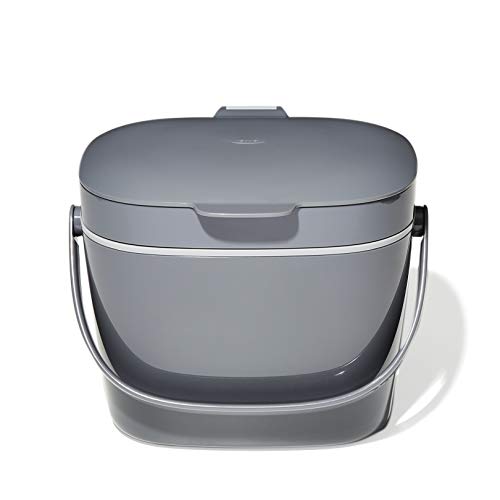
- ✓ Neat bag-tucking design
- ✓ Quiet, soft-close lid
- ✓ Easy to clean interior
- ✕ Slightly small for heavy use
- ✕ Lid can be tricky to remove
| Capacity | 1.75 gallons (6.62 liters) |
| Material | Plastic with charcoal filter |
| Design Features | Soft-close lid, stay-open lid, interior smooth surface |
| Dimensions | Not explicitly specified, but designed for typical kitchen countertop use |
| Additional Features | Odor containment, pest reduction, bag storage inside |
The first thing that hits you when you lift the lid of this OXO compost bin is how surprisingly sleek and compact it feels for a 1.75-gallon container. The charcoal color gives it a modern, understated look that doesn’t scream “kitchen gadget.”
The soft-close lid is a real game-changer. It shuts with a gentle press, sealing odors in and keeping pests out without any loud clangs.
I also love that the lid stays open when you need both hands free—perfect when tossing in scraps or cleaning.
The unique design keeps the bag neatly tucked inside, which is such a simple detail but makes the whole thing look tidy. The interior is smooth and easy to clean—no tricky corners to scrub.
Plus, the ventilation lets air flow through, reducing smells and keeping everything fresh longer.
It’s just the right size for a busy kitchen, not too bulky but enough space for daily composting. The handle on the lid is sturdy, making it easy to lift off when it’s time to empty.
And the removable lid makes taking out the compost a quick, no-fuss task.
Overall, this bin feels sturdy but lightweight enough to move around easily. It’s a smart choice if you want a clean, odor-free way to compost without sacrificing style or space.
Maygrove Outdoor Compost Bin 53 Gallon, Dual Chamber Large

- ✓ Effortless 360° rotation
- ✓ Sturdy, weatherproof build
- ✓ Dual chamber for continuous use
- ✕ Slightly heavy to move
- ✕ Larger footprint than small bins
| Capacity | 53 gallons (200 liters) |
| Material | UV-resistant polypropylene plastic and heavy-duty steel frame |
| Design Features | Dual chamber with 360° rotating drum and built-in mixing bars |
| Airflow Control | Adjustable air vents for airflow, moisture, and temperature regulation |
| Assembly | Snap-together construction with minimal screws, no tools required |
| Durability | Resists rust, cracking, and corrosion; reinforced leg supports |
The first thing that hits you when you lift the lid of the Maygrove 53-gallon compost bin is how surprisingly solid it feels. The heavy-duty steel frame and UV-resistant plastic give it a sturdy, weatherproof vibe that makes you feel confident it’ll last through seasons of outdoor use.
Firing it up for the first time, I noticed how effortless it is to spin the drum thanks to the ergonomic handle with gear-assist. No more awkward manual turning—just a smooth, almost effortless rotation that makes mixing feel like a breeze.
The built-in mixing bars do their job well, ensuring everything gets evenly composted without extra effort on your part.
Adding kitchen scraps is a snap thanks to the large sliding doors, which swing open wide enough to toss in waste without fuss. The dual-chamber design means you can toss new scraps into one while the other finishes decomposing—perfect for continuous composting.
I was impressed with how quickly it started producing rich compost, often within 4-6 weeks, which is a real time-saver.
Adjusting airflow with the vents is simple, and you can dial in just the right moisture and temperature to minimize odors. Plus, it’s pretty easy to assemble—snap-together pieces, no tools required, and a pair of gardening gloves included.
Overall, it’s a user-friendly, durable solution that makes backyard composting straightforward and efficient.
What Factors Should You Consider When Choosing the Best Size Compost Bin?
When choosing the best size compost bin, several key factors should be considered to ensure it meets your composting needs.
- Available Space: Assess the area where you plan to place the compost bin. Ensure that the size of the bin fits well within your yard or garden, allowing for easy access and maintenance.
- Volume of Waste: Consider the amount of organic waste your household produces weekly. A larger compost bin may be necessary for families or those who generate significant food scraps, while smaller bins are suitable for individuals or couples.
- Composting Method: The chosen composting method impacts bin size; for instance, a hot composting method may require a larger bin to accommodate the necessary materials, while a worm bin can be smaller and more compact.
- Composting Goals: Determine your composting goals, such as whether you want to produce compost quickly or if you prefer a slower, more passive approach. Larger bins can enable faster composting with more materials, while smaller bins are often easier to manage for slower processes.
- Local Regulations: Check local zoning laws and regulations regarding composting, as some areas have restrictions on compost bin sizes or types, which can influence your choice.
Available space is crucial because a compost bin that is too large for your yard can be an eyesore and impractical for regular use. Make sure there’s enough room not only for the bin itself but also for airflow and maintenance access.
The volume of waste is a practical consideration; if you find yourself throwing away significant amounts of organic material, a larger bin will accommodate this volume, while a smaller bin may fill up quickly, resulting in a need for more frequent emptying.
Different composting methods require different bin sizes; for example, traditional composting needs more space for the aerobic process, while vermicomposting can thrive in smaller, contained environments, allowing for more flexibility in size.
Your composting goals can dictate the size as well; if you aim to create compost quickly, you will need a larger bin to handle larger quantities of materials, while smaller bins can be better for those looking for a more leisurely composting experience.
Finally, local regulations can influence your choice of compost bin size, as some communities have specific requirements for composting setups, including limits on the size and type of compost bins permitted, which should always be verified before making a purchase.
What Are the Common Sizes of Compost Bins Available on the Market?
The common sizes of compost bins available on the market cater to various needs and space requirements.
- Small (10-20 gallons): Ideal for urban settings or small households, these bins are easy to manage and perfect for kitchen scraps and small yard waste.
- Medium (30-50 gallons): Suitable for families or gardeners with moderate waste production, these bins provide ample space while still being manageable for regular turning and maintenance.
- Large (60-100 gallons): Designed for larger households or those with significant yard waste, these bins can accommodate a substantial amount of organic material and are ideal for composting enthusiasts.
- Extra Large (over 100 gallons): Best for community gardens or farms, these bins are capable of processing large volumes of organic waste, making them efficient for commercial composting operations.
Small compost bins, typically ranging from 10 to 20 gallons, are perfect for individuals living in apartments or homes with limited outdoor space. They allow for easy management of kitchen scraps and small yard trimmings, promoting composting without overwhelming the user.
Medium-sized compost bins, which usually offer 30 to 50 gallons of capacity, are a good choice for families or avid gardeners. They strike a balance between size and manageability, enabling regular composting of a variety of organic materials without becoming cumbersome.
Large compost bins, generally between 60 to 100 gallons, are suited for larger households or those who generate significant yard waste. These bins provide enough capacity to handle a substantial amount of organic material, making them ideal for more serious composters who need to dispose of larger quantities of waste.
Extra-large compost bins, exceeding 100 gallons, are typically used in community gardens or by farms. They are designed to process vast amounts of organic waste efficiently, making them suitable for those looking to compost on a larger scale, such as in commercial or educational settings.
How Does the Size of a Compost Bin Impact Composting Efficiency?
- Small Compost Bins: Small bins are easy to manage and suitable for limited spaces, but they may require more frequent monitoring and turning to ensure effective composting.
- Medium Compost Bins: These offer a balance between space efficiency and composting capacity, allowing for a more substantial amount of material while still being manageable for regular maintenance.
- Large Compost Bins: Large bins can handle significant volumes of organic waste, promoting heat retention and microbial activity, but they may require more effort to aerate and turn the compost effectively.
- Portable Compost Bins: These bins are designed for mobility, making it easier to compost in various locations, and are typically smaller, which can limit the amount of material processed at one time.
Small Compost Bins: Small bins are easy to manage and suitable for limited spaces, such as balconies or small backyards, but they may require more frequent monitoring and turning to ensure effective composting. Their smaller size can lead to quicker decomposition, but the limited volume may restrict the amount of waste you can process at once, making them ideal for individuals or families with minimal organic waste.
Medium Compost Bins: These offer a balance between space efficiency and composting capacity, allowing for a more substantial amount of material while still being manageable for regular maintenance. They are often recommended for households that generate a moderate amount of kitchen scraps and yard waste, providing enough space for efficient microbial activity without the overwhelming size of larger bins.
Large Compost Bins: Large bins can handle significant volumes of organic waste, promoting heat retention and microbial activity, which are essential for rapid composting. However, they may require more effort to aerate and turn the compost effectively, and managing such a bin can become labor-intensive, especially if the compost material becomes too compacted.
Portable Compost Bins: These bins are designed for mobility, making it easier to compost in various locations, such as community gardens or during camping trips. They are typically smaller and lightweight, which can limit the amount of material processed at one time, but their convenience allows for composting in diverse environments, appealing to those who need flexibility.
What Size Compost Bin Is Ideal for Small Yards or Urban Settings?
The ideal compost bin size for small yards or urban settings typically ranges from 3 to 10 cubic feet, depending on the volume of organic waste produced.
- 3-Cubic Foot Bin: This size is suitable for individuals or small households that generate minimal organic waste. It is easy to manage, allowing for quicker decomposition and less space consumption, making it perfect for patios or balconies.
- 5-Cubic Foot Bin: A 5-cubic foot compost bin is ideal for urban gardeners or small families who produce a moderate amount of kitchen scraps and yard waste. This size strikes a balance between capacity and manageability, ensuring that composting remains efficient without overwhelming limited space.
- 10-Cubic Foot Bin: The 10-cubic foot compost bin is best for those who have a larger volume of organic material, such as those who may garden extensively or prepare a lot of food. While it requires more space, it allows for a more significant composting operation, providing ample room for air circulation and decomposition of materials.
- Compact Tumblers: These typically range from 3 to 6 cubic feet and are designed to facilitate easy turning of compost. They are ideal for small spaces as they can be placed on patios or decks, and their enclosed design helps to keep pests away while enhancing decomposition through constant mixing.
- Worm Bins (Vermicomposting): While not a traditional compost bin, worm bins are a fantastic option for urban settings due to their compact size and ability to produce nutrient-rich worm castings. They can fit under sinks or in small corners, and they handle kitchen scraps efficiently, making them perfect for city dwellers with limited outdoor space.
What Size Is Best for Larger Gardens or Families?
The best size for compost bins largely depends on the size of your garden and the number of people in your household.
- Small (Up to 3 cubic feet): Ideal for small gardens or families of one to two people, a small compost bin can process kitchen scraps and yard waste without overwhelming the space.
- Medium (3 to 5 cubic feet): Suitable for families of three to four, a medium bin allows for more waste accumulation and can support a more diverse range of compostable materials, making it a practical choice for modest gardens.
- Large (5 to 10 cubic feet): Best for larger families or extensive gardens, a large compost bin can handle significant amounts of organic waste, making it efficient for those who produce a lot of compostable material.
- Extra Large (10 cubic feet and above): Ideal for community gardens or families with a strong commitment to composting, extra large bins can accommodate large volumes of waste, including bulk yard waste and kitchen scraps from multiple sources.
Small compost bins are great for limited spaces, such as apartments or tiny yards, allowing for easy maintenance and quick composting of small amounts of waste. Medium bins offer flexibility and a balance between size and composting capacity, making them a popular choice for average households.
Large compost bins cater to those who garden extensively or have multiple compostable materials, reducing the frequency of emptying and maximizing compost production. Extra large bins are perfect for serious composters who want to manage significant waste loads, providing ample space for decomposition and often requiring more effort in terms of turning and aeration.
How Can the Right Size Compost Bin Benefit Your Gardening Efforts?
The right size compost bin can significantly enhance your gardening efforts by optimizing the composting process and improving the quality of your soil amendments.
- Compact Bin: Ideal for small gardens or urban settings, a compact bin typically holds 1-3 cubic feet of compost material.
- Medium Bin: A medium-sized compost bin, ranging from 4-6 cubic feet, is suitable for average-sized gardens and allows for a more substantial amount of organic waste.
- Large Bin: Large bins, often exceeding 7 cubic feet, are best for larger gardens or those with significant organic waste, providing ample space for composting.
- Worm Compost Bin: Specifically designed for vermicomposting, these bins are generally smaller and accommodate worms, turning kitchen scraps into nutrient-rich compost.
Compact Bin: Compact bins are perfect for gardeners with limited space. They allow for effective composting without taking up too much room, making them ideal for patios or balconies. However, the smaller capacity may require more frequent turning and monitoring of the composting process.
Medium Bin: A medium bin strikes a balance between size and capacity, making it a versatile choice for most home gardeners. It can handle a moderate amount of kitchen scraps and yard waste, allowing for a more efficient breakdown of materials while still being manageable in terms of space and maintenance.
Large Bin: Large compost bins are well-suited for gardeners who generate significant organic waste, such as those with larger properties or extensive gardens. They provide ample space for layering materials, which can enhance heat retention and accelerate the composting process, resulting in nutrient-rich compost more quickly.
Worm Compost Bin: A worm compost bin is an excellent choice for those who want to compost kitchen scraps efficiently. These bins create a controlled environment for worms, which break down organic matter into high-quality compost. They are typically smaller and can be kept indoors or outdoors, making them versatile and convenient for various living situations.
What Problems May Occur from Using an Incorrectly Sized Compost Bin?
- Insufficient Aeration: A compost bin that is too small may become compacted, limiting airflow and leading to anaerobic conditions. This lack of oxygen can cause unpleasant odors and slow down the decomposition process, resulting in a less effective compost.
- Overloading: If the bin is too small for the volume of organic waste being added, it can quickly become overloaded. This can prevent the materials from breaking down properly and could lead to overflowing, making it messy and difficult to manage.
- Temperature Regulation Issues: A compost bin that is not appropriately sized can struggle with maintaining the ideal internal temperature for composting. A bin that is too small may not retain heat well, while a bin that is excessively large may become difficult to heat up effectively, both of which can hinder microbial activity.
- Pest Attraction: An improperly sized compost bin can attract pests if it is overloaded or has materials that are not breaking down properly. A small, overflowing bin can create an ideal environment for rodents and insects, leading to infestations and further complications in the composting process.
- Difficulty in Turning the Compost: A bin that is too large can make it difficult to turn the compost, which is essential for aeration and even decomposition. If the materials cannot be effectively mixed, it can result in uneven breakdown and poor-quality compost.