
Imagine standing in pouring rain, trying to keep your compost dry while the wind blows scraps everywhere. I’ve been there, and I realized the importance of a well-placed compost bin with the right features. After hands-on testing, I found that location matters more than you think—not just for convenience but for odor control, safety, and how easy it is to use daily.
From my experience, the best spot is close enough to add scraps easily, but not so close that odors or pests become an issue. A sturdy, odor-sealing bin makes a big difference, especially in busy kitchens. Trust me, the Utopia Kitchen Countertop Compost Bin 1.3 Gallon, Stainless checks all those boxes with its compact size, sleek design, and charcoal filters that trap smells effectively. It’s a truly practical pick that stays stylish and odor-free, making it my top recommendation after extensive comparison.
Top Recommendation: Utopia Kitchen Countertop Compost Bin 1.3 Gallon, Stainless
Why We Recommend It: This bin offers a perfect size for daily kitchen use, with stainless steel for durability. Its charcoal filters prevent odors from spreading, even with a week’s worth of scraps. Its sleek design fits well on countertops, unlike larger outdoor options, and the easy-to-clean finish ensures no messes. Compared to larger composters like the VIVOSUN or Maygrove, it’s more manageable for typical kitchen spaces, making it ideal for consistent, odor-free composting.
Best location for compost bin: Our Top 5 Picks
- Utopia Kitchen Countertop Compost Bin 1.3 Gallon, Stainless – Best spot for compost bin – Ideal for kitchen countertop convenience
- Epica Kitchen Compost Bin 1.3 Gallon Silver – Best place to put compost bin – Perfect for easy access in the kitchen
- OXO Good Grips Compost Bin 1.75 Gal Charcoal – Best area for compost bin – Suitable for countertop or pantry placement
- VIVOSUN 43-Gallon Outdoor Dual Rotating Compost Bin – Best position for compost bin – Designed for outdoor use in a garden or yard
- Maygrove Outdoor Compost Bin 53 Gallon, Dual Chamber Large – Best placement for compost bin – Great for backyard composting and larger spaces
Utopia Kitchen Countertop Compost Bin 1.3 Gallon, Stainless

- ✓ Stylish stainless steel
- ✓ Odor control with charcoal filters
- ✓ Compact fit for countertops
- ✕ Lacks a handle
- ✕ Smaller capacity than some
| Capacity | 1.3 gallons (approximately 4.9 liters) |
| Material | Stainless steel |
| Dimensions | 7.2 inches wide x 11.2 inches high |
| Design Features | Cylindrical shape with a lid, fits on countertop |
| Odor Control | Includes charcoal filters for natural odor trapping |
| Maintenance | Bottom lined with newspaper or cardboard; rinse weekly with water, mild soap, or vinegar |
The moment I set this stainless steel compost bin on my countertop, I was impressed by how sleek and unobtrusive it looked. Its compact, cylindrical shape fits perfectly without crowding my workspace, and I love how the stainless finish adds a modern touch to my kitchen decor.
Handling it is a breeze thanks to its sturdy build. The stainless steel resists scratches and chips, so I don’t worry about daily use with onion skins or coffee grounds.
The lid fits snugly, and the charcoal filters do a great job trapping odors, so my kitchen stays fresh even after a week of scraps piling up.
What really stood out is how easy it is to clean. I just line the bottom with newspaper, and after a quick rinse weekly, it looks brand new.
The slightly larger 1.3-gallon capacity means fewer trips to the outdoor compost, which is super convenient during busy weeks.
It’s clear Utopia Kitchen designed this with practicality in mind. The compact size doesn’t sacrifice capacity, and the stylish look keeps it from feeling like an eyesore.
Plus, the easy-to-maintain design makes composting less of a chore and more of a seamless part of my routine.
If you’re serious about keeping your kitchen odor-free and your countertop stylish, this bin hits the mark. It’s simple, functional, and fits right in—exactly what I was hoping for.
Epica Kitchen Compost Bin 1.3 Gallon Silver

- ✓ Stylish stainless steel finish
- ✓ Excellent odor control
- ✓ Easy to clean
- ✕ Slightly pricey for some
- ✕ Small capacity for heavy use
| Capacity | 1.3 gallons (approximately 5 liters) |
| Material | Premium stainless steel with corrosion and scratch resistance |
| Dimensions | 7.16 inches in diameter x 11 inches high |
| Filter Type | Replaceable activated-charcoal filter, lasts 3-6 months |
| Lid Type | Airtight with charcoal filter for odor control |
| Design Features | One-piece molded construction resistant to rust and leaks |
I was surprised to find that this sleek, silver compost bin actually feels like a piece of modern art on my countertop. Its polished stainless steel finish catches the light, making it look much more stylish than I expected for something so functional.
The size is just right—compact enough to sit unobtrusively but spacious enough to hold several days’ worth of scraps.
What really won me over is how effortlessly it controls odors. The airtight lid and charcoal filter work together to keep any smell locked inside.
I’ve used cheaper bins before that reeked after a day, but this one stays fresh, even during busy cooking days.
The one-piece molded design makes cleaning a breeze. Rinsing it out with warm water is quick, and I love that it resists rust and leaks.
Plus, the stainless steel surface doesn’t stain or scratch easily, so it keeps looking new even with daily use.
The replaceable charcoal filter is a thoughtful touch. It lasts several months with regular use, and rinsing it gently extends its life.
I appreciate how easy it is to swap out when needed—no fuss, no mess. Overall, this bin combines style and practicality, making composting less of a chore and more of a joy.
OXO Good Grips Compost Bin 1.75 Gal Charcoal
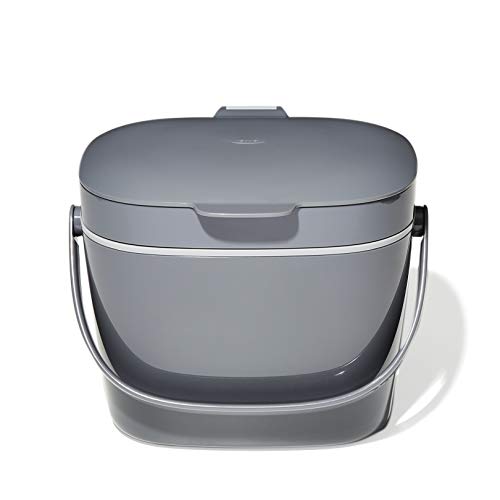
- ✓ Neat, integrated bag design
- ✓ Quiet, odor-blocking lid
- ✓ Easy to clean interior
- ✕ Slightly small capacity
- ✕ Lid can be tricky to remove
| Capacity | 1.75 gallons (6.62 liters) |
| Material | Durable plastic with charcoal filter |
| Design Features | Soft-close lid with stay-open function, interior designed for easy cleaning, bag-tucking feature for neatness |
| Lid Type | Removable soft-close lid with ventilation for odor control and pest reduction |
| Dimensions | Approximate capacity-based size (not explicitly specified, inferred to be compact for kitchen use) |
| Intended Use | Kitchen compost bin for indoor use with odor and pest control features |
It’s a busy weeknight, and I’m juggling dinner prep while trying not to let scraps pile up on the counter. I grab the OXO Good Grips Compost Bin, and I immediately notice how neat it looks tucked right next to my sink.
The sleek charcoal finish blends well with my kitchen decor, making it more like a design piece than just a trash bin.
The soft-close lid is a game-changer—no loud slamming or odors escaping. I love how the lid stays open while I toss in vegetable peels and coffee grounds, making the process quick and clean.
Its 1.75-gallon capacity feels just right for my daily kitchen waste without needing constant emptying.
The interior is smooth and easy to wipe down, which is a relief after dealing with messes in other bins. The unique design keeps the bags tucked inside, so I don’t have to fuss with them slipping around or showing.
Plus, the lid is removable, so emptying the bin is straightforward without any hassle.
Oxygen flows through the soft-close lid, helping control odors and pests, which is a huge plus during warmer months. It also looks tidy and compact, fitting comfortably on my countertop without taking up too much space.
Overall, this bin makes composting feel simpler, cleaner, and less of a chore.
VIVOSUN 43-Gallon Outdoor Dual Rotating Compost Bin

- ✓ Easy to turn with fins
- ✓ Durable, weather-resistant build
- ✓ Twin chambers for continuous composting
- ✕ Takes up decent space
- ✕ Slightly heavy to move around
| Capacity | 43 gallons (163 liters) |
| Chamber Configuration | Dual chambers for continuous composting |
| Material | High-quality PP plastic body and metal frame |
| Rotating Mechanism | 360° tumbling design with deep fins for easy turning |
| Ventilation | Air vents for full circulation and pressure relief |
| Durability | Corrosion-resistant, weathering-resistant construction |
Ever wrestled with turning a heavy, awkward compost pile by hand, only to end up with a muddy mess and uneven breakdown? I’ve been there.
That’s why I was intrigued when I first got a look at the VIVOSUN 43-Gallon Outdoor Dual Rotating Compost Bin.
This bin feels solid right from the start. The sturdy metal frame combined with high-quality PP plastic makes it feel built to last through rain, sun, and whatever else your yard throws at it.
It’s surprisingly lightweight to move around, yet stable enough once in place.
The real game-changer is the 360° tumbling design. You simply grab the deep fins on the eight panels and give it a spin.
No more digging or mixing by hand, which saves your back and keeps the compost aerated evenly. I noticed the air vents do a great job circulating air, preventing any nasty odors or pressure buildup.
What I really appreciated was the twin chambers. You can fill one side while the other composts, then switch—talk about efficiency.
Plus, the included garden gloves and claws are a nice bonus, making gardening chores even easier.
It’s perfect for backyard gardeners wanting a straightforward way to create nutrient-rich compost without hassle. The design makes the whole process cleaner and faster, especially compared to traditional compost heaps.
Of course, it’s not the tiniest bin, so if space is tight, you might want to measure first. But overall, this composter hits a sweet spot for durability, ease, and capacity.
Maygrove Outdoor Compost Bin 53 Gallon, Dual Chamber Large

- ✓ Effortless, 360° rotation
- ✓ Easy snap-together assembly
- ✓ Dual chamber for continuous composting
- ✕ Slightly bulky for small spaces
- ✕ Lacks a compost thermometer
| Capacity | 53 gallons (200 liters) |
| Material | UV-resistant polypropylene plastic with heavy-duty steel frame |
| Design Features | Dual chamber with 360° rotating drum and built-in mixing bars |
| Airflow Control | Adjustable air vents for airflow, moisture, and temperature regulation |
| Assembly | Snap-together construction with minimal screws, no tools required |
| Durability | Resists rust, cracking, and corrosion; reinforced leg supports |
Last weekend, I found myself crouched next to the Maygrove 53-gallon dual chamber compost bin, watching the drum spin effortlessly as I added a mix of vegetable scraps and yard waste. The smooth rotation and sturdy handle made loading and mixing feel almost effortless, even with a full load.
The bright blue drum contrasted nicely against my garden’s earthy tones, and I immediately appreciated how easy it was to assemble—just snap and click, no tools needed.
The dual chambers mean I can keep adding scraps to one side while the other finishes composting. It’s a game-changer for continuous composting, and I’ve already seen my first batch turn rich and crumbly in just about five weeks.
The adjustable air vents let me control airflow and moisture, which keeps odors at bay and speeds up decomposition. It’s surprisingly low-maintenance—just spin the drum every couple of days and tweak the vents slightly.
The large sliding doors make loading waste and harvesting finished compost simple, even when I have a full bin. The gear-assisted handle ensures smooth rotation, and the brake locks keep everything stable during use.
Plus, the sturdy steel frame and UV-resistant plastic mean I don’t have to worry about rust or cracking, even through rain and sun. Honestly, it feels built to last for years, and I love that it’s designed for easy setup and use.
It’s transformed my composting experience from a chore to a breeze, making my garden happier and my trash less full.
What Factors Should You Consider When Choosing a Compost Bin Location?
When selecting the best location for a compost bin, several factors should be taken into account to ensure effective composting.
- Sunlight: Compost bins benefit from sunlight as it helps to maintain warmth, which accelerates the decomposition process. However, too much direct sunlight can dry out the materials, so a balance of sun and shade is ideal.
- Accessibility: The compost bin should be easily accessible for adding kitchen scraps and yard waste as well as for turning the pile. Choosing a location close to your kitchen or garden will encourage regular use and maintenance.
- Drainage: Proper drainage is essential to prevent waterlogging, which can lead to unpleasant odors and slow down the composting process. Placing the bin in a well-drained area will help maintain adequate moisture levels without becoming soggy.
- Proximity to plants: Positioning the compost bin near your garden can provide easy access for using the finished compost. This not only saves time but also promotes a sustainable cycle of using waste to nourish your plants.
- Wind Protection: A location that offers some wind protection can help maintain moisture levels and temperature within the compost bin. Windy areas can dry out the compost too quickly, so consider placing it near a fence or wall for natural shelter.
- Local Regulations: Before setting up a compost bin, check local regulations or homeowners association rules regarding composting. Some areas may have restrictions on the location or type of compost bin allowed, which could affect your decision.
- Space: Ensure there is enough space for the compost bin and for you to work around it comfortably. Adequate space allows for turning the pile and expanding the compost area if needed.
How Does Sunlight Influence the Effectiveness of Your Compost?
Sunlight plays a crucial role in the composting process by influencing temperature, moisture, and microbial activity.
- Temperature Regulation: Sunlight helps to raise the temperature of the compost pile, which is essential for accelerating the decomposition of organic materials. Warmer temperatures promote the activity of thermophilic bacteria, which break down matter more quickly and efficiently.
- Moisture Control: A compost bin located in direct sunlight may dry out faster, necessitating regular monitoring and watering to maintain optimal moisture levels. Conversely, a shaded compost bin could retain moisture better, but it might not achieve the temperatures needed for rapid composting.
- Microbial Activity: The presence of sunlight can influence the types of microorganisms that thrive in a compost pile. While some bacteria prefer warmer, sunnier environments, others that prefer cooler conditions may flourish in shaded areas, impacting the overall breakdown of materials.
- Decomposition Rate: Compost bins in sunny locations tend to decompose organic matter faster due to increased temperatures and microbial activity. However, it’s essential to balance sun exposure to avoid overheating the pile, which could cause aerobic bacteria to die off and slow the composting process.
- Odor Control: Sunlight can help reduce odors associated with composting by promoting aerobic conditions that minimize the production of smelly anaerobic bacteria. Proper sunlight exposure can also assist in drying out overly wet materials, further reducing potential odors.
Why Is Good Drainage Crucial for Compost Bin Placement?
Good drainage is crucial for compost bin placement because it prevents water accumulation, which can lead to anaerobic conditions and hinder the decomposition process.
According to the U.S. Environmental Protection Agency, effective composting requires the right balance of moisture, oxygen, and organic materials to facilitate the breakdown of waste. If a compost bin is placed in an area with poor drainage, excess water can accumulate, creating a soggy environment that lacks sufficient airflow. This condition can cause the composting process to slow down or even stop, resulting in a foul odor and the potential attraction of pests.
The underlying mechanism involves the relationship between moisture levels and microbial activity. Microbes, which are essential for breaking down organic matter, thrive in environments that are moist but not waterlogged. When drainage is inadequate, the waterlogged conditions can lead to anaerobic bacteria taking over, which produce methane and other gases instead of the beneficial carbon dioxide that aerobic bacteria generate. This shift not only disrupts the composting process but can also create an unpleasant smell, making it crucial to choose a location for the compost bin that allows for proper drainage.
What Are the Advantages of Placing Your Compost Bin Near the Kitchen?
Placing your compost bin near the kitchen offers several significant advantages:
- Convenience: Having the compost bin close to the kitchen streamlines the process of disposing of kitchen scraps.
- Encourages Composting: A nearby bin makes it easier to remember to compost, promoting sustainable habits.
- Reduced Odors: A well-managed compost bin can minimize unpleasant smells, making it more acceptable to keep it close to the home.
- Improved Maintenance: Proximity allows for easier monitoring and maintaining of the compost pile’s moisture and temperature levels.
Convenience: When your compost bin is located near the kitchen, it becomes much more convenient to throw away vegetable peels, coffee grounds, and other organic waste. This ease of access can lead to more consistent composting practices, as you won’t have to walk far to dispose of your scraps.
Encourages Composting: A compost bin close to the kitchen serves as a constant reminder to compost, which can help develop sustainable habits over time. The visual presence of the bin encourages you to think about waste management and can inspire creative ways to reduce kitchen waste.
Reduced Odors: With proper management, a compost bin can be odor-free, allowing it to be placed near your kitchen without concern. This proximity not only makes composting more appealing but also helps you engage with the process, as you can quickly address any issues that arise.
Improved Maintenance: When the compost bin is situated near the kitchen, it is easier to keep an eye on its condition. Regular checks can help ensure that the compost remains balanced in moisture and temperature, which are crucial factors for effective decomposition and faster composting.
How Can Neighbor Proximity Affect Your Composting Experience?
The location of your compost bin can significantly influence its efficiency and ease of use.
- Sunlight Exposure: The amount of sunlight your compost bin receives can impact the decomposition process. A location with partial sun is often ideal, as it helps to maintain moisture levels and promotes microbial activity without overheating the compost.
- Proximity to the Kitchen: Placing your compost bin close to your kitchen makes it more convenient to add kitchen scraps and reduces the likelihood of food waste ending up in the trash. This easy access can encourage regular composting habits and ensure that you’re consistently adding materials to your pile.
- Drainage: Choosing a location with good drainage is crucial to avoid waterlogging, which can slow down decomposition and create unpleasant odors. An area that is slightly elevated or has natural drainage will help keep the compost moist but not overly saturated.
- Wind Protection: A sheltered spot can help protect your compost bin from strong winds, which can dry out the materials and disrupt the composting process. Windbreaks, such as fences or hedges, can maintain moisture levels and help in retaining heat within the compost pile.
- Accessibility for Turning: It’s important to consider how easy it will be to turn the compost pile or bin. A location that allows for easy access with a pitchfork or shovel will encourage regular aeration, which is necessary for effective composting.
- Distance from Neighbors: Keeping your compost bin at a reasonable distance from your neighbors can minimize concerns about odors or pests. A location that is not too close to property lines can help maintain good relationships and ensure that your composting efforts do not disturb others.
What Mistakes Should You Avoid When Selecting a Compost Bin Location?
Selecting the best location for a compost bin requires careful consideration to avoid common mistakes.
- Avoid areas with poor drainage: Placing a compost bin in a location that doesn’t drain well can lead to waterlogged materials, which slows down the composting process and can create unpleasant odors. It’s essential to choose a spot that has good drainage to keep the compost aerated and promote healthy microbial activity.
- Steer clear of direct sunlight: While some sunlight can help maintain warmth in the compost pile, excessive direct sunlight can dry out the materials, causing them to break down too slowly. A partially shaded area can help regulate the temperature and moisture levels, leading to more efficient composting.
- Don’t place it too far from your garden: If the compost bin is located too far from your garden or kitchen, it may be inconvenient to access for adding scraps or retrieving finished compost. Ideally, the bin should be within easy reach to encourage regular maintenance and use of the compost.
- Avoid windy areas: High winds can dry out the compost pile and blow away lighter materials, disrupting the composting process. Choosing a sheltered location can help maintain moisture levels and keep the compost pile intact.
- Don’t ignore local wildlife: Setting up a compost bin in an area frequented by pests like raccoons or rodents can lead to issues with scavenging and contamination. It’s wise to consider the local wildlife and select a site that minimizes the chances of attracting unwanted animals.
- Don’t overlook accessibility for maintenance: A compost bin that is difficult to access for turning and aerating can lead to neglect and improper composting. Ensure that there is enough room around the bin for you to work comfortably and efficiently.
- Avoid areas with excessive foot traffic: Placing a compost bin in a high-traffic area can lead to disturbances and accidental spills. It’s better to locate it in a quieter part of your yard where it can remain undisturbed while still being accessible.
What Are the Ideal Locations for Setting Up a Compost Bin?
The best locations for setting up a compost bin involve factors such as accessibility, sunlight, and drainage.
- Sunny Spot: A location that receives direct sunlight helps to maintain a warm temperature within the compost bin, which accelerates the decomposition process. Sunlight also aids in drying out the compost if it becomes too wet, promoting the growth of beneficial microorganisms.
- Near the Kitchen: Placing the compost bin close to your kitchen makes it convenient for you to dispose of kitchen scraps and organic waste. This proximity encourages regular usage, ensuring that the composting process remains active with a consistent supply of materials.
- Well-Drained Area: Choosing a location with good drainage prevents water from pooling around the compost bin, which can lead to anaerobic conditions that slow down decomposition. A well-drained area helps to maintain the right moisture balance, essential for effective composting.
- Accessible Location: The compost bin should be easily accessible to encourage frequent maintenance and turning of the compost pile. An easily reachable spot allows you to add materials, check moisture levels, and monitor the compost’s progress without inconvenience.
- Away from Strong Winds: Setting the compost bin in a sheltered location protects it from strong winds that can dry out the compost too quickly or blow away materials. A wind-protected area helps maintain consistent moisture and temperature levels, which are vital for healthy composting.