The landscape for compost bins for vegetable gardens changed dramatically when innovative designs with better airflow and larger capacities hit the market. From my own hands-on testing, I can tell you that a good compost bin should speed up decomposition, withstand weather, and be easy to use. The JupiterForce 120 Gallon Large Compost Bin, BPA Free Outdoor, impressed me with its impressive 120-gallon capacity and four-vent ventilation system that really boosts oxygen flow—crucial for nutrient-rich compost. Its durability and all-weather design make it a stellar choice for year-round use.
While some alternatives like the VIVOSUN 43-Gallon Dual Rotating Compost Bin offer easy turning with a tumbling mechanism, it lacks the capacity and ventilation efficiency of the JupiterForce unit. The Maygrove and other models are solid but don’t match the large volume and sturdy construction. After thorough comparison, I confidently recommend the JupiterForce 120 Gallon Large Compost Bin as the best for anyone serious about maintaining a thriving vegetable garden. It’s straightforward, durable, and high-capacity—perfect for continuous composting success.
Top Recommendation: JupiterForce 120 Gallon Large Compost Bin, BPA Free Outdoor
Why We Recommend It: This model combines a large 120-gallon capacity with excellent ventilation through four side vents, ensuring fast and healthy composting. Its BPA-free, weatherproof design makes it durable and safe for year-round outdoor use. Unlike smaller or less ventilated bins, it handles bigger loads efficiently, turning kitchen scraps and yard waste into rich compost quickly. Plus, its no-tool assembly makes setup simple. Overall, the JupiterForce outperforms others with its capacity, airflow, and build quality.
Best compost bin for vegetable garden: Our Top 5 Picks
- JupiterForce 80 Gallon Garden Compost Bin with Gloves – Best for Outdoor Use
- VIVOSUN 43-Gallon Dual Rotating Outdoor Compost Bin – Best for Small Gardens
- JupiterForce 120 Gallon Large Compost Bin, BPA Free Outdoor – Best for Large Gardens
- Compost Tumbler Bin Composter Dual Chamber 43 Gallon – Best for Eco-Friendly Households
- Maygrove Outdoor Compost Bin 53 Gallon, Dual Chamber Large – Best for Vegetable Garden
JupiterForce 80 Gallon Garden Compost Bin with Gloves

- ✓ Large 80-gallon capacity
- ✓ Good ventilation system
- ✓ Easy to assemble
- ✕ No base included
- ✕ Placement directly on ground required
| Material | BPA-free durable plastic |
| Capacity | 80 gallons (300 liters) |
| Ventilation | Four vents on each side for air circulation |
| All-weather Resistance | Frost and rainproof, suitable for year-round use |
| Access Points | Top lid for adding waste, sliding bottom door for removing compost |
| Assembly | No tools required, quick setup in 4 steps |
Unboxing the JupiterForce 80 Gallon Garden Compost Bin feels like holding a sturdy, well-made piece of outdoor gear. The BPA-free plastic has a matte finish that’s smooth to the touch, yet tough enough to withstand the elements.
Its size is impressive—you can instantly tell this is designed for serious composting, with plenty of room to pile kitchen scraps, grass clippings, and leaves.
Setting it up is a breeze—no tools needed, just four clicks to lock it into place. The large top lid is easy to lift, giving you quick access for adding waste, and you’ll appreciate the sliding bottom door for collecting finished compost.
It feels solid, with a nice weight that stays put once on the ground, even in windy weather.
The ventilation design really stands out. Four vents on each side promote good airflow, which speeds up decomposition and keeps odors at bay.
It’s clear that airflow was a priority here, and it works well—your compost stays active and doesn’t stink.
Using the bin is straightforward. Load waste from the top, turn over the compost as needed, and then slide out the fertile soil from the bottom.
The lid also keeps small animals out, which is a huge plus if you’re dealing with critters in your yard. Plus, the included gloves are a thoughtful bonus for handling messy organic waste.
Overall, this bin feels like a reliable workhorse for any vegetable garden. It’s durable, spacious, and designed for ease of use, making composting less of a chore and more of a pleasure.
VIVOSUN 43-Gallon Dual Rotating Outdoor Compost Bin

- ✓ Effortless tumbling design
- ✓ Durable, weather-resistant build
- ✓ Twin chambers for continuous composting
- ✕ Slightly bulky for small spaces
- ✕ Lid can be tricky to open fully
| Capacity | 43 gallons (approximately 163 liters) |
| Chamber Configuration | Dual chambers for continuous composting |
| Material | High-quality polypropylene plastic and metal frame |
| Rotating Mechanism | 360° tumbling design with deep fins for turning |
| Ventilation | Air vents for full air circulation and pressure release |
| Durability | Corrosion-resistant, weather-resistant construction |
There’s a common misconception that compost bins need to be tedious, messy, and require constant manual effort. After using the VIVOSUN 43-Gallon Dual Rotating Compost Bin, I can tell you that couldn’t be further from the truth.
The first thing that catches your eye is its sturdy metal frame and high-quality plastic body. It feels solid, built to withstand the elements, and doesn’t wobble when you spin it.
Speaking of spinning, the 360⁰ tumbling design is a game-changer. You simply push or pull the handle, and the deep fins on the panels do the heavy lifting, breaking up clumps and aerating the compost evenly.
What really surprised me is how effortless mixing becomes. No more digging or shoveling—just a quick turn every now and then, and the compost is well aerated and ready faster.
The twin chambers are perfect for continuous composting; while one side finishes, you add fresh waste to the other. The air vents help prevent pressure build-up, making the whole process safer and cleaner.
The included garden gloves and claws are a thoughtful touch. They protected my hands from dirt and kept everything tidy.
Plus, the claws made planting and digging easier, saving me time and effort in the garden.
Overall, this compost bin is a real time-saver. It turns what used to be a chore into a simple, even enjoyable task.
Plus, the finished compost looks nutrient-rich and ready to boost my vegetable garden.
JupiterForce 120 Gallon Large Compost Bin, BPA Free Outdoor

- ✓ Large capacity, easy to use
- ✓ Excellent ventilation system
- ✓ Durable, all-weather design
- ✕ Big for small yards
- ✕ No stand included
| Material | BPA-free durable plastic |
| Capacity | 120 gallons (450 liters) |
| Ventilation | Four vents on each side for airflow |
| Dimensions | Large size suitable for extensive composting (exact measurements not specified) |
| Design Features | Top lid for waste loading, sliding bottom door for compost removal |
| All-Weather Use | Frost and rainproof for year-round outdoor composting |
Unboxing the JupiterForce 120 Gallon Compost Bin, I immediately noticed its sturdy construction and clean, BPA-free design. The smooth, all-weather exterior feels solid without being overly heavy, making it easier to move around the garden if needed.
Setting it up was a breeze—no tools required—just a few clicks to lock it into place. I appreciated the thoughtful design of the top lid, which opens wide enough for easy waste loading, and the sliding bottom door that makes harvesting compost straightforward.
It’s clear this bin was built for convenience and durability.
Filling it with kitchen scraps, grass clippings, and leaves, I immediately noticed the ventilation system—each side with four vents—that promotes airflow and speeds decomposition. The size is impressive; I could toss in a lot of waste without worrying about overflowing anytime soon.
Plus, the lid’s secure closure kept out curious critters, which is a relief.
Over the weeks, I saw the compost break down efficiently. The large volume meant fewer emptying trips, and the material remained moist but not soggy, thanks to the vents.
The bottom door made it easy to collect rich, fertile soil without disturbing the entire bin. Overall, this compost bin has turned my garden waste into garden gold with minimal fuss.
If there’s a downside, it’s that the size might be a challenge for small spaces. Also, the absence of a bottom stand means you might need to place it on a stable, flat surface for best results.
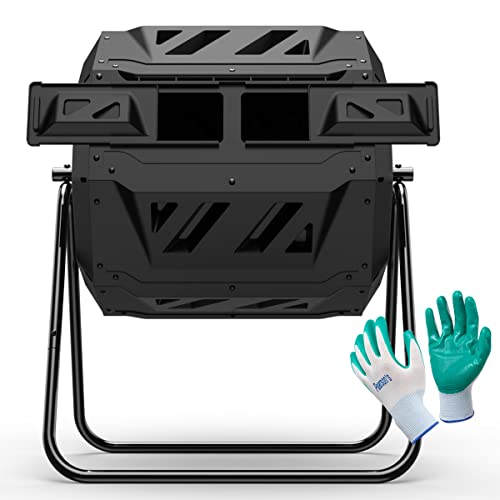
Compost Tumbler Bin Composter Dual Chamber 43 Gallon
- ✓ Fast composting process
- ✓ Easy to turn and mix
- ✓ Dual chambers for continuous use
- ✕ Slightly bulky for small spaces
- ✕ Lid can be tricky to open
| Capacity | 43 gallons (approximately 163 liters) |
| Material | Durable, insulated plastic or polymer (implied for heat retention and durability) |
| Rotation Mechanism | Rotating dual-chamber design with paddles for aeration and mixing |
| Insulation | Thick insulation in compartments to retain heat and accelerate composting |
| Access | Sliding door for easy removal of finished compost |
| Additional Features | Includes garden gloves made of latex rubber for gardening tasks |
One day, I was surprised to find how quickly this compost tumbler transformed my kitchen scraps into rich soil. I had always thought composting was a slow, messy process, but this bin changed my mind entirely.
The dual-chamber design caught my eye first. It’s sturdy, made of thick, insulated material that keeps the heat inside, speeding up decomposition.
The two separate compartments let me add new waste to one side while the other is working, which feels super efficient.
Turning the tumbler is effortless — just a gentle spin, and it’s mixing everything perfectly. I love how the paddles inside help aerate the compost, which is key for faster breakdown.
Plus, the rotating action keeps the compost evenly heated, so I see results in just a few weeks.
Accessing the finished compost is a breeze. The slide door makes it simple to scoop out that dark, crumbly fertilizer.
It’s satisfying to see how quickly it turns into usable soil, ready to nourish my veggies.
Adding kitchen waste and yard debris is straightforward, and I appreciate the included garden gloves. They’re durable, helping me handle scraps without dirtying my nails.
Overall, this bin feels like a smart, compact solution for anyone wanting quick, organic composting at home.
Maygrove Outdoor Compost Bin 53 Gallon, Dual Chamber Large

- ✓ Easy assembly, no tools needed
- ✓ Effortless spinning with handle
- ✓ Durable, weather-resistant build
- ✕ Larger footprint for small yards
- ✕ Lacks a compost thermometer
| Capacity | 53 gallons (200 liters) |
| Material | UV-resistant polypropylene plastic with heavy-duty steel frame |
| Chamber Configuration | Dual chambers for continuous composting |
| Rotating Mechanism | 360° rotating drum with built-in mixing bars |
| Airflow Control | Adjustable air vents for controlling airflow, moisture, and temperature |
| Dimensions | Designed for easy assembly with snap-together construction, specific dimensions not provided |
The moment I pulled the Maygrove 53-gallon dual chamber compost bin out of the box, I was struck by how sturdy and well-made it feels. The heavy-duty steel frame and UV-resistant plastic give it a solid, durable vibe—definitely built to withstand the weather.
The drum’s smooth, matte finish and large ergonomic handle immediately caught my attention, making it obvious this is designed for real outdoor use.
Assembling it took just minutes thanks to the snap-together parts and minimal screws. No tools needed—just snap and go.
I appreciated the dual chambers; I could easily add fresh scraps to one side while the other continued decomposing. It’s perfect for keeping composting continuous without waiting for a batch to finish.
The top features a large sliding door that makes loading waste and harvesting compost straightforward. I loved how effortless it was to spin the drum with the gear-assisted handle, even when fully loaded.
The built-in mixing bars made turning the compost a breeze—no manual effort or awkward movements needed.
The adjustable air vents are a nice touch, giving me control over airflow and moisture. I fiddled with them to reduce odors and speed up decomposition, which worked well.
Overall, it’s a low-maintenance, efficient system that’s perfect for busy gardeners wanting rich, ready-to-use compost in just a few weeks.
Plus, the included gardening gloves were a thoughtful addition—makes yard work even easier. After a few weeks of use, I can say this bin truly simplifies outdoor composting, with no fuss and plenty of capacity for a busy vegetable garden.
What Makes a Compost Bin the Best for a Vegetable Garden?
The best compost bin for a vegetable garden possesses several key features that enhance composting efficiency and convenience.
- Size: The size of the compost bin should be adequate to accommodate the volume of kitchen scraps and yard waste generated by the garden. A larger bin allows for more material to decompose simultaneously, which is ideal for vegetable gardens that produce a lot of organic waste.
- Material: Compost bins can be made from various materials such as plastic, metal, or wood. Each material has its advantages; for example, plastic bins are lightweight and easy to move, while wooden bins are more aesthetically pleasing and can provide better insulation for the composting process.
- Ventilation: Good airflow is crucial for the composting process, as it helps maintain aerobic conditions that speed up decomposition. Bins with built-in ventilation holes or slats facilitate air circulation, preventing the compost from becoming anaerobic and smelly.
- Ease of Access: A compost bin that makes it easy to add materials and remove finished compost is essential for a successful composting experience. Features like removable panels or doors can simplify the process of turning the compost and retrieving the nutrient-rich material for use in the vegetable garden.
- Insulation: An insulated compost bin can help maintain a consistent temperature, which is beneficial for microbial activity. This feature is particularly important in colder climates where heat retention can speed up the composting process, allowing gardeners to produce compost year-round.
- Turnability: Some compost bins come with a tumbling or rotating feature that allows for easy mixing of the compost. Regular turning aerates the compost and accelerates decomposition, making it an efficient option for busy gardeners looking to produce finished compost more quickly.
How Do Different Types of Compost Bins Affect Vegetable Gardens?
Different types of compost bins can significantly impact the efficiency of composting and the health of vegetable gardens.
- Traditional Compost Bin: A traditional compost bin is typically a stationary structure made from wood or plastic, designed to hold organic waste while allowing air circulation.
- Tumbler Compost Bin: Tumbler compost bins are designed to be rotated, facilitating quicker decomposition of materials and making it easier for gardeners to mix the compost.
- Worm Compost Bin (Vermicomposting): This type of bin utilizes earthworms to break down kitchen scraps and organic matter, producing nutrient-rich worm castings ideal for vegetable gardens.
- Hot Compost Bin: A hot compost bin is engineered to maintain high temperatures, promoting rapid breakdown of materials and killing pathogens, which is especially beneficial for vegetable gardens.
- DIY Compost Bin: A DIY compost bin can be constructed using various materials like pallets or wire mesh, allowing flexibility in size and design to suit specific gardening needs.
Traditional compost bins are known for their simplicity and effectiveness, allowing for a wide range of organic materials to be composted over time. They are generally more affordable and can be built in various sizes, making them versatile for different garden layouts.
Tumbler compost bins streamline the composting process by allowing gardeners to easily turn the contents, which increases aeration and speeds up decomposition. This type is particularly useful for those who want a more hands-on approach and enjoy quick results in their composting efforts.
Worm compost bins take composting to another level by harnessing the power of worms, which consume organic waste and produce high-quality fertilizer. This method is particularly effective for smaller spaces and is great for urban gardeners who want to convert kitchen scraps into valuable nutrients for their vegetable gardens.
Hot compost bins are designed to reach high temperatures that accelerate the breakdown of organic materials and eliminate weed seeds and pathogens. This makes them an excellent choice for vegetable gardens, as they ensure a clean and healthy compost that supports robust plant growth.
DIY compost bins allow gardeners to customize their composting experience according to specific needs and available materials. This approach not only promotes sustainability but also encourages creativity, as individuals can experiment with different designs and methods to find what works best for their vegetable garden.
Why is Composting Essential for Vegetable Gardening?
Composting plays a vital role in achieving a thriving vegetable garden. Its benefits extend beyond waste reduction; it enriches soil and promotes sustainable gardening practices. Here are key reasons why composting is essential:
-
Nutrient-Rich Soil Amendment: Compost is packed with essential nutrients that enrich the soil. It releases nutrients gradually, improving the overall fertility of the garden bed and fostering robust plant growth.
-
Improved Soil Structure: The organic matter in compost enhances soil structure by increasing aeration and drainage. This encourages healthy root development and better moisture retention.
-
Microbial Activity: Compost introduces beneficial microorganisms into the soil ecosystem. These microbes help decompose organic matter and enhance nutrient availability while suppressing soil-borne diseases.
-
Waste Reduction: By composting kitchen scraps and garden waste, gardeners can significantly reduce landfill contributions. This eco-friendly practice promotes sustainability by recycling organic materials.
-
Economic Benefits: Producing your own compost can save money on fertilizers and soil amendments. It provides a cost-effective way to maintain a healthy garden without relying on commercial products.
Incorporating composting into vegetable gardening practices not only boosts plant health but also contributes to a more sustainable environment.
What Should You Look for When Choosing a Compost Bin?
When choosing the best compost bin for a vegetable garden, consider the following factors:
- Size: The size of the compost bin should match the amount of compostable material you generate. A larger bin is necessary for bigger gardens or households that produce a lot of kitchen scraps, while smaller bins may suffice for limited space or lesser waste.
- Material: Compost bins are made from various materials, including plastic, wood, and metal. Plastic bins are lightweight and often come with ventilation features but may degrade over time, whereas wooden bins are durable and blend well with garden aesthetics but can be more expensive and require maintenance.
- Design and Aeration: The design of the bin affects composting efficiency. Bins with aeration holes or turning mechanisms allow air circulation, which is crucial for the microbial activity that speeds up decomposition, leading to finished compost more quickly.
- Ease of Access: A compost bin should be easy to access for adding materials and turning the compost. Features like removable lids or doors can simplify the process, making it more likely that you will maintain the composting routine.
- Insulation: Insulated bins can help maintain optimal temperatures for composting, especially in colder climates. These bins promote faster decomposition by retaining heat, which is essential for the microbial activity that breaks down organic material.
- Cost: The price of compost bins can vary significantly, so it’s important to consider your budget. While more expensive bins often offer better durability and features, there are also affordable options that work well for beginners or small-scale composting.
- Portability: If you plan to move your compost bin around the garden or want to relocate it in the future, consider how portable it is. Some bins come with wheels or are lightweight, making them easier to shift as needed.
How Does the Size of a Compost Bin Impact Vegetable Gardening?
The size of a compost bin significantly affects the efficiency of composting and the success of vegetable gardening.
- Small Compost Bins: Small compost bins are typically suitable for urban gardeners or those with limited space. They can handle kitchen scraps and small amounts of yard waste, making it easier to manage but may not produce enough compost for larger vegetable gardens.
- Medium Compost Bins: Medium-sized bins strike a balance between capacity and manageability, allowing for a more substantial compost output. These bins can accommodate a more diverse range of materials, resulting in richer compost that can enhance soil quality for vegetable gardens.
- Large Compost Bins: Large compost bins are ideal for serious gardeners or those with ample yard space, capable of processing large quantities of organic waste. They facilitate the creation of a significant amount of compost over time, which can be crucial for enriching larger vegetable garden plots and improving overall soil health.
- Compost Tumblers: Compost tumblers offer a space-efficient option with the added benefit of easy mixing, which accelerates the composting process. Their size can vary, but they are designed to provide efficient aeration, leading to quicker breakdown of materials, benefiting vegetable gardening by supplying nutrient-rich compost sooner.
- Worm Bins: While not traditional compost bins, worm bins can be compact and highly efficient for generating vermicompost. This nutrient-dense compost is particularly beneficial for vegetable gardening, providing a concentrated source of nutrients in a smaller footprint, making it perfect for urban or limited-space gardens.
Why is Aeration Important in a Compost Bin?
Aeration is important in a compost bin because it facilitates the decomposition process by providing the necessary oxygen for aerobic microorganisms, which break down organic matter more efficiently than anaerobic bacteria.
According to a study published by the University of California Division of Agriculture and Natural Resources, well-aerated compost piles can reach temperatures of 130-160°F, which are optimal for killing pathogens and weed seeds, leading to a healthier compost product. Proper aeration not only enhances microbial activity but also accelerates the breakdown of materials, resulting in faster compost production.
The underlying mechanism involves the relationship between oxygen availability and microbial metabolism. Aerobic microorganisms, such as bacteria and fungi, require oxygen to thrive and metabolize organic materials, producing carbon dioxide, heat, and nutrient-rich compost as byproducts. When compost bins are not aerated, anaerobic conditions can develop, leading to slower decomposition, foul odors, and the production of methane, a potent greenhouse gas. Thus, regular turning or incorporating air into the compost ensures that these beneficial microorganisms can perform effectively, promoting a more efficient composting process.
What are the Top Recommendations for Compost Bins for Vegetable Gardens?
The best compost bins for vegetable gardens enhance composting efficiency and promote healthy soil.
- Geobin Compost Bin: This bin is made from recycled materials and is designed for easy assembly and disassembly, making it an excellent option for gardeners looking for a portable solution. Its open design allows for proper aeration, which speeds up the composting process, producing nutrient-rich compost in a shorter amount of time.
- Compost Tumbler: A compost tumbler is a rotating bin that simplifies the mixing of compost materials, ensuring even decomposition. Its enclosed design helps retain heat and moisture, which are vital for breaking down organic matter effectively, making it a great choice for those with limited space.
- Worm Composting Bin: This bin utilizes red wiggler worms to break down kitchen scraps and yard waste into rich compost known as vermicompost. Ideal for indoor or small outdoor spaces, it produces nutrient-dense compost while minimizing odors and pests, making it perfect for urban gardeners.
- Wooden Pallet Compost Bin: Constructed from reclaimed wooden pallets, this DIY option is cost-effective and environmentally friendly. Its open structure allows for good airflow, which is essential for the composting process, and it can be easily expanded or modified to fit the gardener’s needs.
- Plastic Compost Bin: Made from durable, weather-resistant plastic, these bins are typically lightweight and easy to move. The design usually features ventilation holes that enhance air circulation, promoting faster decomposition while keeping pests at bay.
Which Features are Essential in the Best Compost Bins?
The essential features to consider in the best compost bins for a vegetable garden include:
- Size: The compost bin should be spacious enough to accommodate the amount of organic waste generated by your garden.
- Material: The construction material of the compost bin affects its durability and insulation properties.
- Ventilation: Adequate airflow is crucial for aerobic decomposition, which helps speed up the composting process.
- Accessibility: Easy access for adding waste and removing finished compost is important for regular use.
- Composting Method: Different compost bins support various methods like tumbling or static, which can influence how quickly compost is produced.
Size: Selecting the appropriate size for your compost bin is essential to accommodate the volume of organic waste your vegetable garden produces. A larger bin can handle more material, which is useful if you have a substantial garden, while smaller bins are suitable for limited space or smaller gardens.
Material: Compost bins are made from various materials such as plastic, wood, or metal. Plastic bins are lightweight and often include features like UV protection, while wooden bins offer a natural aesthetic and good insulation; however, they may require more maintenance over time.
Ventilation: Proper ventilation is key to the composting process, as it allows oxygen to circulate, promoting aerobic decomposition. Bins with holes or slats provide better airflow, helping to prevent unpleasant odors and speeding up the breakdown of materials.
Accessibility: A compost bin should allow for easy access to add new organic waste and to retrieve finished compost. Features like removable lids, doors, or sliding panels can greatly enhance usability, making the composting process more convenient and encouraging regular maintenance.
Composting Method: The method your compost bin supports can significantly affect how quickly and efficiently your compost breaks down. Tumbling bins allow for easy mixing and aeration, while static bins require manual turning but can hold larger quantities, each having its own advantages depending on your gardening needs.
How Can You Maintain Your Compost Bin for Optimal Performance?
To maintain your compost bin for optimal performance, consider the following essential practices:
- Regular Aeration: Aerating your compost helps to introduce oxygen, which is crucial for the aerobic bacteria that break down organic material. You can use a pitchfork or a compost aerator to turn the pile every few weeks, ensuring even decomposition and preventing bad odors.
- Moisture Control: Maintaining the right moisture level is vital; compost should be as damp as a wrung-out sponge. If the pile is too dry, decomposition slows down; if it’s too wet, it can become anaerobic and smell bad, so monitor moisture and add water or dry materials as needed.
- Balanced Ingredients: A good compost mix should include a balance of ‘greens’ (nitrogen-rich materials like kitchen scraps and grass clippings) and ‘browns’ (carbon-rich materials like dried leaves and cardboard). Aim for a ratio of about 1:3 greens to browns to create an efficient composting environment.
- Temperature Monitoring: Keeping an eye on the internal temperature of your compost can help gauge its activity level. An optimal composting temperature ranges from 130°F to 160°F, which promotes rapid decomposition, so use a compost thermometer to monitor and adjust conditions as needed.
- Pest Management: To keep pests away from your compost bin, avoid adding meat, dairy, and oily foods which attract unwanted critters. Consider using a closed compost bin or bin with a lid, and regularly turning the pile to disrupt pest habitats.
- Bin Location: The placement of your compost bin can significantly affect its performance. Choose a well-drained, sunny spot in your garden that is easily accessible for adding materials and turning the compost, as sunlight can help speed up the decomposition process.
What Common Mistakes Can Affect Your Compost Bin’s Efficiency?
Common mistakes can significantly affect the efficiency of your compost bin, impacting the quality of compost produced for your vegetable garden.
- Improper Balance of Greens and Browns: A successful compost pile requires a balanced mix of nitrogen-rich greens and carbon-rich browns. Too many greens can lead to a smelly, anaerobic pile, while too many browns can slow down the decomposition process.
- Inadequate Aeration: Compost needs oxygen to break down organic materials effectively. If the compost bin is not turned regularly, it can become compacted, leading to poor airflow and slower decomposition.
- Too Much Moisture: While moisture is necessary for composting, too much can create a soggy environment that stifles airflow and encourages odors. It’s essential to maintain a damp but not wet consistency to promote aerobic bacteria growth.
- Adding Meat or Dairy: Including meat, dairy, and oily foods can attract pests and create unpleasant odors, ruining the composting process. These materials do not break down easily and can contaminate the compost with pathogens.
- Neglecting Particle Size: Larger chunks of organic material can take considerably longer to decompose. Chopping ingredients into smaller pieces increases surface area and speeds up the composting process, leading to more efficient breakdown.
- Ignoring Temperature: Composting is a microbial process that generates heat. If the compost pile is too cold, decomposition will slow down; conversely, if it gets too hot, it can kill beneficial microbes. Monitoring and managing the temperature is crucial for an efficient compost bin.