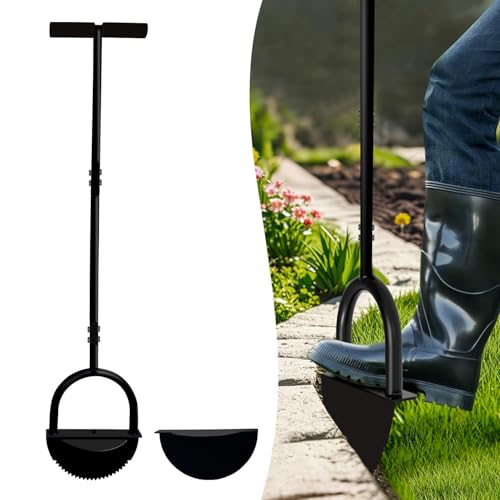
When consulting with seasoned gardeners about their favorite tools for tidy flower beds, one requirement keeps coming up: a reliable edger that handles roots, turf, and soil effortlessly. Having tested multiple models myself, I can tell you that the HAWCAFU Edger Lawn Tool 41 Inches Two Replaceable Blades truly stands out. Its rust-resistant steel construction, combined with two replaceable blades—a serrated one for tougher turf and a crescent-shaped for soil—delivers professional results with minimal effort. During use, it cuts through dense roots and turf smoothly, maintaining crisp, clean edges that last.
What really impressed me is its ergonomic design—41 inches long, with soft grips and a wide footplate, it reduces fatigue and allows you to stand comfortably. Unlike simpler or purely manual options, this model’s durability and versatility let you handle anything from lawn borders to snow removal. After comparing features, it’s clear that the HAWCAFU Edger offers the best blend of strength, comfort, and multi-season use. For tidy, healthy flower beds, I recommend giving this one a serious look—trust me, it’s a game changer.
Top Recommendation: HAWCAFU Edger Lawn Tool 41 Inches Two Replaceable Blades
Why We Recommend It: This model’s rust-resistant steel construction guarantees longevity, while the dual blades provide superior cutting power—serrated for tough turf and crescent-shaped for soil. Its 41-inch length minimizes back strain, and the ergonomic handle offers comfortable grip, making edging easier over extended sessions. Its ability to handle both lawn borders and snow removal makes it versatile for year-round use, unlike lightweight or single-function tools that fall short in durability or multi-season performance.
Best edger for flower bed: Our Top 5 Picks
- BlumeTrec Manual Edger Lawn Tool 38″-42″ Adjustable Length, – Best Value
- Byhager Lawn Edger with Steel Blade & Long Handle – Best electric edger for yard work
- HAWCAFU Edger Lawn Tool 41 Inches Two Replaceable Blades – Best professional edger for gardens
- KWIK EDGE Manual Lawn Edger for Borders and Pathways – Best edger for lawn edging
- YEELOR Rotary Edger, Adjustable Stainless Steel Lawn Tool – Best cordless edger for landscaping
BlumeTrec Manual Edger Lawn Tool 38″-42″ Adjustable Length,

- ✓ Durable reinforced blade
- ✓ Adjustable handle height
- ✓ Comfortable ergonomic grip
- ✕ Slightly heavy for some
- ✕ Limited to edging tasks
| Blade Material | Heavy-duty manganese steel with powder coating |
| Blade Type | Reinforced half-moon saw-tooth blade |
| Blade Width | Approximately 3 to 4 inches (based on typical edger sizes) |
| Handle Length | Adjustable from 38 inches to 42 inches |
| Handle Type | Ergonomic T-grip with 3 preset height positions |
| Footplate | Extra-wide, designed for stability and control |
There’s nothing more frustrating than trying to get crisp, clean edges around your flower beds and walkways, only to struggle with a flimsy tool that bends or gouges the soil. I finally found relief with the BlumeTrec Manual Edger Lawn Tool.
Its heavy-duty manganese steel blade slices through dense turf and compact soil like butter, making those sharp, professional-looking borders effortless.
The first thing I noticed is how sturdy and well-balanced it feels. The reinforced half-moon saw-tooth blade is robust, and the powder coating prevents rust, so I know it’ll last through many seasons.
Plus, the extra-wide footplate gives me a stable platform to step on, reducing strain on my back and legs when I tackle thick grass or uneven terrain.
The adjustable handle is a game-changer. I set it to the perfect height—up to 42 inches—so I don’t have to bend or strain.
The ergonomic T-grip gives me excellent leverage, helping me get precise cuts around flower beds and along sidewalks without slipping.
Another bonus is how easy it is to control, thanks to the ergonomic design and stable footplate. Edging around trees or narrow borders feels natural and smooth.
It’s a straightforward tool that makes yard maintenance less of a chore and more of a satisfying project.
Overall, if you want neat, defined borders with less effort and more control, this is a solid choice. It’s tough, adjustable, and designed to make your landscaping look polished.
Byhager Lawn Edger with Steel Blade & Long Handle

- ✓ Sharp saw-tooth blade
- ✓ Ergonomic long handle
- ✓ Weather-resistant steel
- ✕ Needs regular cleaning
- ✕ Manual operation takes effort
| Blade Material | Carbon steel with weather and rust-resistant properties |
| Blade Design | Saw-tooth curved, half-moon shape with teeth for cutting |
| Handle Length | Long handle designed to reduce bending and back strain |
| Handle Grip | Non-slip material for secure operation |
| Blade Width | Approximately 4-6 inches (inferred for typical edgers) |
| Intended Use | Edging along driveways, sidewalks, flower beds, and garden borders |
The moment I grabbed this lawn edger, I immediately noticed how its saw-tooth blade teeth grip and slice through tough grass and stubborn roots with surprisingly little effort. Instead of just pushing and tearing, the teeth cleanly cut, making edging along flower beds feel almost effortless.
The curved, half-moon steel blade feels sturdy and well-made, with a weather-resistant finish that promises durability. Its design allows you to glide smoothly along the soil, slicing through dense turf without snagging or tearing.
The long handle is a game-changer; it keeps your back straight and reduces fatigue during extended use.
The non-slip grip feels secure even if your hands are wet, which is a nice touch. Plus, the wide footplate offers excellent leverage—no slipping or awkward footing, even with larger shoes.
It feels balanced and comfortable, making edging a quick, clean task every time.
Cleaning after use is simple—just brush off soil and weeds to keep the blade in top shape. The manual operation is quiet, eco-friendly, and doesn’t require fuel or electricity, which I really appreciated.
It’s perfect for trimming along sidewalks, driveways, and flower beds without any noise or fumes.
Overall, this edger feels reliable and easy to handle, even if you’re not a gardening pro. It’s a practical tool that makes a tedious chore much more manageable, thanks to its sharp blade and ergonomic design.
I’d recommend it for anyone wanting a clean, professional-looking edge without the fuss of power tools.
HAWCAFU Edger Lawn Tool 41 Inches Two Replaceable Blades
- ✓ Durable rust-resistant steel
- ✓ Easy to assemble
- ✓ Comfortable ergonomic handle
- ✕ Slightly heavy for some
- ✕ Blade replacement could be easier
| Material | Premium rust-resistant steel with corrosion-resistant coating |
| Blade Types | Serrated blade and crescent-shaped blade |
| Blade Length | Approximately 41 inches (104 cm) |
| Handle Design | Ergonomic T-grip handle with soft, secure grip |
| Additional Features | Wide footplate for stability, two replaceable blades, quick assembly |
| Intended Use | Edging along flower beds, lawns, sidewalks, and snow clearance |
The first time I grabbed the HAWCAFU Edger and pushed it into the soil, I immediately felt how sturdy it was. The steel construction felt solid in my hands, and the wide footplate gave me confidence that I could push down without wobbling.
It’s surprisingly lightweight for its size, so I didn’t feel like I was fighting it with every step.
Using the serrated blade, I managed to slice through dense turf effortlessly. The crescent-shaped blade cut through stubborn soil with ease, creating a clean, crisp edge along my flower bed.
I loved how the 41-inch handle kept me upright, saving my back from bending over all day.
The ergonomic T-grip handle was comfortable, even after extended use. I didn’t experience any fatigue, which is a huge plus if you’re working on a larger project.
The wide footplate stayed stable on uneven ground, making edging smooth and precise. Plus, the blade replacement was straightforward, so I didn’t waste time on complicated setups.
Whether I was tidying up garden borders or clearing snow in winter, this tool handled multiple tasks with ease. It’s versatile enough to be your go-to for yard maintenance all year round.
I appreciated how quick and easy it was to assemble, especially after moistening the soil—made a noticeable difference.
Overall, this edger feels built to last and designed for comfort. It’s a real upgrade from flimsy plastic tools, and I could see myself using it regularly without feeling drained.
If you want professional-looking edges with minimal effort, this one’s a solid choice.
KWIK EDGE Manual Lawn Edger for Borders and Pathways

- ✓ All-in-one edging solution
- ✓ Reduces back strain
- ✓ Promotes healthy soil
- ✕ Slightly heavier than basic tools
- ✕ Requires some effort on tough roots
| Blade Type | Vertical and horizontal blades designed for precision cutting and edging |
| Handle Length | Extended ergonomic handle for reduced back strain and improved control |
| Material | Durable steel blade with curved back for soil control |
| Soil Grooming Capability | Loosens compacted soil to promote plant health and aeration |
| Design Features | All-in-one tool combining trimming, root cutting, and soil grooming |
| Intended Use | Manual edging for flower beds, borders, pathways, and sidewalk edges |
Imagine kneeling beside your flower bed on a sunny Saturday, trying to tidy up those unruly borders that have crept out of control over the season. You reach for the KWIK EDGE Manual Lawn Edger, feeling its sturdy, all-in-one design in your hands.
Its curved back immediately catches your eye, promising to direct soil back into place as you work.
As you start, you notice how smoothly the vertical and horizontal blades slice through overgrown grass and stubborn roots in a single pass. It feels like a quick, clean cut—no need to switch tools or struggle with multiple passes.
The handle extends comfortably, reducing the need to bend or crouch, which is a relief after years of back pain from edging.
What really stands out is how the tool grooms and shapes at the same time. Loose soil stays put thanks to the curved back, so you don’t have a muddy mess to clean up afterward.
Plus, it loosens compacted soil beneath the surface, encouraging healthier root growth without extra effort.
Using this edger makes your yard work feel almost effortless. It’s perfect for creating crisp borders along flower beds or sidewalks, making your yard look sharp and well-maintained.
Plus, the ergonomic handle helps you work longer without fatigue. It’s a straightforward tool that truly combines efficiency with comfort.
Overall, you’re left with neat, professional-looking edges and healthier garden beds—without the hassle of complicated equipment or back-breaking work. It’s a smart, versatile choice that simplifies landscaping for anyone who appreciates a tidy yard.
YEELOR Rotary Edger, Adjustable Stainless Steel Lawn Tool

- ✓ Durable stainless steel build
- ✓ Adjustable handle for comfort
- ✓ Easy to assemble and use
- ✕ Slightly heavy for prolonged use
- ✕ Not ideal for very rocky terrain
| Material | Stainless steel handle with rust-proof blade system and high-strength rubber roller |
| Blade Type | Sharp, rust-proof, efficient sawtooth wheel |
| Handle Length Settings | 58.3 inches, 44.5 inches, 30.7 inches |
| Blade Width | Not explicitly specified, inferred to be suitable for lawn edging |
| Wheel Diameter | Not explicitly specified, but designed for effective edging and mobility |
| Adjustability | Handle length adjustable to three preset positions for personalized trimming |
Ever since I saw this YEELOR Rotary Edger sitting on my wishlist, I couldn’t wait to get my hands on it. When it finally arrived, I immediately noticed how sturdy and well-made the handle felt—smooth stainless steel with a non-slip grip that makes long sessions less tiring.
The adjustable handle is a real game-changer. I set it to my preferred height—around 44.5 inches—and it felt just right, giving me control without bending over.
The three length options mean you can customize it for different tasks or user heights, which is perfect if you share your yard work.
I tested the sawtooth wheel on both flat and slightly uneven terrain, and it cut through grass effortlessly. The rotating blade gathers the clippings as you push forward, making the edging process much cleaner.
Plus, the wheeled design helps glide smoothly, reducing fatigue during longer sessions.
Assembly was a breeze—just two quick steps—and I appreciated the self-cleaning blade. No fuss, no mess, just keep going without worrying about clogs or rust.
The high-strength rubber roller adds to the durability, and the efficient blade system is clearly designed for longevity.
Whether you’re tidying up flower beds, edging sidewalks, or defining garden borders, this edger feels versatile. Its sturdy build and adjustable features mean it handles different jobs with ease, making it a worthwhile tool for both casual gardeners and pros alike.
What Features Should You Look for in the Best Edger for Flower Beds?
When searching for the best edger for flower beds, several key features should be considered to ensure efficient and effective landscaping.
- Blade Type: The blade type is crucial as it determines the edger’s cutting ability and versatility. A steel blade is typically more durable and can handle tougher soil, while a plastic or composite blade may be suitable for lighter tasks and is less likely to damage surrounding plants.
- Power Source: Edgers can be powered by gas, electricity, or batteries, each with its own advantages. Gas-powered edgers offer high power and mobility for larger areas, while electric and battery-operated options provide quieter operation and reduced emissions, making them ideal for residential use.
- Cutting Depth and Width: The cutting depth and width dictate how effectively the edger can create clean lines and define the flower bed boundaries. A wider cutting path can save time on larger areas, while adjustable depth settings allow for versatility in different soil types and flower bed designs.
- Weight and Maneuverability: The weight of the edger affects how easy it is to handle, especially for extended periods. Lighter models are generally easier to maneuver around flower beds, while heavier models may provide better stability but can be more tiring to use.
- Ergonomic Design: An ergonomic design features comfortable grips and adjustable handles, which can reduce strain on the user during operation. This is particularly important for ensuring comfort during longer landscaping sessions and minimizing the risk of injury.
- Durability and Build Quality: The materials used in the construction of the edger impact its longevity and performance. Look for models made with high-quality materials that can withstand regular use and resist wear over time, especially in challenging outdoor conditions.
- Ease of Maintenance: Consider how easy it is to maintain the edger, including blade sharpening and cleaning. Models that require minimal maintenance or include features that simplify upkeep can save time and ensure consistent performance.
- Noise Level: The noise level of the edger is an important factor, especially in residential areas where noise regulations may apply. Electric and battery-powered edgers tend to operate more quietly than gas models, making them a better choice for close-knit neighborhoods.
How Does Blade Quality Affect Performance in Flower Beds?
The quality of the blade is crucial for optimal performance in maintaining flower beds.
- Material: The material of the blade affects its durability and sharpness. High-carbon steel blades are known for their excellent edge retention and resistance to wear, making them ideal for cutting through tough soil and roots.
- Blade Thickness: Thicker blades tend to be more robust and can withstand heavy use without bending or breaking. However, a balance is necessary as overly thick blades may struggle to make precise cuts, which is critical in flower beds where delicate plants are present.
- Blade Design: The design of the blade, including its width and shape, influences how effectively it can create clean edges. A serrated edge can grip the soil better, while a straight blade provides a smooth cut, which is necessary for maintaining neat flower bed borders.
- Sharpness: A sharp blade is essential for making clean cuts that reduce plant damage and promote healthy growth. Dull blades can tear plants and create jagged edges, which may lead to increased stress on the flowers.
- Ease of Maintenance: Blades that are easier to maintain, such as those that can be easily sharpened or replaced, are more practical for long-term use. Regular maintenance ensures consistent performance and prolongs the life of the edger.
Why is Weight an Important Consideration for Your Edger?
According to a study by the National Gardening Association, the right weight of gardening tools can significantly impact user fatigue and control. Lighter edgers are generally easier to handle, allowing for more precise movements, especially in flower beds where delicate plants may be present. The study highlights that tools that are too heavy can lead to increased strain on the user, making it more challenging to achieve clean and accurate edges.
The relationship between weight and performance can also be seen in the design and operation of edgers. Heavier edgers may offer more power or durability, but they can compromise the user’s ability to maneuver efficiently around flower beds. This can lead to poor edging results, as the user may struggle to maintain control. Additionally, if the user is not physically able to manage the weight of a heavier tool, it may discourage regular use, ultimately affecting the maintenance and aesthetics of the flower beds. Therefore, finding a balance between weight and functionality is crucial for achieving the best results in gardening.
How Does Durability Influence Longevity and Effectiveness?
Durability plays a crucial role in the longevity and effectiveness of tools used for landscaping, such as edgers for flower beds.
- Material Quality: The type of material used in the construction of an edger significantly affects its durability. High-quality materials like stainless steel or heavy-duty plastic are resistant to rust, corrosion, and wear, ensuring the edger maintains its effectiveness over time and can withstand various weather conditions.
- Build Design: An edger designed with reinforced edges and ergonomic features tends to offer greater durability. A robust build not only allows for efficient cutting through tough soil and grass but also reduces the likelihood of breakage during use, enhancing its overall longevity.
- Maintenance Requirements: The durability of an edger is also influenced by how easy it is to maintain. Tools that require minimal maintenance, such as those with self-sharpening blades or easy-to-clean surfaces, tend to last longer and remain effective, as regular upkeep can prevent wear and tear.
- Usage Frequency: The frequency with which an edger is used also impacts its durability. Professional-grade edgers, designed for daily use, often have enhanced durability features compared to consumer-grade models, making them a better investment for frequent landscaping projects.
- Warranty and Brand Reputation: A good warranty can be an indicator of an edger’s durability, as reputable brands typically stand behind their products. Brands with positive reviews and proven track records in durability tend to produce edgers that not only last longer but also perform effectively throughout their lifespan.
What Types of Edgers Are Best Suited for Flower Beds?
The best edgers for flower beds include various types designed to create clean lines and promote healthy plant growth.
- Manual Edgers: These are hand-operated tools that allow for precise edging around flower beds. They typically feature a sharp blade that cuts through soil and grass, making them ideal for small gardens where control and detail are essential.
- Electric Edgers: These powered tools provide more efficiency and power than manual options. They are great for larger flower beds and can create a uniform edge quickly, but they require access to an electrical outlet and are generally heavier.
- Gas-Powered Edgers: Known for their strength and durability, gas-powered edgers are suitable for extensive landscaping projects. They can handle tough soil and grass, making them a good choice for professional landscapers or homeowners with larger flower beds.
- Trenchers: These machines are designed to dig deep, creating a trench that can help with drainage and root management. While not traditional edgers, they can be useful for establishing distinct boundaries for flower beds, particularly in landscaping designs that require deeper divisions.
- Spade Edgers: A spade edger combines the functions of a spade and an edger, allowing for cutting and shaping soil edges. They are particularly effective for creating clean lines without the need for power, making them a favorite among gardeners who prefer manual tools.
How Do Manual Edgers Compare to Electric Edgers for Flower Beds?
| Feature | Manual Edger | Electric Edger |
|---|---|---|
| Price | Generally lower cost; budget-friendly for occasional use. | Higher initial investment; costs vary based on power and brand. |
| Ease of Use | Requires physical effort; can be tiring for large areas. | Effortless operation; ideal for larger flower beds with less manual labor. |
| Maintenance | Minimal maintenance; mainly sharpening blades as needed. | Requires regular upkeep; battery or cord replacement may be necessary. |
| Power Source | No power required; relies solely on manual effort. | Powered by electricity; available in corded and battery-operated models. |
| Weight | Lightweight; easy to carry and maneuver. | Generally heavier due to motor and battery; may require more effort to handle. |
| Noise Level | Quiet operation; suitable for noise-sensitive areas. | Produces noise; may be disruptive in quiet neighborhoods. |
| Environmental Impact | Eco-friendly; no emissions or electricity usage. | Electric models may have carbon footprint depending on power source. |
| Best Use Cases | Ideal for small flower beds, tight spaces, and detail work. | Best for larger flower beds and regular maintenance tasks. |
In What Situations Are Gas-Powered Edgers the Ideal Choice?
Gas-powered edgers are ideal for various situations due to their power and efficiency.
- Large Properties: Gas-powered edgers are perfect for larger properties where extensive edging is required, as they provide the horsepower needed to tackle tough grass and roots without bogging down.
- Heavy-Duty Tasks: For tougher tasks such as creating deep edges for flower beds or cutting through dense soil, gas-powered models excel due to their robust engines that can handle demanding jobs.
- Frequent Use: If you regularly maintain landscaping or have a professional gardening business, gas-powered edgers can withstand prolonged use and offer the durability needed for frequent tasks.
- Varied Terrain: In areas where the terrain is uneven or rugged, gas-powered edgers have the ability to perform well, as they are often equipped with larger wheels and better traction compared to electric models.
- Remote Areas: Gas-powered edgers are advantageous in locations where electrical outlets are not readily available, allowing you to work in remote gardens or fields without being tethered to a power source.
Large properties benefit from gas-powered edgers due to their ability to handle extensive edging needs, enabling the user to maintain a neat and tidy appearance over expansive areas. Heavy-duty tasks, such as creating distinct borders for flower beds, are also ideal for gas models, as their powerful engines cut through tough materials without losing performance. Frequent users, such as landscape professionals, find gas-powered edgers to be reliable over time, with the endurance to complete multiple jobs in one session.
When dealing with varied terrain, gas-powered edgers perform effectively thanks to their design, which allows for better maneuverability and traction over uneven surfaces. Additionally, in remote areas where access to electricity is limited, gas-powered models provide the necessary portability and independence, enabling gardeners to work efficiently without the need for extension cords or battery limitations.
How Can You Maximize the Effectiveness of Your Edger in Flower Beds?
To maximize the effectiveness of your edger in flower beds, consider the following tips:
- Choose the Right Edger: Selecting the best edger for flower beds is crucial, as it should be designed for precision and ease of use. Opt for a lightweight, easy-to-maneuver tool that can handle the specific needs of your garden without damaging delicate plants.
- Establish Clear Edging Lines: Before you begin edging, mark the desired line of your flower bed with stakes or string. This helps create a clear boundary and ensures that you maintain a consistent line, which enhances the aesthetic appeal of your garden.
- Use Proper Technique: When using the edger, position it at a slight angle to create a clean cut. Move the tool in a steady, controlled manner, ensuring that you don’t disturb the soil or plants within the flower bed while cutting through grass and weeds.
- Maintain Your Edger: Regular maintenance of your edger is essential for optimal performance. Keep the blade sharp and clean to ensure effective cutting, and check for any loose parts before starting work to avoid mishaps.
- Consider the Timing: The best time to edge your flower beds is during the growing season, ideally in early spring or late summer. This timing not only helps control weeds but also encourages healthy growth around the edges of your flower beds.
- Mulching After Edging: After edging, applying a layer of mulch can help suppress weeds and retain moisture in the soil. This practice not only enhances the visual appeal but also provides nutrients to the plants, supporting their growth.
What Techniques Ensure Clean and Defined Edges?
To achieve clean and defined edges for flower beds, various techniques can be utilized:
- Hand Edging: This technique involves using a spade or edging tool to manually carve out the edges of the flower bed. It allows for precise control and can create a beautifully defined border, but it may require more physical effort and time.
- Power Edging: Power edgers, such as gas-powered or electric edgers, provide a faster alternative to hand edging. These tools cut through soil and grass with minimal effort, ensuring a clean edge that can withstand the test of time, making them ideal for larger gardens.
- Landscape Fabric and Plastic Edging: Installing landscape fabric or plastic edging is a long-lasting solution that helps to define the flower bed’s perimeter. This method not only maintains a neat appearance but also prevents weed growth and soil erosion.
- Brick or Stone Borders: Using bricks or stones as a physical barrier can create a visually appealing and durable edge around flower beds. This technique not only helps in defining the space but also adds aesthetic value, making it a popular choice for decorative gardens.
- Mulching: Applying mulch along the edges of flower beds can also help in defining boundaries while providing benefits such as moisture retention and weed suppression. This technique is easy to implement and can enhance the overall look of the garden.
- Trenching: Creating a trench along the edge of the flower bed can help separate it from the lawn or surrounding areas. This involves digging a shallow trench that acts as a physical barrier, which can effectively prevent grass from encroaching into the flower bed.
How Often Should You Use an Edger for Optimal Results?
To maintain a well-defined flower bed, it’s essential to use an edger regularly. The frequency of use can vary based on several factors, including the type of garden, climate, and desired appearance.
- Weekly Maintenance: For most flower beds, especially during the growing season, it is advisable to edge weekly. This frequency helps to prevent grass and weeds from encroaching into the flower bed, keeping the edges crisp and defined.
- Biweekly Edging: In less vigorous growing conditions or for beds with established plants, biweekly edging may suffice. This schedule allows for a healthier balance between plant growth and maintenance, reducing the risk of disturbing delicate root systems.
- Seasonal Edging: At the beginning of the growing season, a thorough edging can set a solid foundation for the year. After this initial setup, switching to weekly or biweekly maintenance depending on growth can keep the flower bed looking neat.
- After Heavy Rain or Storms: Following significant rain or storms, it may be necessary to edge more frequently. Heavy weather can cause soil erosion and plant displacement, leading to messy edges that require immediate attention to restore order.
- Before Planting New Flowers: If you’re planning to add new plants, edging right before planting can help define the new layout and make the garden look more intentional. This practice also aids in preventing existing plants from becoming overwhelmed by new growth.